Tracing God’s Fingerprint in Genesis 46 and Numbers 7
In The Marriage Supper of the Lamb – Part 2 we saw that Scripture by itself, as “letter,” is dead; it is the Holy Spirit who makes the Word alive—for, “the letter kills, but the Spirit gives life” (2 Corinthians 3:6). Any study of the Bible that focuses only on the text as an academic object usually misses the depth of meaning God intended—especially in the Old Testament.
So can I “prove” my understandings are correct? Not in a mathematical way. The only real confirmation is if the same Holy Spirit bears witness in your heart. There is also a second safeguard: no true understanding of Scripture will contradict any other part of Scripture. If an interpretation requires us to ignore even a single verse, it is not from God. The understandings I present here are, to the best of my knowledge, in harmony with all of Scripture—and I welcome honest testing and challenge on that basis.
Every Word as Seed
Quoting Moses, Jesus said, “Man shall not live by bread alone, but by every word that comes from the mouth of God.” To me, that means every word in Scripture matters.
Why are we told Peter caught exactly 153 fish in John 21:11? Why, in the middle of one of the longest and hardest-to-read genealogies in the Bible, does Nehemiah 9:11 speak of “a stone” being cast “into mighty waters,” while Exodus 14:21 says a strong east wind parted the sea?
These kinds of details began to stand out to me. A new texture—and, most of all, life—began to emerge, as if a new dimension opened above the black letters on a white page. Meaning began to “float” above the text in the illuminating golden light of the Lampstand.
What I call God’s “signature” in Scripture—patterns that authenticate the Bible as His Word in a way no human author could have orchestrated—is exactly this: illuminated meaning that seems to rise from the pages and brings a deep confidence and peace that it truly is God’s Word.
The Seed of the House of Israel—66/70
Genesis 46 records Jacob going down to Egypt with his family. The chapter carefully lists the descendants of Jacob who went to Egypt, and then gives us two counts:
66 direct descendants who went down with Jacob
70 total when Jacob himself and Joseph’s two sons are included
Scholars debate how to reconcile these numbers. Most readers overlook them. To me, the 66/70 pattern looked deliberate, but I did not yet know what it meant. I simply kept it prayerfully tucked away in my heart.
Some time later, as I was planning another full read-through of Scripture, that unanswered question came back.
I am currently reading through the Bible for the ninth time. I don’t read from Genesis straight through to Revelation. Instead, I mix the order to see more cross-connections. In one of these cycles, I decided to split the book of Psalms into its five internal “books,” because Psalms is so long and is already clearly partitioned.
When I did that, I realized something simple but striking:
If you count Psalms as one book, the Bible has 66 books.
If you count Psalms as five books, the Bible has 70 “books”.
There was that 66/70 pattern.
When I saw that, Genesis 46 came back into my mind. I had been praying over the double count there, and now I saw a link:
In Genesis 46, the seed of the house of Israel is counted as 66/70.
In the Bible, the books that carry God’s Word also form a 66/70 pattern.
My conclusion is not that “the Bible is 66/70” as a bare number. Rather: 66/70 is the number of the seed of the house of Israel, and Scripture is that seed.
Here it is important to remember who Israel is.
“Israel” is a name God Himself gives to Jacob after he wrestles with Him: “Your name shall no longer be called Jacob, but Israel, for you have striven with God and with men, and have prevailed.” (Genesis 32:28)
In the New Testament Paul explains that “Israel” is defined by faith, not mere genetics: “For not all who are descended from Israel belong to Israel… it is not the children of the flesh who are the children of God, but the children of the promise.” (Romans 9:6–8; see also Galatians 3:7, 29)
Daniel 12 adds an Old Testament witness to this same idea: “At that time your people shall be delivered, everyone whose name shall be found written in the book.” (Daniel 12:1) Here “your people” are identified not merely by bloodline, but as those whose names are written “in the book” (elsewhere called “the book of life” in Revelation 20:12; 21:27).
Revelation 7 gives a New Testament picture of “Israel” at the end of the age: an angel seals “the servants of our God … sealed from every tribe of the sons of Israel” (Revelation 7:3–4). Verses 5–8 then list the offspring (sons) of the tribes, notably omitting Dan.
The “house of Israel” is therefore not just an ethnic label; it is the house of God’s people—those who belong to Him and walk by faith.
Scripture itself uses “seed” both in the physical (descendants) and spiritual sense (the Word):
In the parable of the sower, Jesus says plainly: “The seed is the word of God.”
Paul speaks of Christ as the Seed and of us as Abraham’s offspring by faith (Galatians 3).
So when I see Genesis 46 highlighting the seed of Israel as 66/70, and the canon of Scripture mirroring 66/70 depending on how we count Psalms, I see a quiet signature of Godthat confirms the Bible is the “seed” of the house of Israel—God’s house.
The Structure of the Word of God—13/7/1
This brings us to Numbers 7, another place where, at first glance, the text is repetitive and easy to overlook—and yet another place where I believe God has left His signature authenticating the Bible.
Numbers 7 describes the dedication of the tabernacle. The twelve tribal chiefs bring their offerings. The offerings are identical, and the chapter repeats the full list verbatim, twelve times, once for each tribe. Many readers skim this section. Many commentators summarize it instead of reading it through.
As I prayed over this chapter, I sensed the Lord impress something on my heart:
“Do not skim this. Read every offering, all twelve times. It is this way for a reason. If you are faithful to read it this way, I will give you understanding.”
So I read each repetition of the offerings of the twelve tribes as if I were reading it for the first time.
The next day I started a long journey, on a train from Sumy, Ukraine to Moscow, with a nine-hour stop in Kharkov. As I lay in my cabin, I played back Numbers 7 in my mind, prayerfully considering the details I had read the day before. There were two offerings of grain and oil on silver platters of 130 and 70 shekels, and one offering of incense on a gold platter of 10 shekels.
What did the 13/7/1 mean? Why was there grain and oil on two of them but incense on the third? What did the silver and gold mean?
The more I contemplated it, the more three simple observations stood out:
There are threedishes: the first two are made of silver, and the last is made of gold.
The first two hold grain mixed with oil, and the last one holds incense alone.
Their weights form a 13 / 7 / 1 pattern (130, 70, 10).
Grain and oil match what we have already seen: the Word (grain) made alive by the Spirit (oil). Incense, in turn, is a picture of prayer received in heaven before God (as we see in Revelation 5:8, where we read of “golden bowls full of incense, which are the prayers of the saints” and in Revelation 8:3-5, where incense is offered with “the prayers of all the saints” and then thrown to the earth).
In The Marriage Supper of the Lamb – Part 2, we described grain—which grows above the earth—as symbolic of manna from heaven, and oil as a picture of the Holy Spirit who gives that Word life. So we can see the grain-and-oil dishes as representing the Word of God made alive by the Holy Spirit. Incense clearly pictures prayer.
Even the metals speak. Silver is pale like the moon; gold shines like the sun. The moon’s light is only a reflection of the sun’s light. Silver, then, can picture what is on earth, reflecting heaven; gold points directly to the source—heaven itself.
Seen this way:
The two silver dishes with grain and oil point to God’s Word and Spirit working in the realm of man.
The one golden dish with incense points to the heavenly side: worship and prayer before God’s throne.
This 13/7/1 pattern is not random. It appears elsewhere in Scripture in ways that cluster around sacrifice, fullness, and completion. One striking example is the Feast of Booths in Numbers 29, where:
13 bulls are offered on the first day,
the number of bulls decreases day by day down to 7 over 7 days, and
on the eighth day, there is a single bull for a solemn assembly.
Again we see a 13 / 7 / 1 shape around offerings and consecration.
In Numbers 7, the 130–70–10 shekel dishes form a 13/7/1 pattern and carry exactly the elements we have been tracing: grain and oil (Word and Spirit) on silver, and incense (prayer and worship) on gold. For me, this became another part of God’s “signature”: hidden inside a chapter most people skim, He quietly sketches the basic structure of His Word.
In the Old Testament, Israel is often functioning as thirteen tribes: Joseph is divided into Ephraim and Manasseh, and Levi is set apart in the center around the tabernacle while the other tribes encamp around them. In that light, the “13” can be seen as pointing to God’s Word and Spirit given to the genealogical tribes of Israel—the Old Testament.
In the New Testament, Jesus walks “among the seven golden lampstands,” and we are shown seven churches (Revelation 1–3). The “7” in the second silver dish fits this: the Word of God, made alive by the Spirit, given to the seven churches—the New Testament.
The “1” then points to a single, distinct book: Revelation itself—a book not simply written from earth looking up, but dictated to John in heaven, where the bowls of incense gather the prayers of the saints.
13 – the Old Testament: Word + Spirit in the era of the tribes.
7 – the New Testament churches: Word + Spirit in the era of the lampstands.
1 – Revelation: a heavenly book of incense, vision, and the consummation.
Even the gaps in the numbers—13 down to 7, and 7 down to 1—are 6 and 6, again hinting at the 66 pattern tied to the whole Bible’s sixty-six books.
There is another 13/7/1 pattern echoing this structure inside the New Testament itself:
13 letters traditionally associated with Paul, laying foundations of doctrine and practice for the churches.
7 other letters (James; 1–2 Peter; 1–3 John; Jude), strengthening, warning, and encouraging believers.
1 final prophetic book, Revelation, filled with incense, worship, and end-time vision around the throne of God.
I don’t claim these patterns as a mathematical proof, but I believe they are God’s quiet signature—ordering His Word with a consistency no human author could have engineered, and leaving hints of that order in places like Numbers 7 that most readers pass over quickly.
Taken together, Genesis 46’s 66/70 pattern for the seed of the house of Israel and Numbers 7’s 13/7/1 pattern for the dishes and offerings look to me like two sides of the same signature: the number and structure of the seed of the house of Israel, the Word of God. These are not proofs in a laboratory sense, but if we both have the Holy Spirit, He can confirm what is true and set aside what is not.
How I Came to Read Scripture This Way
For those who are interested in how the Lord led me into this way of reading, I want to share a bit of my own story.
From Ukraine to Daniel 7
I read the Bible twice in my twenties, then on and off for the next two or three decades. In 2011 I became a digital nomad and have lived in many places since. I spent a lot of time in Ukraine—Sumy, Mykolaiv, Crimea, Luhansk, and also the western parts like Lviv and Kolomyia in the southwest. I understood the regional differences and the tensions keeping the nation divided.
When the Maidan protests began in 2013–2014, I followed the news closely. I watched what Western media and U.S. officials were saying, and compared it to what I experienced while living there. It became clear to me that the West was more interested in narratives that justified force than in truth that could lead to peace. I understood then where the U.S.’s meddling would lead.
I remembered Daniel 7, where the bear is told to “arise and devour much flesh.” I understood what I was watching in real time was part of what Daniel saw: the shifting of empires and the approach of a third world war. Russia is the bear, and Ukraine, one of the three ribs in the bear’s mouth.
When the Veneer Came Off the Church
In my twenties I attended a “charismatic Baptist” church. They taught what is often called the “five-fold ministry” from Ephesians 4:11—apostles, prophets, evangelists, shepherds (pastors), and teachers—as if these were institutional offices to be filled and managed.
The main Bible teacher (who bore the title “apostle”) had real insight—and I still believe much of his teaching came from a sincere place. But looking back, the system around him was driven by membership and money, not by the Holy Spirit. Emotion through music and institutional loyalty were often substituted for real spiritual connection, obedience, and truth.
When events in Ukraine escalated, I reconnected with that church, hoping to talk with one of their “prophets.” A true prophet will not simply echo the viewpoint of his own nation; he cares about truth before nationalism. As I listened, I realized their “prophets” were fully Americanized in their worldview. They did not see what was really happening. That was the moment when the veneer came off for me. I saw the institution for what it was.
More importantly, that was when I decided: I need to go back to Scripture myself.
Laying Aside Commentaries
At first, I opened a few well-known Bible commentaries on my screen beside the text. I would read a chapter of Scripture and then read what the commentators said about it.
Then, one day, quietly but clearly, I sensed the Holy Spirit speaking to my heart: “Stop reading the commentaries. I will teach you.” After that, I began to see a bigger picture. My heavenly Father, through the Holy Spirit and the Word, wanted to have a conversation with me, but a third person was sitting at the table, constantly interrupting, rephrasing and injecting his comments into our conversation. Should a child not be able to understand his own father? Why should a stranger join in and try to talk for the father?
Jesus had already promised, “the Helper, the Holy Spirit, whom the Father will send in my name, he will teach you all things and bring to your remembrance all that I have said to you” (John 14:26). That does not mean we never learn from others, but it does mean that the same Spirit who inspired Scripture must be the One who makes it alive and clear in each of our hearts.
(In everything I write, I have no desire to replace that Teacher; my hope is that your love for the Word of God deepens, and that you find yourself more drawn to meet with God through it.)
From that point on I stopped going to commentaries for understanding. I now purposely use a physical ESV Bible with no commentary as my primary way of reading Scripture. If I don’t understand something, I pray for understanding. Sometimes it’s immediate; sometimes it takes days or longer; but whenever I have sought earnestly, I have received understanding.
Many “scholarly” approaches to the Bible lean heavily on schemes such as historical-critical analysis, source criticism and redaction criticism, and purely literary analysis, all wrapped in highly technical “biblical hermeneutics” that imply only trained experts can really understand the text.
The Bible, however, was given for the whole people of God—for anyone with an open, believing heart—not just for those with degrees and titles.
Those tools can sometimes provide useful background, but they are not the same as listening to the Author with an open heart. If we treat the Bible only as an object of academic study, we may become clever—and also blind.
And the final message is that God’s people need to return to the Word of God—undivided across denominations and continents—peeling back doctrines introduced over the ages by human interests, doctrines that separate us from real relationship and living knowledge of God the Father and Jesus the Son.
In Part 2: Sixes, Sevens, and the Two Witnesses, we will look at another layer in Numbers 7—the six-and-seven pattern in the animal offerings—and how it connects to God’s end-time work in His Church.
And in Part 3: Seven Lamps, One Bride, One King, we will show the completion of the number pattern, as it finishes in Numbers 8, and how it points to the completion of this age.
“Riders on the Storm” is a message about war and judgment—a song that says, in effect, the storm is coming, the riders are already in motion, and the only real shelter is the One most people refuse to love.
The original track is here, and a well-known fan edit set to Vietnam War footage is here.
Like the other songs we’ve looked at, I believe it also carries a mocking tone: Satan gloating that he can speak truth right in front of us, and almost no one notices.
“Riders on the storm” – Spiritual cavalry
The song opens with the repeated phrase “Riders on the storm.” Before I dive in, it’s worth asking: who are the riders?
Isaiah 21 gives a clue. The prophet is told to set a watchman, and the watchman reports what he sees:
“…riders, horsemen in pairs, riders on donkeys, riders on camels…” (Isaiah 21:7)
In the ancient world, horses, donkeys, and camels were the vehicles that carried soldiers, weapons, and supplies to the front lines. In our day the hardware has changed—trucks, trains, planes, ships—but the pattern is the same. When you see massive movement of men and materiel toward a front, you are watching the riders of war.
Those are the riders of the storm in the physical sense: columns of troops, endless convoys, logistics chains feeding a conflict that has its own momentum once it starts.
But that is only the surface.
The track itself is soaked in rain and thunder. Musically and lyrically, the picture is:
A dark sky,
Sheets of rain,
Invisible riders moving through it.
This echoes the biblical picture of war and judgment moving like a storm across the earth—like the horses released in Revelation 6, or the “whirlwinds” and “riders” of Isaiah 21 sweeping through nations.
The riders are not just tanks and soldiers. They are spiritual powers riding on top of human wars—principalities and powers that push nations into conflict and feed on the destruction.
The official audio visualizers lean into the storm mood. And in the Vietnam-war fan edit, the lightning flashes line up with artillery and bombs, making the link even clearer: the storm is not just weather; it is war.
The song never names these riders. It just keeps chanting the line, like a mantra: the riders are out there, and the storm is already on us.
“Into this house we’re born… into this world we’re thrown”
Early in the song we hear two key lines:
“Into this house we’re born…”
“Into this world we’re thrown…”
We are born into a storm-world—into a “house” already under judgment. The Bible says creation itself is in “bondage to corruption” and “groaning together” (Romans 8:21–22). Human life begins in a broken system.
The next images underline that:
A human being “like a dog without a bone” – restless, unsatisfied, wandering, looking for something to cling to.
“An actor out on loan” – on stage for a short time, reading lines someone else has written, then gone.
That is the human condition under the ruler of this age. People are hungry, temporary, and easily pushed into playing parts in someone else’s drama—especially the drama of war.
The storm is already raging when we arrive. Most of us just try to live our small stories under a sky filled with riders.
“There’s a killer on the road” – War personified
The tone shifts when we hear: “There’s a killer on the road.”
On one level, you can picture a serial killer. On another level, it is a picture of war itself, personified—a spirit of murder travelling the highways of history.
His “brain… squirming like a toad” sounds like an unclean spirit: restless, slimy, never at peace, always hunting for the next victim.
Then comes a chilling warning in everyday language: If you give this man a ride, sweet family will die.
This is the dance of war. Once you invite war into your vehicle—your nation, your alliances, your political project—it does not just hurt “the other side.” It kills families on every side:
Sons drafted and sent to the front.
Daughters trafficked or abused.
Cities leveled.
Fathers and mothers buried or left nameless.
It echoes the red-shoes picture from Hans Christian Andersen: once you put them on, you cannot stop dancing. Once you let the killer in the car, you cannot control where he takes you. The dance continues long after people want it to stop.
In that sense, the rider is not just a single man. He is the spirit of war—and behind him, the destroyer who has been riding storms from age to age.
“Take a long holiday… let your children play” – Stepping Out of the Storm’s Path
Around this same section we hear:
Take a long holiday Let your children play
On the surface it can sound like escapism—go someplace warm, let the kids enjoy life. But in light of Scripture’s warnings, I hear something sharper: get out of the path of the storm while you still can. Revelation 18:4 says, “Come out of her, my people…” and Jeremiah repeatedly calls people to flee from the city under judgment rather than sit and hope it blows over.
In that light, “take a long holiday” carries a dark double meaning—not a long weekend, but a one-way trip out of the kill zone. And “let your children play” is not about ignoring reality; it is about preserving your children’s lives so they can live to play at all. School, careers, routines—none of that matters if a bomb lands on your city. When God says to leave, the priority is simple: go.
In our own time, we have already seen what happens when people wait too long. Millions of Syrians have been scattered across neighboring countries because the war swallowed their towns faster than they ever imagined. Millions of Ukrainians have left homes, jobs, and schools behind and become refugees across Europe. Before the full-scale invasion, many thought, “It probably won’t come to my city. It will blow over.” For some, that delay meant getting trapped—men called up to the front lines, families separated, or only being able to flee with what they could carry.
The same pattern showed up in Vietnam: millions of civilians killed or wounded, and millions more driven from their homes. No one set out hoping to become a war refugee, but once the storm was fully overhead, many had no choice.
Biblically, God has already told us how serious the final storms will be. In Isaiah, when the prophet asks, “How long, O Lord?” he is told it will be “until cities lie waste without inhabitant… and though a tenth remain in it, it will be burned again” (Isaiah 6:11–13, excerpts). Elsewhere we read: “seven women shall take hold of one man in that day” (Isaiah 4:1, excerpt)—a picture of how badly war will thin the ranks of men (and also a shadow of the seven churches finally clinging to one Man, Jesus.
I do not know the exact timing, but I believe World War III and the night that is coming will be devastating. It will not all happen in a single instant; Scripture hints at an ordered sequence of blows. In other articles I will dig into Illuminati symbolism that points to specific cities marked for early destruction, such as I have already done in Marks & Spencer Xmas Advert Exposed. For now, the point is simple: when the song says, “Take a long holiday,” I hear more than vacation lyrics. I hear a warning—move before the riders of the storm arrive at your door.
“Girl, you gotta love your man” – A buried gospel
Then, out of nowhere, comes a different kind of stanza:
Girl, you gotta love your man… Take him by the hand… Make him understand… The world on you depends… Our life will never end…
On the surface, it sounds like a strange love song. But listen carefully.
In Scripture, the true people of God are called the Bride of Christ. Jesus is the Bridegroom; the Church is the “girl.” Eternal life hinges on whether she loves Him, takes His hand, and stays faithful.
“The world on you depends” – in a real sense, the fate of nations hangs on whether the people of God remain loyal to Jesus or sell out to Babylon.
“Our life will never end” – that is the heart of the gospel promise: “whoever believes in him should not perish but have eternal life” (John 3:16).
I believe this is Satan mocking the gospel in plain sight.
It is as if he is saying to God:
“Look—I told them the truth right in the middle of a song about war. I told them the girl has to love her man, that eternal life depends on it. They sang along, stoned and distracted, and never heard it. Can I burn them now?”
The truth is there. Most listeners never connect it to Jesus.
Back to the Storm – The Only Shelter
After the “girl, you gotta love your man” stanza, the song slides back into the storm. The riders keep moving, the rain keeps falling, the refrain circles round and round.
“There will be… wars and rumors of wars… nation will rise against nation, and kingdom against kingdom” (Matthew 24:6–7, excerpts).
What’s missing is any real shelter—no ark, no rock, no strong tower named. The picture is simple and bleak: wars will come, killers are on the road, families will die, and you might as well drift through it half-awake, humming along. From Satan’s point of view, that is perfect. As long as people never look up, never call on the name of Jesus, the storm will sweep them away.
Scripture gives a different way to respond. God does tell His people to leave when judgment is coming—“Come out of her, my people…” (Revelation 18:4)—but not as a project of clinging to this life at all costs. Jesus said, “whoever would save his life will lose it, but whoever loses his life for my sake will find it” (Matthew 16:25). The point is not survival for its own sake; the point is obedience and trust. Sometimes He hides His people—“perhaps you may be hidden in the day of the anger of the LORD” (Zephaniah 2:3)—and Daniel is told there is blessing for “the one who waits and reaches the end” (Daniel 12:12, excerpt). Sometimes He calls us to be “faithful unto death” with the promise of “the crown of life” (Revelation 2:10, excerpt). In every case, real safety is being in right relationship with God and letting Him steer your steps—even where you live, even when it is time to go.
There really are riders on the storm. There really is a killer on the road. And there really is a “girl” whose love for her Man will never end—the Bride who takes Jesus by the hand, makes Him understand (by her obedience) that the world on her depends, and discovers that in Him her life truly never ends. The song tells the storm honestly but leaves the shelter unnamed. The question it leaves us with is simple: will we stay in the path of the storm with the killer, or step out of the car and into the hands of the only One who can carry us through it into eternal life?
“Everyone then who hears these words of mine and does them will be like a wise man who built his house on the rock. And the rain fell, and the floods came, and the winds blew and beat on that house, but it did not fall, because it had been founded on the rock.” (Matthew 7:24–25)
I’ll be honest: I have never liked this song. I do not enjoy the sound, and the lyrics are not something I would ever sing along with on purpose. There are many other songs I would rather cover for Illuminati messaging.
So why Black Friday today? Because the “calendar” that flashes on screen at 1:02 happens to line up with this month (“Vendredi” is the French word for Friday), and as I write, the U.S. again seems poised on the edge of another foreign conflict that could trigger a financial “Black Friday.” I am not setting dates, and I am not claiming a Friday this particular month will be the one. But the timing is uncanny enough that I felt prompted to finally write about it.
As with the other songs in this series, I believe Black Friday is not just a quirky rock track about a market crash. I believe it is a message—told from the viewpoint of Satan—about a future day of judgment on the financial system and on the people who trusted it.
Listening to Black Friday in the First Person
Before we go line-by-line, there’s a basic orientation that, I believe, makes the whole song snap into place: Black Friday is written in the first person of Satan. The “I” who speaks expects a day of mass death, waits at the “door” to catch falling souls, gloats about “collect[ing] everything I’m owed,” and talks about staking his claim and changing his name. That is the voice of the destroyer, not of an ordinary man.
Even the band’s name points in that direction. “Dan” is the tribe that does not appear in the list of Israel’s tribes in Revelation 7, and Numbers 2 places the standard of Dan’s camp on the north side—already hinting at a northern, warlike role. Dan turned to idolatry; in Judges 18, six hundred men with weapons of war from Dan steal a carved image, a metal idol, and a priest who is happy to sell his services for money, then wipe out a quiet city and set up their own false worship there (Judges 18:11–31). The number 600 is repeated three times in that chapter—three sixes, a 6-6-6 drumbeat wrapped around a tribe marked by violence and counterfeit worship. Jacob’s prophecy over Dan was:
“Dan shall judge his people as one of the tribes of Israel. Dan shall be a serpent in the way, a viper by the path, that bites the horse’s heels so that his rider falls backward.” (Genesis 49:16–17, ESV)
That picture—a serpent striking the horse so the rider is thrown backward—matches the pattern of Revelation 17, where the beast turns on the woman who rides it: the harlot rides the beast, the beast hates the harlot, and the beast destroys her. Dan is the tribe that bites from underneath and brings the rider down—the hidden power that helps throw the rider off the beast.
“Steely Dan” pushes that image further. The name was taken from a crude mechanical device in William S. Burroughs’ Naked Lunch—a metallic instrument of sexual penetration, violation, and domination. Symbolically, this represents a counterfeit consummation, offering temporary pleasure but not leading to life. Satan is the master of counterfeit; his “unions” corrupt rather than create. Where the true Bride of Christ will one day know a real spiritual consummation—receiving an incorruptible heart and eternal life—his false consummations leave people hollow and, in the end, under eternal death. The “steely” aspect also echoes the iron teeth and claws of the final beast in Daniel 7—cold, hard, engineered metal used to tear, crush, and conquer.
Put together, you get “Steely Dan”: a hardened, predatory Dan-system under Satan’s tutelage. These are the global schemers and elites who present themselves as virtuous—“those who say that they are Jews and are not, but are a synagogue of Satan” (Revelation 2:9; 3:9)—but whose loyalty is to the serpent.
Because Scripture is God-breathed—written by human hands but directed by the Spirit—I believe even the numerical patterns around Dan are not accidental. That repeated “six hundred” in Judges 18 is one of those patterns, echoing the 6-6-6 mark of the beast. When you hold all of that in mind, Black Friday reads like what it is: a smug monologue from the serpent-king and his tribe, celebrating the day they expect to bring judgment on a world they helped corrupt.
Verse 1 – Catching the Grey Men
When Black Friday comes I’ll stand down by the door
The speaker is not a nervous investor—the “door” is the gate to death and hell. When the crash comes, Satan is already in position.
And catch the grey men when they Dive from the fourteenth floor
The “grey men” are those anonymous, suited figures who run the system: bankers, traders, executives. When the system collapses and they despair—picture some committing suicide by jumping out of windows—and Satan is there to “catch” them—collect their souls.
The “fourteenth floor” carries a second layer. In many high-rises the 13th floor is skipped for superstition, so the 14th floor is really the 13th, which I believe fits a pointer to the 13th tribe as I described above. Hiding it under a “fourteen” fits how the system hides its true nature.
When Black Friday comes I’ll collect everything I’m owed
Scripture calls Satan “the accuser of our brothers” (Revelation 12:10). He keeps record of sins and claims those who never brought their debt to the cross. On this Black Friday he is not panicking—he is collecting.
And before my friends find out I’ll be on the road
Those who serve him now—occultists, Baal worshipers, high-level “friends”—think they are insiders. This line says the opposite. Before they realize what has really been set in motion, he is already gone. They will discover too late that they were never truly his friends; they were just tools.
Chorus – “Don’t Let It Fall on Me”
When Black Friday falls you know it’s got to be Don’t let it fall on me
Here the voice shifts toward the crowd. On the surface, it sounds like a plea not to be ruined by the crash. Underneath, I hear a taunt: judgement has to fall; the only question is on whom. Those tied to the system—who wear the “cloak of Shinar” and trust Babylon’s money more than God—are exactly the ones who will be crushed when it collapses. (In Joshua 7, the “cloak of Shinar” is a beautiful Babylonian garment that Achan hides under his tent with stolen silver and gold. Shinar is the land of Babylon, so the cloak pictures trusting in Babylon’s wealth and security instead of God’s promise—a trust that ends in judgment.)
Verse 2 – Muswellbrook, Red Words, and Kangaroos
When Black Friday comes I’ll fly down to Muswellbrook
Muswellbrook is a small town in Australia. Donald Fagen, lead singer, has said they chose it by putting a finger on the map at the place they thought was furthest from New York. In the context of this song, it pictures the speaker fleeing to the ends of the earth while judgment falls on the center he has been using. Black Friday is not just about a bad trading day; it hints at a Black Friday for New York itself.
Revelation 18 first speaks of Babylon’s plagues coming “in a single day” (Revelation 18:8), which I believe applies to the fall of the U.S. as a whole. Then it narrows to “one hour” judgments and a specific commercial city whose smoke is seen from the sea, and finally to a vision of a great stone thrown into the sea as a picture of that city being violently destroyed (Revelation 18:10, 17, 19, 21). In my understanding, that commercial harbor city points to New York: the financial heart of the Babylon system, destined not only for economic collapse but for a sudden, physical destruction from the sea. The voice speaking in Black Friday expects that day to come—and plans to be on the far side of the world when it does.
Gonna strike all the big red words From my little black book
A “red-letter Bible” prints Jesus’ words in red. In this line, the speaker is not rejecting the Bible as a whole—he wants to keep the “little black book”—but he wants to erase the red. Keep the structure, keep the law, keep the language of God, but remove Christ’s voice, authority, and victory.
This is exactly how Satan works with Scripture. Paul writes that “the letter kills, but the Spirit gives life” (2 Corinthians 3:6). Satan loves the letter without the Spirit. He uses God’s good law—which no fallen human can fully keep—to condemn, control, and accuse. Jesus comes to bring mercy, a new heart, and eternal life. If you can take Jesus out of the Bible, you have a perfect control system: a religion of rules and guilt with no true forgiveness, leading only to condemnation and death.
That is why the Bible appears so often in Illuminati symbolism. Satan knows Scripture very well. He quotes it, twists it, and repackages it so that the outer form of “the Word of God” remains, but the living Word—Christ Himself—is pushed out. In that light, “striking out the big red words” is not a throwaway phrase. It is a boast about keeping the black-ink framework of religion while quietly erasing the One who gives it life.
Gonna do just what I please Gonna wear no socks and shoes
Here the voice revels in lawlessness. No restraint, no covering, nothing between him and the dust. It is rebellion dressed up as freedom.
With nothing to do but feed All the kangaroos
The kangaroos are a picture of the global elite who do Satan’s bidding. Satan “feeds” them with money, flattery, fame, and subservient power, and they jump when he says “jump”—and in the end he laughs at them as they go to their destruction.
Chorus 2 – On the Hill
When Black Friday comes I’ll be on that hill You know I will
Here the speaker is looking ahead to Black Friday with confidence. “On that hill” is not just a random image; it echoes Satan’s high vantage point in the temptation of Jesus, where “the devil took him up and showed him all the kingdoms of the world in a moment of time” and then tempted Him to throw Himself down (Luke 4:5, ESV). I do not see that as just a single snapshot, but as a panoramic view across history—seven Babylon systems, all the kingdoms of the earth under his temporary authority—before the moment he is finally cast down.
So when he says he will be “on that hill,” it pictures Satan still in his high place, watching the world’s systems and waiting for the day he believes will be his great harvest. Jesus has already spoken the outcome: “I saw Satan fall like lightning from heaven” (Luke 10:18, ESV). Satan wanted the Son of God to throw Himself down; instead, Jesus refuses the temptation and, through the cross and resurrection, reverses the table—Satan is the one who is thrown down. Black Friday, in that sense, is the day he expects to stand at the pinnacle above the world one last time, just before his fall and final union with the mind of the anti-Christ in the eighth and final kingdom.
Verse 3 – Digging a Hole
When Black Friday comes I’m gonna dig myself a hole
I see this as a foreshadowing of Revelation 12, when Satan is cast down from heaven. Revelation describes “war arose in heaven… and the great dragon was thrown down… he was thrown down to the earth, and his angels were thrown down with him,” followed by the warning: “Woe to you, O earth and sea, for the devil has come down to you in great wrath, because he knows that his time is short” (Revelation 12:7–9, 12, ESV, excerpts). In the song, Satan talks as if he is choosing to “dig” his own hole and lie down in it, but scripture shows the reality: he is forcibly expelled from heaven, locked to the earthly realm in rage—that is the real Black Friday he is preparing his followers for.
Gonna lay down in it ’Til I satisfy my soul
He lies down in that self-dug hole, determined to wring from the earth everything he can. His “soul” is only satisfied by destruction.
Gonna let the world pass by me
The world spirals into chaos; he is content to sit in his hole and watch nations devour each other.
The Archbishop’s gonna sanctify me
“Archbishop” has a double meaning. On one side, it hints at God’s sovereign permission: God allows the beast his limited season. On the other, it hints at the false prophet—a religious leader who will “sanctify” the beast before the world and tell everyone to worship him (Revelation 13).
And if he don’t come across I’m gonna let it roll
Even if God doesn’t sanctify him, he will still rebel. Whether God allows it or not, he is determined to “let it roll”—to push sin and destruction as far as he can, even knowing the outcome is his own doom.
Chorus 3 – Staking His Claim, Changing His Name
When Black Friday comes I’m gonna stake my claim
On this day, he asserts ownership. The financial system may be collapsing, but he is staking his claim on the soul’s of the people who trusted it more than God.
I guess I’ll change my name
Before he rebelled against God his name was “Lucifer” His followers still like to use the name “Lucifer”—angel of light. Scripture, though, calls him Satan, the adversary. In the end he will be known by what he truly is. When this Black Friday plays out, the mask of “light” is gone. His “name change” is complete.
The Calendar at 1:02 – The Number of the Destroyer
Now back to the image at 1:02 in the video.
At 1:02 a calendar flashes on screen. The days of the week are in French; vendredi is Friday. In certain years and months that pattern of dates matches a real calendar—and this month happens to be one of them.
One detail that is difficult to ignore is that Saturday’s are written in red. Saturday’s are the last day of the week, and are the Sabbath, also called the Lord’s day. Saturday comes after Friday. The end times are called a dark night in Scripture (verse), and Jesus calls Himself the Bright Morning Star (Rev 22:??), who comes at the end of the dark night. So is Black Friday, a moment in time – such as a major stock market crash, a short period of time, the end times in which the U.S. is destroyed by nuclear fire and the world goes into WW3, or a whole era, from Jesus’s first coming to His 2nd coming. Some people believe the earth has eras of rough 1000 years, 4000 years before Christ, 2000 years until his 2nd coming, and then 1000 years of His reign on earth – 7,000 years – 1000 years is as a day unto the Lord (verse).
One detail is hard to ignore: Saturdays are printed in red. Saturday is the weekly Sabbath—the ordinary “Lord’s day” of rest after six days of work. Many Christians also see a prophetic pattern here: “with the Lord one day is as a thousand years” (2 Peter 3:8), so six thousand years of human history are like six days, and the seventh “day” is the thousand-year reign of Christ. In that frame, Friday is the last working day before the Sabbath rest. Black Friday can therefore be read on three scales at once: (1) a literal crash day, (2) the short end-time window when the U.S. system burns and World War III erupts, and (3) the final “Friday-era” — the sixth thousand-year span leading right up to Jesus’ return, before the red “Saturday” of His millennial reign. The red Saturdays on the calendar hint at that coming Sabbath-age Satan hates and wants to erase, just as he wants to erase the red words of Jesus from Scripture.
I believe it is all three. The red Saturday is something Satan doesn’t want. The end of the era, ending in the Lord’s Day. This aligns with Satan wanting to erase the red words from the Bible.
The timestamp itself is a message: 1:02 → 102.
In Hebrew gematria, Abaddon—“the angel of the bottomless pit” in Revelation 9—adds to 102 (https://www.gematrix.org/?word=abaddon). Scripture says of him:
They have as king over them the angel of the bottomless pit. His name in Hebrew is Abaddon, and in Greek he is called Apollyon.” (Revelation 9:11)
Apollyon means destroyer. So 102 is tightly linked to the Destroyer.:
In New York City, the Oculus building beside One World Trade opens its roof for 102 minutes once a year, marking the time between the first impact and the collapse of the second tower on 9/11. The very name Oculus means “eye”—an architectural echo of the eye of providence on the U.S. one-dollar bill.
That eye sits in a floating capstone above the larger pyramid base—a split structure that pictures his rule from the unseen realm over earthly institutions—with the Latin motto Annuit Coeptis (“He has favored [or winks at] our undertakings”) and Novus Ordo Seclorum (“new order of the ages”)—the same spirit as an “eye” that winks open for exactly 102 minutes over the rebuilt World Trade site.
So Abaddon, the destroyer, connects to 9/11 in three ways at once:
102 as his Hebrew gematria,
Apollyon meaning destroyer, and
the 9:11 chapter-and-verse reference to the angel of the pit.
In Black Friday we therefore have:
a song about a catastrophic crash,
sung in the first person of Satan,
marked at 1:02 by a calendar that matches specific real months,
branded with a number many associate with Abaddon and with 9/11.
I do not see that as random.
Does this calendar point to a real month when the U.S. financial system finally breaks? Will it fall on a literal Friday? I don’t know—but it easily could. The dollar is under pressure, and a controlled demolition of the current system would give the global elite a clean slate to roll out their “new order” under the beast.
Scripture warns that end-time Babylon’s judgment comes suddenly: “her plagues will come in a single day… she will be burned up with fire” (Revelation 18:8), and three times merchants lament that “in a single hour” her wealth is laid waste (Revelation 18:10, 17, 19). Jeremiah speaks of God bringing “a destroyer at noonday” so that terror falls “suddenly” (Jeremiah 15:8). That is exactly the flavor of Black Friday: a last dark Friday-era, a destroyer coded as 102, and a collapse that comes faster than anyone expects.
How This Fits the Larger Pattern
In other articles on this site, the pattern is similar: coded numbers, images of burning Americans, and a mocking tone toward people who never notice what is being shown to them.
Here, Black Friday fits into that same pattern, but focused on the financial side:
The destroyer stands ready at the “door” while grey men dive from towers.
The Bible is kept, but the red words of Jesus are struck out.
Servants are just “kangaroos” to be fed until they fall.
A pit is dug; a counterfeit “sanctification” is given; a claim is staked.
The calendar at 1:02 quietly stamps the whole thing with the number of the destroyer.
In your own life, this raises a simple question: Where is your trust?
If our security is in the markets, in digital accounts, in Babylon’s paper promises, then a real Black Friday—whenever it comes—will be terror. That is the “cloak of Shinar”: covering ourselves with a garment of financial confidence instead of trusting the God who judges the system.
If our security is in Jesus, then even a Black Friday becomes something different. It is still painful; it may cost us dearly in earthly terms. But it is no longer the day the destroyer “collects what he is owed.” Our debt has already been paid.
I am not timing the market, and I am not setting dates. What I am saying is that songs like Black Friday are not accidental. They are part of a long-running pattern of messaging in music—taunting hints from powers that think they are untouchable and warnings for anyone with ears to hear.
The wise response is not to decode every date, but to move our trust off Babylon’s books and onto the One who cannot be shaken, before the real Black Friday comes.
Bearing Offspring: The Righteous Deeds of the Bride
In Part 1, we looked at the marriage supper as a present reality: Jesus feeding us with His flesh, the pure Word of God, and calling us to gather that heavenly manna every day.
In Part 2, we focused on the cup — drinking His blood — receiving the Holy Spirit so that the Word becomes alive inside us. Without the Spirit, even the most accurate Bible reading remains dry and lifeless. With the Holy Spirit, the same words become living bread and living wine.
In this Part 3, we look at what that living Word and living Spirit are meant to produce: offspring for the Bridegroom. The Bride is not only invited to eat and drink; she is called to bear fruit, to bring forth spiritual children before the consummation of the marriage in the next age.
The Betrothed Who Bears a Son
Scripture gives us a clear picture of a virgin, betrothed but not yet married, who nonetheless bears the promised Son:
“Behold, the virgin shall conceive and bear a son, and shall call his name Immanuel.” – Isaiah 7:14; Matthew 1:23
Mary is still a virgin, still only betrothed to Joseph when she conceives by the Holy Spirit. She is not yet in the fully consummated marriage, yet she already bears the Offspring of promise.
This is a pattern for the Bride of Christ.
The Church is the betrothed Virgin Bride.
The marriage (union in the fullest sense) is still future.
Yet in this betrothal period, the Bride is already called to bear the Bridegroom offspring.
We see the same pattern already hinted at in the test of the unfaithful woman (Numbers 5:11–31), which we looked at in Part 2. If she is found faithful, she does not merely survive — she bears her husband offspring. Faithfulness in the testing leads to fruitfulness.
In the same way, the faithful Bride of Christ is not only preserved; she is made fruitful. She bears Him children — not physical children, but spiritual offspring: lives brought to Him through His living Word and Spirit working in and through her.
The Jealous Husband and the Bridegroom of Blood
The jealousy of God for His Bride appears throughout Scripture. On the road back to Egypt, after Moses has delayed circumcising his son as God had commanded, the Lord meets Moses in judgment. It is a strange and sobering scene:
24 At a lodging place on the way the Lord met him and sought to put him to death. 25 Then Zipporah took a flint and cut off her son’s foreskin and touched Moses’ feet with it and said, “Surely you are a bridegroom of blood to me!” 26 So he let him alone. It was then that she said, “A bridegroom of blood,” because of the circumcision. – Exodus 4:24–26
The Lord is confronting Moses, because the covenant sign of blood has been neglected. Circumcision belongs to God; Zipporah’s act of obedience and the shedding of blood turn away death.
Who commanded circumcision — Moses or God? It is God who requires it. Circumcision is a sign in the flesh that belongs to Him. Prophetically, it points to the circumcision of the heart, a heart opened to God, separated for Him, willing to be changed.
Jesus is the true Bridegroom of blood:
He purchased the Bride with His own blood.
He calls us to open our hearts, to let Him cut away what does not belong to Him.
He insists on ownership: we are not our own, we are bought with a price.
This is not about us making ourselves perfect. It is about not hiding from His claim on us, not resisting His jealous love. We bring Him a washed, honest heart; He does the deep changing and cleansing over time.
Pain in Childbearing, Sweat in the Field
After the fall, God speaks to the woman and to the man:
To the woman he said, “I will surely multiply your pain in childbearing; in pain you shall bring forth children. Your desire shall be contrary to your husband, but he shall rule over you.” – Genesis 3:16
There is a natural meaning here, but there is also a prophetic picture:
The woman is a picture of the Bride.
The children are spiritual offspring.
The husband is Christ.
We have a nature that is contrary to our Husband’s will, but we are called to come into obedience to Him. The Bride will bring forth children, but not without pain, struggle, and conflict with her own nature.
Then to Adam He said, “Because you have listened to the voice of your wife, and have eaten from the tree about which I commanded you, saying, ‘You shall not eat from it’; Cursed is the ground because of you; In toil you will eat of it All the days of your life. 18 “Both thorns and thistles it shall grow for you; And you will eat the plants of the field; 19 By the sweat of your face You will eat bread…” – Genesis 3:17–19a
The ground, “cursed” and full of thorns and thistles, is a picture of the soil of human hearts. In toil we bring the Word of God to this ground so that it may bear fruit. The thorns are the cares, worries, and deceitfulness that choke the Word. The thistles are false teachings and worthless ideas that compete with it.
Jesus makes this picture explicit in the parable of the sower (Luke 8:4–11). The seed is the Word of God. Different kinds of soil receive it differently. The harvest depends not just on sowing, but on the condition of the heart.
So:
The Bride’s calling is to labor in this “field,” sowing the Word.
There will be sweat, thorns, and resistance.
This age is the season of toil and sowing; the next age is the rest and full harvest.
Even the garments of the priests picture this.
“They shall have linen turbans on their heads, and linen undergarments around their waists. They shall not bind themselves with anything that causes sweat.” – Ezekiel 44:18
In the inner courts they were not to wear anything that caused sweat. Prophetic picture:
In this age (outer court / outer sanctuary), we labor and “sweat” in ministry and obedience.
In the next age (inner sanctuary), it will be our very nature to serve without “sweat” — without inner conflict.
For now, we sweat and labor to bring the harvest of souls, the offspring of Christ.
Washed with the Word, Clothed in Fine Linen
Paul pulls the picture together in Ephesians 5, where he speaks of husbands and wives and then says plainly that he is really speaking of Christ and the Church:
Wives, be subject to your own husbands, as to the Lord. 23 For the husband is the head of the wife, as Christ also is the head of the church, He Himself being the Savior of the body. 24 But as the church is subject to Christ, so also the wives ought to be to their husbands in everything.
25 Husbands, love your wives, just as Christ also loved the church and gave Himself up for her, 26 so that He might sanctify her, having cleansed her by the washing of water with the word, 27 that He might present to Himself the church in all her glory, having no spot or wrinkle or any such thing; but that she would be holy and blameless. … 31 For this reason a man shall leave his father and mother and shall be joined to his wife, and the two shall become one flesh. 32 This mystery is great; but I am speaking with reference to Christ and the church. – Ephesians 5:22–27, 31–32
Jesus is actively preparing the Bride:
He washes her with the water of the Word.
He is preparing to present her to Himself, without spot or wrinkle, holy and blameless.
The end goal is union: “the two shall become one.”
That consummation is not mainly about scenery or a change of location; it is about God giving us a truly new, perfect heart — the “white stone” with a new name (Revelation 2:17), His own nature written within. Only with hearts like His can paradise truly be paradise. With all the knowledge and glory of the age to come, if our hearts were still crooked we would only build new towers of Babel; with perfect hearts, love for God and for one another finally becomes our nature instead of a struggle.
Revelation gives us the same picture from heaven’s perspective:
“Let us rejoice and exult and give him the glory, for the marriage of the Lamb has come, and his Bride has made herself ready; 8 it was granted her to clothe herself with fine linen, bright and pure”— for the fine linen is the righteous deeds of the saints. – Revelation 19:7–8
Notice the tension:
“It was granted her” – the linen is a gift of grace.
“The Bride has made herself ready” – she has a role.
The linen is described as “the righteous deeds of the saints.”
These deeds are not the Bride trying to earn love. They are the fruit of a heart that has been:
Washed by the Word.
Filled and led by the Spirit.
Brought into obedience to Christ’s purposes.
Those deeds are part of her wedding garment.
Revelation also says:
“Blessed are those who wash their robes, so that they may have the right to the tree of life…” – Revelation 22:14
The washing is now. The tree of life and the full access belong to the next age. The marriage supper prepares the Bride’s garments; the actual marriage is when she stands before Him fully clothed in what His grace has produced in her.
The Bride’s Commission: Bearing Offspring
Jesus sums up the Bride’s commission in what we often call the Great Commission:
“Go therefore and make disciples of all nations, baptizing them in the name of the Father and of the Son and of the Holy Spirit, teaching them to observe all that I have commanded you…” – Matthew 28:19–20
This is not a command to run religious programs; it is a call to live as His sons and daughters, truly fruitful:
“Teaching them to observe” – passing on the Word in a way that leads to obedience.
“I am with you always” – the Bridegroom’s presence with His Bride as she labors.
When we:
Eat the Word (Part 1),
Drink the Spirit (Part 2), and
Walk out what He shows us (Part 3),
Like a good tree that naturally bears good fruit, a heart filled with His Word and Spirit naturally overflows. Others are touched, awakened, drawn, and discipled. Christ’s own life in us begins to show itself. His life in us does not end in us; it multiplies.
The faithful Bride does not only “pass the test”; she becomes fruitful. She brings the Bridegroom offspring by sowing the living Word in the power of the Holy Spirit.
There is a cost to this fruitfulness. The church was built on the blood of martyrs, and Scripture says, “Precious in the sight of the Lord is the death of his saints” (Psalm 116:15). Jesus calls a Bride who does not “love [her] life even unto death” (Revelation 12:11). The key is not heroic willpower, but love that begins to outweigh fear: love for Him, and love for others who will otherwise face eternal loss. A faithful wife cares more about what her husband thinks than the opinion of the crowd; in the same way, the faithful Bride of Christ cares more about honoring Him and rescuing souls than about her own comfort or reputation. From that kind of heart, boldness can rise when circumstances demand it.
Not Earning, but Responding
It is important to keep the order clear:
He loves and chooses first.
He invites us to the marriage supper now: to eat His Word and drink His Spirit.
As we keep coming with a washed, honest heart, He changes us from the inside out.
Out of that changed heart come righteous deeds and spiritual offspring.
We are not trying to earn the marriage. We are responding to His love and His calling:
We keep bringing our hearts to be washed.
We keep coming to the table.
We keep saying “yes” to the small obediences He shows us.
The fruit — the deeds, the offspring — is the result of His life in us.
Living as the Betrothed Bride
So where does this leave us now, in very practical terms?
The marriage supper is here and now, on earth, in this age.
The marriage — the full union, the unveiling in the Holy of Holies — is still to come.
In this betrothal period, the Bride is called not just to eat and drink, but to bear fruit.
To live as the Betrothed Bride means:
Eating His flesh – feeding daily on the Word with a washed, honest heart.
Drinking His blood – asking and allowing the Holy Spirit to make that Word alive and to change us.
Bearing offspring – letting that living Word and Spirit flow through us to others so that Jesus gains children, not just attendees.
The Betrothed—the virgin who bears offspring before the consummation—has made herself ready with righteous deeds here on earth. Those deeds flow from a Word-filled, Spirit-filled heart that brings forth spiritual children for the Bridegroom.
The veil into the Holy of Holies, the full unveiling of the marriage itself, belongs to the next age. For now, we remain in the outer sanctuary of this present age, being washed with the water of the Word and filled with the Spirit (Ephesians 5:26; 5:18). If we will stay at the table and in the field—Word, Spirit, and obedient deeds together—He will make us ready:
Ready to endure the coming night,
Ready to bear Him offspring in this age,
And ready to stand—washed, faithful, and longing for that perfect heart—when the consummation itself comes.
On that day He will give each overcomer “a white stone, with a new name written on the stone that no one knows except the one who receives it” (Revelation 2:17)—a picture of a new, perfect nature that does not erase the unique identity He gave us, but fulfills it.
Then in the next age, the marriage itself is revealed and God gives His Bride that new, perfect heart that makes true paradise possible for all eternity.
If you feel the world is getting stranger by the minute, you are not alone. I don’t think many people could have imagined the world we live in today, ten years ago.
Across the world, something feels off. We watch governments in completely different cultures roll out the same policies at the same time, often against the clear will of their own people. Unelected “experts” and global bodies have somehow become the official purveyors of truth. Election after election, nations cry out for one direction and get leaders who do the opposite. Instead of pursuing truth that could bring unity and peace, our institutions seem to specialize in narratives that divide. The systems that were supposed to protect us look broken, and the news can no longer tell a story straight. It is more than just bizarre now; it is getting scary.
The Bible says, “The coming of the lawless one is by the activity of Satan with all power and false signs and wonders” (2 Thessalonians 2:9), and also that “the whole world lies in the power of the evil one” (1 John 5:19). In other words, there are real spiritual powers behind what we see. They do not only push policies and laws; they also know how to speak to us directly—through films, music videos, news narratives (including staged events), public ceremonies and rituals, the symbols they scatter across our world, and very often through popular music.
I believe some songs are literally messages from the future, passed down through spiritual powers who can see what lies ahead and who share it with their servants. Those servants then encode it in lyrics, videos, and symbolism that are “hidden in plain sight.”
One of those songs, I believe, is “How Bizarre” by OMC.
In this article I simply walk through the evidence so you can decide for yourself.
At first glance, the song is just a quirky story: driving in a car, police lights, strange scenes, and the repeated chorus, “How bizarre.” But when you look at the phrases together, it starts to read like a parable of our political circus.
Here is how I understand some of the key lines.
“Red-blue lights flash”
This is not just about police. Red and blue are the colors of the two major political camps or controlled opposing powers—a Hegelian dialectic. The sirens of crisis, outrage, and “emergency” are always flashing. Both sides use them to keep their followers in a constant state of alarm, to manufacture conflict, and then to justify the ultimately designed outcome: a major change, a “new solution.”
“Chevy ’69”
In occult symbolism, 69 is often associated with inversion (swapping good and evil) and the “devil’s number.” The picture here is of a car—society, the system, or the coming ruler—powered by that dark source. The officer tells them to “step out onto the line” – to do what ordinary people are supposed to do: follow orders and stay inside the rules of authority. “Pele preaches words of comfort” – a soothing, virtue-signaling narrative to make it all sound reasonable. But because they are riding in the devil’s vehicle, they are waved through. Those who serve the system are not harassed; they are carried by it. The rules are for everyone else.
“Destination unknown”
After the officer waves them on, the lyric says “destination unknown.” But the way he sings it, it sounds more like “destination un-no-one”—a stuttered double negative that hints at something darker: a destination where no one is left. It fits Satan’s nature and the prophetic picture of the end, where the path the world is on does not lead to a stable new order, but toward the attempt to erase whole populations:
“And if those days had not been cut short, no human being would be saved.” (Matthew 24:22, ESV)
In that light, “destination unknown” sounds less like being lost on a road trip and more like a coded pointer to where this whole circus is actually headed.
“A freshly pasted poster reveals a smile from the past”
This speaks of a familiar smiling political figure from the past being brought back to center stage. It points to the anti-Christ figure the Bible describes as one who “was, and is not, and is about to rise from the Abyss” (Revelation 17:8, ESV), a ruler who seems gone but then returns.
Revelation goes on to say of this same figure: “they are also seven kings…As for the beast that was and is not, it is an eighth but it belongs to the seven” (Revelation 17:10–11, ESV, excerpt). In other words, he first appears as one of the rulers of the seventh “Babylon” system, and then becomes the king of an eighth and final world order before the return of Jesus.
In that light, the “smile from the past” is more than nostalgia. It is a poster announcing the return of a leader the world already knows—one who will step back onto the stage with far more power the second time.
“Elephants and acrobats, lions, snakes, monkeys…”
Our leaders and institutions are portrayed as circus acts: elephants (Republicans), acrobats (talking heads who promote manipulative narratives with verbal gymnastics), lions (devouring opponents with accusations), snakes (deception and lies), and monkeys (imbeciles put in power who create chaos because they don’t understand what they are doing)—a whole menagerie of circus performers. It is not dignified government; it is confusion, chaos, and a path to destruction.
Does this resonate with you? Do you see why the world feels so bizarre? You are not imagining it.
“Ringmaster steps out”
The ringmaster is the one who truly controls the show, calling each act in and out. This line points to the rise of the final world ruler, the anti-Christ, finally stepping openly into view after working behind the scenes.
“The elephants left town”
The elephants leaving town represent the elimination of the Republican/Trump side of the conflict—not just losing an election, but being cleared off the field. This line points to the day when that camp is neutralized: their leaders sidelined or jailed, and many of their followers sent into internment and re-education camps, or eliminated entirely.
“People jump and jive / The clowns have stuck around”
The remaining population rejoices. The “threat” is gone, and people dance in the streets. But the clowns—corrupt politicians and their handlers—are still very much in charge. The circus act continues, just under one side’s colors instead of two.
“TV news and cameras, there’s choppers in the sky / Marines, police…”
This is not a quiet transfer of power. It is a major event, broadcast worldwide, involving military and police forces. It points to a civil conflict or crackdown where one side is crushed in the name of “restoring order” and conformance to “reason” dictated by so-called recognized or anointed authorities.
“Making moves and starting grooves before they knew we were gone”
Later he sings, “making moves and starting grooves before they knew we were gone.” But the way it’s delivered, it also sounds like “before the New World dawn”—as if the planners are already setting things in motion. By the time people wake up, many of those who resisted have already been removed or marginalized, and the New World Order is already in place. It matches the prophetic picture of the first horse of the apocalypse, which goes out “conquering, and to conquer” before the red horse of war that removes peace from the earth (Revelation 6:1–4).
“Jumped into the Chevy and headed for big lights”
Once the opposition—conservatives, constitutionalists, and Christians—has been cleared out of the U.S.-led world order, the anti-Christ simply keeps driving the same devil-powered vehicle toward the “big lights”: global power and open world leadership.
“Wanna know the rest? Hey, buy the rights”
The writers are telling us, “There is more to this story.” The rest is for those who truly want to know—who are willing to “pay the price,” one way or another. Scripture tells us the rest: a dark night, great deception, and then the coming of the Bright Morning Star.
“How bizarre, how bizarre”
The chorus is our response. We look around at politics, wars, social chaos, and say, “How bizarre.” What we are really seeing, though, is a carefully written script moving toward a planned outcome.
Illuminati Fingerprints in the Official Video
If all of this were just my imagination, the official video would be random. It is not.
The video is loaded with specific symbols that line up with the message I’ve just outlined.
One line keeps looping in the chorus: “Every time I look around… it’s in my face.” On the surface, it sounds vague, but to me it means that the symbolism that tells us what is coming is everywhere, built into ads, ceremonies, buildings, movies, and music videos. For those with eyes to see, it really is “in your face” all the time—part of the mockery is that most people look straight at it and still cannot see what they are being told.
“Keep Left” sign at 0:06
At 0:06 into the video, there is a “Keep Left” sign in the background. The anti-Christ will try to force you to the political left – the voice of conformance to reason moderated by the appointed authorities. If you don’t want to go to the internment camps with conservatives, constitutionalists and Christians, keep left. It also hints at where the anti-Christ figure comes from—he comes from the left, not the right.
Moloch at 1:53
At 1:53 into the video we get our first clear Illuminati mark: a brief shot of a mask shaped like an owl, representing Moloch, the ancient god associated with child sacrifice.
For generations, the global elites have used owl-Moloch imagery as a badge of who they serve—from the old street layout around key buildings in Washington, D.C., to modern rituals such as Bohemian Grove.
The pattern hasn’t changed; it continues right up to the present day.
The number 17 is a number the Illuminati use frequently because it mirrors the beast of Revelation: “a beast… having seven heads and ten horns, and upon his horns ten crowns” (Revelation 13:1; see also Revelation 17:3, 7, 9–12).
The number 9 points to the nine “Babylon” phases of Satan’s rule over mankind—from the first Babylon at the tower of Babel (Genesis 11:1–9), through “Babylon the great” (the 7th, Revelation 17–18), then the 8th kingdom ruled by the beast “that was and is not… an eighth but… belongs to the seven” (Revelation 17:11), and finally the last rebellion of Gog and Magog after the thousand-year reign (Ezekiel 38–39; Revelation 20:7–8).
In that light, 153 functions a numeric signature: a way for Satan and the Illuminati to celebrate the full span of his kingdoms over the whole history of mankind.
The number 153 itself appears in John’s Gospel. After Jesus rose from the dead and met His disciples on the shore, they hauled in a miraculous catch:
“So Simon Peter went aboard and hauled the net ashore, full of large fish, 153 of them.” (John 21:11, ESV)
From God’s perspective, that catch hints at a great harvest of souls drawn out of all the “Babylon” systems of the beast—men and women rescued from every phase of Satan’s counterfeit kingdoms.
The Fire-Breathing Clown at 2:39
At 2:39 into the video, we see a performer blasting a huge jet of fire out over the water in a scene drenched in orange and gold.
The timestamp matters. 2:39 → 239.
Plutonium-239 is the primary fissile material used in modern nuclear weapons. So at the exact moment we see a clown breathing fire, the clock quietly spells out the nuclear number.
The number 239 is heavily used in Illuminati symbolism. In my article “Marks & Spencer Xmas Advert Exposed,” I walk through another example where “23 September” (23-9) is used as a visual marker, tying together nuclear fire imagery, a firm public nuclear threat by North Korea on a September 23 and the contemporaneous occurrence of the Revelation 12:1-2 great sign in the heavens. I am not setting dates. The point is that 239 is a heavily used numeric mark in their language—and it points to destruction through nuclear war.
In the How Bizarre video, the primary meaning is plain: the circus that brings the rise of the anti-Christ system, does so through the use of nuclear blasts. The clown breathing flame at 2:39 is a picture of nuclear blasts driven by plutonium-239.
“It’s in my face” – and then nothing but fire
The last words of the song are: “It’s in my face.” On that line, the video flashes a close-up of the masked performer, lit by orange firelight. Then, in the final seconds, the fire rushes toward his face and the image is completely washed out in white-hot flame. He is gone. All that remains on the screen is fire.
The message is not subtle. The masked man represents the warmongers and puppets of Satan—those who help bring nuclear destruction to the world. The same fire they unleash on others ultimately consumes them too. The show ends the way it has been hinting all along: in blinding, devouring fire.
A Pop Song That Predicts the End
Taken together, the lyrics and visuals tell one coherent story.
It describes the journey of the anti-Christ, coming from the political left, standing outside the law, orchestrating a global circus act of schemers, actors, and puppets to bring the U.S. to destruction. He removes the political right—conservatives, constitutionalists, and Christians—and then, through more war and nuclear fire, rises to become the leader of the world, until the same destruction turns back even on those who helped create it.
Scripture says of the end-times: The sky vanished like a scroll that is being rolled up, and every mountain and island was removed from its place. 15 Then the kings of the earth and the great ones and the generals and the rich and the powerful, and everyone, slave and free, hid themselves in the caves and among the rocks of the mountains, 16 calling to the mountains and rocks, “Fall on us and hide us from the face of him who is seated on the throne, and from the wrath of the Lamb, 17 for the great day of their wrath has come, and who can stand?” (Revelation 6:14-17)
Jesus also warned, “Put your sword back into its place. For all who take the sword will perish by the sword” (Matthew 26:52).
The video, in its own coded way, pictures the same truth: this road leads to fire, and those who live by that fire will not escape it.
In the end, the only safe place is not on the left or the right, but out of the circus altogether—out of Babylon and in honest relationship with the One who tells us the truth. If you sense Him knocking, do not wait; open the door, listen to His voice, and walk with Him now, while there is still time.
“American Pie” has been argued about for more than fifty years. People have called it a riddle, a nostalgic scrapbook of the ’60s, or just a clever tribute to Buddy Holly. Don McLean himself stayed mostly quiet, letting the speculation swirl.
But in the last decade, the mask has slipped. In interviews, McLean has finally admitted that American Pie is not just a story about music—it is a story about a civilization in decline, Rome burning in American clothing. And when you put his own words together with the official music videos and a “deleted” verse, the picture becomes much clearer—and much darker.
I do not believe American Pie was just clever cultural commentary. I believe God showed Don McLean something real about the end of America, and that the “deleted verse” with its precise five-year marker is evidence of that. At some point, McLean sold the rights to the song and was required to compromise that verse and was not allowed to tell the meaning, but the warning remained—and the lyrics and videos still carry a message far deeper than entertainment.
In my understanding, the specific five-year timing is not something Satan would be able to see directly; it reinforces that this is a real warning, not just a human guess, even if the vessel later sold out.
Personal note: Years ago I emailed Don McLean’s agent with my analysis of how it points to the fall of the United States and the rise of an anti-Christ system. Shortly after that email, all uploads of this iconic song disappeared from the internet for roughly three months. I cannot prove those two events were directly connected, but the timing felt like a shock reaction—panic while someone checked with higher-ups about how to respond. My sense was that the pattern had been seen and taken seriously. I have often wondered if McLean himself may even have felt a kind of relief that at least one listener finally understood what had been given to him, and I still hope to reach out to him again someday. (Don, if by chance you read this, your remedy is in Numbers 30:3 — 3-3, the remedy for Freemasons. The spiritual gender of the Church is a woman, the daughter of the Father and the betrothed of the Son.)
What Don McLean Has Now Admitted
Back in 2015, when McLean auctioned the original lyrics, people expected a great unveiling. Instead, his explanation was vague: life is becoming “less idyllic,” American Pie is “a morality song,” and “things are heading in the wrong direction.” That was it—just enough to confirm that the song is about moral drift, but not enough to pin anything down.
Then came two interviews in 2019 where he said more.
In the first of those interviews, McLean explains that when he wrote American Pie he “came up with this notion that politics and music flow parallel together forward through history.” The music, he says, is tied to what is happening politically, and “the verses get more dire each time until you get to the end.” The “good old boys” are politicians, always present, “singing ‘bye bye Miss American Pie’ almost like they are fiddling while Rome is burning.” Then he underlines the point: “All roads lead to Rome.”
In some of his early performances, you can see how heartfelt this was for him—he sometimes wept while singing the song, and his delivery of the lines “the church bells all were broken” is always mournful, not triumphant (in contrast to Madonna’s version).
He may not say the sentence, “This is about the end of America,” but that is exactly what he describes. Rome burned. Rome fell. America is walking the same road.
He says the song arrived in one piece as he sat with his guitar, “like a genie out of a bottle.”
He insists that he has always been extremely careful with his words—he wrote exactly what he wanted to say.
He also jokes that Bob Dylan would make a great “jester,” if Dylan were the jester—which, he implies, he is not. That implies the jester in the song is not a random artistic figure, but a real, specific man tied to politics in our time.
Put simply:
The theme is admitted: America following Rome into judgment.
The precision is admitted: every word chosen carefully.
The political focus is admitted: real politicians are in view, including a real “jester.”
That is the foundation this series will stand on.
The “Deleted” Verse – Hints of Judgment and Redemption
There is also a “deleted verse” that did not make the final cut of the song. Its key lines speak of McLean dropping to his knees, promising God everything he could give “if only He would make the music live,” and God promising it would live again—“but this time one would equal four,” and that “in five years four had come to mourn” and “the music was reborn.”
It reads like someone wrestling with God over much more than a music career.
My interpretation is this:
“One would equal four” – In the album version, McLean ends by naming “the three men I admire most – the Father, Son and Holy Ghost.” In the rebirth, one person will be joined to all Three, making four. Each redeemed person will be united with Father, Son, and Holy Spirit.
“Four had come to mourn” – After devastation, a handful (individuals each now joined to the Three) return to the land in mourning. For me, this resonates with the picture in Revelation 18: people who have obeyed Christ’s call to “come out of her, my people” may someday return to a broken homeland, not as citizens of a proud empire, but as mourners ready for a new beginning. I hope I will be among them.
I believe the five years is the time between the first judgment of the U.S., as Babylon the Great of Revelation 18, and the return of Jesus. I am not setting dates, but if this understanding is correct, it is a major prophecy of our time. Scripture says no one knows the day or hour (Matthew 24:36), yet also that God does nothing without revealing it to His servants the prophets (Amos 3:7), and Daniel and Revelation give specific counts of months and days. So I expect God to make the exact timing clear as we enter the final years, and this five-year marker could be one piece of that revelation given to Don McLean.
God’s Warnings
The lyrics and videos of American Pie carry a level of precision, numerology, and prophetic accuracy that goes far beyond nostalgia for the 1960s. I believe this message:
Announces the coming fall of the United States,
Signals the rise of a particular “jester” / anti-Christ figure,
Hints at a staged conflict between leaders (which I understand as the Trump vs. Obama struggle), and
Previews the kind of civil unrest and riots we are already beginning to see.
These are consistent with his stated theme (Rome burning), with the deleted verse (judgment and redemption), and with the imagery and timing markers embedded throughout both the Madonna video and his own, even though the true meaning has largely been withheld and dismissed for decades.
Outline of Four-Part Series
Because this is such a large work, I intend to cover it in four parts:
Part 1 – Setting the Stage (this article) In this article I sketch the big-picture view and set the context for understanding the lyrics and the symbolism in the videos.
Part 2 – Madonna’s “American Pie”: The Simple Code I begin with the Madonna video because its symbolism is simpler and more obvious, pointing directly to the destruction of the U.S. and the rise of the anti-Christ.
Part 3 – Don McLean’s “American Pie”: The Deep Decode McLean’s video carries deeper symbolism and, as far as I know, is the earliest video to decode key Illuminati numbers, so Part 3 will focus on that numerical symbolism as a strong base for understanding later media.
Part 4 – What This Says About America’s Future In this final part we will gather the threads—lyrics, videos, numbers, McLean’s words—to tell the story of the coming collapse of the U.S., the season of conflict, camps, and Satanic sacrifice of Christians, and to show why you might want to take seriously Jesus’ warning to “come out of her, my people” (Revelation 18:4).
Summary
This first part has simply laid the groundwork:
Don McLean has confirmed that American Pie is about the U.S. heading toward collapse, like Rome burning, and that its words are carefully chosen and tied to politics.
A deleted verse hints at redemption after judgment where “one would equal four.”
In Part 2, we will step into Madonna’s video and start learning the “alphabet” of this symbolism—numbers, colors, timing marks, and images that the Illuminati use over and over.
In Part 1, we looked at the marriage supper as a present reality: Jesus Christ feeding us with His own flesh, the pure Word of God, and calling us to gather that heavenly manna every day. In John 6 He says, “Truly, truly, I say to you, unless you eat the flesh of the Son of Man and drink his blood, you have no life in you.” In Part 1 we focused mainly on His flesh; in this Part we will focus mainly on His blood.
If eating His flesh is taking in the Word, then drinking His blood is receiving the Holy Spirit so that the Word becomes alive inside us. Without the Spirit, even the most accurate Bible reading remains dry and lifeless. With the Holy Spirit, the same words become living bread and living wine.
This is not a side topic. Learning to receive and walk with the Holy Spirit is central to loving God with all our heart, soul, mind and strength. At the marriage supper of the Lamb, we do not read as scholars trying to craft a sermon, but as a Bride sitting with her Bridegroom—opening the Bible and our heart together, prayerfully listening, responding, and seeking to understand His heart behind the words. Listening to our Father—really listening, in this two-way conversation of Word and prayer—is an act of love and respect.
In this article we will look at how Scripture itself ties together three things:
The Word of God (the flesh of Jesus)
The Holy Spirit (the blood / wine / oil)
Our heart (the vessel, the tent, the wineskin)
“The Letter Kills, but the Spirit Gives Life”
The Bible is very clear that there is a way to handle Scripture that brings death, and a way that brings life.
For the letter kills, but the Spirit gives life. – 2 Corinthians 3:6
For the life of every creature is its blood. – Leviticus 17:14
The Word of God, taken only as “letter,” can kill—not because there is anything wrong with the Word, but because our heart and our approach are wrong. The same Word, taken with a washed heart and a right spirit, becomes life when joined with the Spirit of God. Scripture links “life” with the blood; the life is in the blood. Spirit and life go together.
Create in me a clean heart, O God, and renew a right spirit within me. – Psalm 51:10
David is not claiming that he already has a clean heart. He is crying out for something only God can create. In this age, our part is to come before God with a washed heart—being honest about our struggles and sins, asking (or at least allowing) Him to change us, and then letting Him fill it with His Word and His Spirit—while we wait for the day He gives us a truly new, perfectly clean heart at the consummation—the marriage that comes after the supper.
So when Jesus speaks about drinking His blood, He is not inviting us into some mystical ritual for its own sake. He is calling us to receive the Holy Spirit, who makes the written Word alive in us. The Word of God does not come alive in us if we try to understand it based only on our own intellect. We must have the Holy Spirit. This is what Jesus meant by drinking His blood.
The Wedding at Cana – Empty Jars to Living Wine
John tells us that Jesus began His public signs at a wedding:
On the third day there was a wedding at Cana in Galilee, and the mother of Jesus was there. 2 Jesus also was invited to the wedding with his disciples. 3 When the wine ran out, the mother of Jesus said to him, “They have no wine.” 4 And Jesus said to her, “Woman, what does this have to do with me? My hour has not yet come.” 5 His mother said to the servants, “Do whatever he tells you.” 6 Now there were six stone water jars there for the Jewish rites of purification, each holding twenty or thirty gallons. 7 Jesus said to the servants, “Fill the jars with water.” And they filled them up to the brim. 8 And he said to them, “Now draw some out and take it to the master of the feast.” So they took it. 9 When the master of the feast tasted the water now become wine, and did not know where it came from (though the servants who had drawn the water knew), the master of the feast called the bridegroom 10 and said to him, “Everyone serves the good wine first, and when people have drunk freely, then the poor wine. But you have kept the good wine until now.” 11 This, the first of his signs, Jesus did at Cana in Galilee, and manifested his glory. And his disciples believed in him. – John 2:1–11
There is a simple, prophetic picture here:
The six stone jars represent the human heart. Six is the number of man. Hollow, stone vessels, designed to be filled.
Jesus tells the servants to fill the vessels with water. This is our part. The servants had to act and the water represents washing. Now the vessels with water—human, washed hearts—are ready for His change.
Then Jesus turns the water into wine. That is His work alone. This pictures the heart filled with the Holy Spirit.
Luke 5:36–38 uses similar imagery when Jesus compares our hearts to wineskins that must hold new wine. The pattern is consistent: we bring a soft, yielded, washed heart; He fills and begins to transform us by His Spirit.
The marriage supper of the Lamb is this very work: His Word, made alive by the Holy Spirit inside hearts that we wash and open to Him. In this way, the marriage supper is the true food that prepares us for the actual marriage consummation, when we will receive a truly new and perfect heart — His perfect nature — which is the necessary foundation for living forever in the paradise of God.
The Tent of Meeting – Stepping into God’s Heart
In Exodus, God gives detailed instructions for the tent of meeting. These details are not just ancient ritual; they reveal how God invites us into fellowship with Himself.
The tent has two chambers: an outer sanctuary, which is holy, and an inner sanctuary, which is the Holy of Holies. Its walls are scarlet, blue, and purple like the walls of a heart, and its covering is of tanned (dyed red) goat skins (Exodus 26), which are soft. Its design represents a heart, the heart of God.
To enter, one must be washed and then sprinkled with the blood of the sacrifice (Exodus 29). Inside the outer sanctuary is:
The table of the Presence (manna from heaven, bread of the Presence)
The lampstand with seven lamps (light of the Spirit)
Paul helps us see what this means for us:
For a tent was prepared, the first section, in which were the lampstand and the table and the bread of the Presence. It is called the Holy Place. 3 Behind the second curtain was a second section called the Most Holy Place… 8 By this the Holy Spirit indicates that the way into the [Most Holy Place] is not yet opened as long as the first section is still standing 9 (which is symbolic for the present age). – Hebrews 9
The outer sanctuary, with table and lampstand, is symbolic for the present age. It is where God meets His people now.
The bread of the Presence pictures Jesus, the manna from heaven, the Word of God.
The lampstand with seven lamps pictures the Holy Spirit (compare Revelation 1:12–16).
Thus, after washing, putting on clean clothes, and being sprinkled by the blood of Jesus—remembering what He did for us and that we are His bondservants—we are also to enter into this Holy Place to meet with God. There He meets with us and reveals His heart through the Word of God, illuminated by the Holy Spirit.
In so doing, the Word of God (the flesh of Jesus) is illuminated and comes alive in us by the golden light of the Lampstand (the Holy Spirit, the “blood” of Jesus). Here, in this very real daily “tent of meeting,” formed as a picture of God’s heart, is where the marriage supper happens in very practical terms.
Grain and Oil – Faithfulness, Oil, and the Ten Virgins
All through the Old Testament, God pairs grain (bread) with oil. In a stalk of wheat or barley, the head of grain forms at the very top, holding its seed high above the earth—a simple picture of bread that “comes down” from above, like the manna from heaven, while the oil poured over it points to the Holy Spirit who makes that Word alive.
Grain offerings are always accompanied by oil (for example, in Leviticus 2; 6, Numbers 7 and Malachi 1–2). Word and Spirit are not meant to be separated.
There is a sobering counter-picture in the test of the unfaithful woman by the jealous Husband (Numbers 5:11–31). In that test, the grain offering has no oil. Both the unfaithful and the faithful woman experience pain in the testing; the unfaithful woman withers, but the faithful woman bears her husband many children. This is a cast and shadow of how Jesus, the jealous Husband, tests His Bride. If we are unfaithful and do not have the Holy Spirit in us, the Word of God brings death. But if we do have the Holy Spirit, that same Word brings new life—spiritual offspring—consistent with the commission of the Bride of Christ, the Church (Matthew 28:18–20), to bring Him children by sowing the Word made alive through understanding given by the Holy Spirit.
The same pattern appears in the parable of the ten virgins (Matthew 25:1–13). All ten have lamps. All ten are waiting. The difference is oil. The virgins who were not ready thought the Bridegroom would come for them early in the night, but He came for them late in the night, and they ran out of oil. They did not have the Holy Spirit. Jesus says of them: “Truly, I say to you, I do not know you.”
Most English translations of this parable indicate those that were ready went with Him to the “marriage supper.” However, the original text in Matthew 25:10 uses only γάμος (“wedding” / “marriage”), not δεῖπνον (“supper”), highlighting the difference between the marriage and the marriage feast.
By contrast, Revelation 19:7–9 speaks of both: “the marriage of the Lamb has come” (ὁ γάμος τοῦ ἀρνίου) and those who are invited “to the marriage supper of the Lamb” (εἰς τὸ δεῖπνον τοῦ γάμου τοῦ ἀρνίου). This makes a real distinction between the marriage supper and the marriage itself. The supper is preparation time in this age; the marriage is union in the next age.
Personal note: After I had come to believe that the marriage supper is here and now on earth, I read Matthew 25 (ESV) one night before going to sleep and felt deeply disturbed, because it did not fit what I had thought I understood. I tossed and turned for hours until I finally got up, opened an interlinear, and saw that the text said simply “wedding,” not “wedding supper.” It was a relief because it confirmed the pattern I felt the Holy Spirit had impressed upon me—but it continues to bother me because this single added word in translation can bend our understanding and sow confusion on such an important topic.
Jesus later calls Himself “the bright morning star” (Revelation 22:16). Morning comes after night. Isaiah 21:12 says that “morning comes, but also the night.” The foolish virgins expected an early rescue—before the night really gets started. The wise were prepared and endured through the night with oil in their lamps.
So what does faithfulness look like now? It is not enough to say, “I believe.” Faithfulness means:
We keep coming to the marriage supper—the daily Word.
We keep coming with a washed heart so God can fill us with the oil—the Holy Spirit—to make that Word alive in us.
We allow the Spirit to comfort, correct, change, and lead us into right relation and obedience to His purpose.
The Betrothed—the virgin who bears offspring before the consummation (Isaiah 66:7–9)—has made herself ready with righteous deeds here on earth. As Revelation says, “Blessed are those who wash their robes, so that they may have the right to the tree of life” (22:14), and “for the fine linen is the righteous deeds of the saints” (19:8). Those deeds flow from a Word-filled, Spirit-filled heart that brings forth spiritual children for the Bridegroom.
Faith Like a Mustard Seed – Letting the Spirit Teach
Jesus gives a strange picture in Luke 17:6:
And the Lord said, “If you had faith like a grain of mustard seed, you could say to this mulberry tree, ‘Be uprooted and planted in the sea,’ and it would obey you.”
When you read about the faith of the mustard seed, how do you react? Do you think, “I just don’t understand”, and move on? Do you assume that “faith of a mustard seed” is something nobody really has? Or do you stop, ponder, and ask your Heavenly Father for understanding? Are you really “eating” the Word of God and do you believe that the Holy Spirit can teach you?
This is where the Holy Spirit makes the difference between “letter that kills” and “Spirit that gives life.”
For most of our lives, we can read verses like this for years and quietly tolerate a gap between what Jesus says and what we experience. We may treat His words as exaggerations or riddles we are not meant to understand. But His words are true. The gap is not in Him; it is in us.
The point here is not to become obsessed with throwing trees into seas. The point is: will we bring the hard verses to God and ask Him to teach us? Will we hold His words in our heart and wait on the Spirit until He gives understanding?
That is part of drinking the cup. That is what it means to treat the words of Jesus as living, not as religious phrases we skim over.
I encourage you to seek the Lord yourself on this verse in prayer and in the Scriptures; and if you stay with me, in a later article on the Gog and Magog prophecies in Ezekiel and Revelation I will share my understanding of this “mulberry tree” being uprooted and thrown into the sea that I believe He has given me. Food for thought: What kind of fruit is the fruit of a mulberry tree? What “sea” is Jesus referring to? Why would God want a mulberry tree thrown into the sea? I once bought a bottle of mulberry wine and spent several days praying and asking God questions like these before the meaning became clear to me.
The Heart Response – How to Actually “Drink His Blood”
In practical terms, what does it mean to “drink His blood” in the context of the marriage supper?
It is not a mystical feeling we chase, and it is not a special experience reserved for a few. It is “a daily posture of heart” so He can change it over time. It starts with faith and with love for God, which produces a true desire to be pleasing to Him.
Washing Our Heart
We come to God honestly, acknowledging our sins and struggles instead of hiding them, and asking Him—or at least allowing Him—to change us. Sometimes it’s hard to ask for something we don’t yet want, but simply allowing Him to work is already a step in the right direction. We are not promising that we will never fail again; we are bringing Him the heart we actually have. That desire for a clean heart is already the beginning of His work in us.
Prayerfully Reading God’s Word
Just like every child wants to spend time with his father and listen to what he has to say, we read God’s Word expectantly. I picture myself sitting at the table of the Presence, with the golden light falling on the words of the text and God just behind the veil of the temple, wanting to speak to me through it. My heavenly Father is there all the time, waiting.
If a president or world leader made an appointment to meet you, you would go, and you would be on time. You would not expect him to wait endlessly. Yet we often take for granted that our heavenly Father—far greater than any earthly ruler—is always near, waiting to meet with us, and we treat almost everything else as more urgent than sitting and listening to Him. Drinking His blood begins with honoring His invitation to meet with Him in His Word.
Pondering, Not Rushing
I think the first few times we read the Bible, it is fine to move quickly. It is important to see the whole landscape so we can understand each part in context. I am reading the Bible for the ninth time now. I do not worry whether I read one chapter or five. I read until my heart is full of thoughts and questions, and then I stop.
There is a word, ruminate, taken from how a cow chews and re-chews its food over time so it can be fully digested. Digesting God’s Word is no different. If our mind and heart are scattered, we may need to stop, pray for a quiet heart, and read less—but read deeply. The goal is not to race; it is to let the Word sink in until it becomes part of us.
Often we do not get the understanding we are looking for right away. Some things take years. For example, I pondered the wheels of Ezekiel in my heart for a very long time before I came to an understanding. But God cares about the process—the interaction, the questions, the fact that we want to hear Him and understand His heart.
So when we meet a hard saying, we do not shrug and move on. We hold it in our heart. We ask questions. We wrestle. We wait. We believe the Holy Spirit can actually answer and slowly realign our thinking with His. That honest effort is all we can give—and it matters to Him.
Walking Out What We Hear
As understanding grows, our faith grows. As the Holy Spirit becomes stronger in us, our conviction deepens, and we begin to take the next steps He shows us. Sometimes we stumble. Sometimes we suddenly see how far off we have been and feel as if we are moving backward. But we keep coming back to the table.
Over time, as our love for and understanding of the Word and the Spirit grow together, they begin to produce real change and real fruit—“righteous deeds,” the fine linen of the Bride. It is a gradual work, but it is real.
This is the essence of the marriage supper of the Lamb in this age. The table is set now. The food is the pure Word of God. The cup is the Holy Spirit. And our hearts are the vessels we keep bringing to Him—vessels He keeps filling and slowly transforming.
Conclusion – Staying at the Table Until Morning
We are not called to treat the marriage supper as a one-time event, or as something distant in heaven. We are at the table now. Jesus stands at the door and knocks. If we hear His voice and open the door, He will come in and eat with us, and we with Him. (Revelation 3:20)
To love God with all our heart, soul, mind, and strength starts with listening to Him—feeding on His Word and receiving His Spirit day after day. It is to stay at the table when the night grows long, with oil in our lamps, trusting that the Morning Star will rise.
Come to the marriage supper of the Lamb. Eat the unleavened manna from heaven by reading the Word of God with a washed, honest heart. Ask for understanding from the Holy Spirit to make it alive in you. Let Him turn the “water” of washing into the “wine” of His life within you.
The veil into the Holy of Holies is for the next age, when the marriage itself is revealed. For now, we are in the outer sanctuary, in this present age, being washed with the water of the Word and filled with the Spirit (Ephesians 5:26; 5:18). If we will remain at the table—Word and Spirit together—He will make us ready: ready to endure the coming night, to bear Him offspring in this age, and to stand—washed and faithful—when the consummation itself comes.
Illuminati Messaging: Dark forces bend the institutions of power and tell us our future in plain sight. Warning: Once you see, you cannot unsee. Do you have the heart of a lion to look?
Illuminati symbolism is not just a meme; it is a visual language used by people in power. In this article I show that this Marks & Spencer Christmas advert carries obvious, repeated, deliberate messaging pointing toward a nuclear World War 3 — including specific targeting of the United States, London, Scotland, and Australia — and gives a peek into how the pillars of power in this world operate.
This is not a vague feeling; it is visible in concrete screenshots and in consistent patterns that match the same visual language used in many other works. I believe these images are shaped by real spiritual forces that are signaling our actual future.
You do not need to share my conclusions to follow the images. My request is simply that you look and decide for yourself whether this is just a cute Christmas ad—or something much more, an ominous warning about what is coming.
Before we go into details, you can watch the advert yourself. There are two versions:
Unless I say otherwise, any time mark I mention refers to the 2-minute version. When I refer to a scene that only appears in the 3-minute cut, I say so explicitly. You can verify everything by pausing the video at those timestamps and comparing it to the screenshots.
The Symbolic Language of the Advert
Illuminati symbolism usually uses biblical themes as a backdrop for the messages it conveys. The symbolism in this Marks & Spencer video focuses on end-time events and judgments described in the book of Revelation, leading up to the return of Jesus, the Bright Morning Star, after a dark night. Among the themes presented are:
the riding out of the second (red) horse of Revelation, taking peace from the earth
cities destroyed by fire (nuclear attacks)
Satan being cast down from heaven in wrath
the man of lawlessness (the anti-Christ) coming into union with Satan’s dark spirit and rising as the beast
the martyrdom of the saints
the opening of the Abyss
I give the relevant Scriptures when we come to each of these in the walkthrough, so you can check them for yourself.
After I shared my early analysis with Marks & Spencer on Facebook Messenger, asking directly if they were telling us World War 3 is coming, a man contacted me about two weeks later. He said he had been trained in this symbolism and had later turned to Christ. His initials are “CC.” Throughout this post I refer to him simply as CC. In several key places I could see that something was being signaled, and CC offered clear, fitting explanations that matched both what is on the screen and what Scripture describes. I mark clearly where his input comes in. I cannot prove it, but the precision and depth of his explanations lead me to suspect he may have been directly involved with the making of the video.
You will also see recurring 3-and-3 (33) patterns and a few timing cues in this advert. Even CC’s initials echo this pattern: C is the third letter of the alphabet, so “CC” can be read as 33. A full treatment of those numbers would be its own study, so here I only point out a few that directly reinforce the main themes.
The Most Obvious War and Death Signals
In this section I focus on the pieces that are hard to dismiss as random: a shell strapped to a reindeer, tanks, dead reindeer, a dove with its heart removed, and a girl drawn into a red-shoe “dance of death.”
The First Seconds: Shell on the Reindeer and the Dead Reindeer (0:02)
In the typical Santa sleigh picture, there are ten reindeer. At 0:01 in this advert, the total is still ten—but they are divided: four as severed heads mounted on spikes or corners of the house, and six still alive, pulling the sleigh in a 3–3 formation. The mounted heads are laid out in two rows of three, a visual 3–3, or 33.
At just 0:02 into the advert, before the story even really starts, we see what looks like an artillery shell or bomb strapped to the back of a reindeer.
That is not festive; it is a beast of burden carrying a weapon of war.
In the classic sleigh picture, reindeer are cheerful helpers pulling a sled. Here, several are dead, their heads mounted like trophies, and they are arranged in two rows of three—a quiet 3-and-3 (33) hint that marks the hands behind the story this video is telling.
R-Dolf and the “Myrrh Star”: Packages of Death
At 0:51* (1:20 in the 3-minute video), we see Mrs Claus putting “packages” into her helicopter. The name painted on the side is “R-Dolf”, a play on Rudolph.
One of the packages clearly reads “Myrrh Star.” In the Bible, the wise men bring:
Gold – for a king
Frankincense – for a priest
Myrrh – used for burial preparation and death
And a “star” is, in plain physical terms, a sustained fusion reaction. Modern nuclear weapons are, in a sense, artificial stars—brief, intense bursts of nuclear reaction.
Put together, myrrh (burial, death) + star (nuclear reaction) gives you a “Myrrh Star”: a man-made “star” whose purpose is death, a nuclear device rather than a cute gift.
In the Old Testament, Moloch worship involved burning children alive. The idol was often described as a hollow metal figure (typically bull-headed) with a furnace in its belly. Children were placed in the outstretched arms or inside the heated body while drums and music were used to drown out their screams as they were burned. In other words, children offered to the fire.
Then the scene shifts: the R-Dolf helicopter exits through a kind of portal, heading out to deliver its Myrrh Star packages to their destinations (we will come back to what those destinations are). If you look carefully around the opening, several shapes stand out:
The bull / Moloch silhouette above and to the left of the portal.
A human face with a “V” over it, suggesting a crowned ruler**, below to the left of the portal.
Two horses waiting at the edge of the portal, which can be read as the third and fourth horses of Revelation (famine and death) ready to ride out behind the red horse of war.
In my view, these are not random decorations. Moloch above the portal, Jesus opening the seals**, the red R-Dolf helicopter with Myrrh Star packages riding out, and two more horses ready to ride behind it form a clear picture: nuclear weapons from above that incinerate cities, burning children alive.
One destination is hinted at even before the helicopter scene. At 0:26 Mrs Claus calls out to Santa, “Don’t forget Australia.” Then the scene shifts to Santa on his sleigh, and in the back is a package marked “Myrrh”, with the part where the word “Star” would appear blocked from view. In light of the Myrrh Star symbolism, that small moment quietly links Australia to these death-gifts; later the advert does the same for London, Scotland, and the United States.
*The 51-second time mark is significant: 3 x 17 → 3 meaning it is determined and immutable; 17 as a number tied to the beast with seven heads and ten rulers in Revelation 13:1, 17:3,12.
**A “V” is a Roman 5 and, in Illuminati symbolism, often represents “king,” linked to Jupiter, the 5th planet. In that sense the face under the V can be read as a man-king figure. It may even be hinting at the Lamb opening the seals and releasing the horses of Revelation 5–6 and “the one who restrains” is taken out of the way (2 Thessalonians 2:6–7)—not because Jesus is evil, but because He stops holding back the judgments that humanity has chosen for itself.
Mrs Claus, “Fifty Shades of Red,” and a Myrrh Star for America
At 1:46 (2:40 in the 3-minute video), Mrs Claus is resting on a couch and pretends to doze as when Santa returns. In her hands is a book titled “Fifty Shades of Red.”
To me, the title is not accidental. It sounds like many ways to shed blood—many “packages” still to be delivered, many war events still to come. In other words: there is more bloodshed on the schedule.
In the 3-minute video only, at 2:48, we see a scene that does not appear in the shorter cut. Santa himself receives a Myrrh Star package as a gift from Mrs Claus. CC pointed out that the package sits on a carpet of Native American-style patchwork.
The label is the same: “Myrrh Star.” As we’ve already seen:
The wise men brought myrrh as one of the gifts to Jesus, and myrrh is associated with burial and death preparations.
Here it is joined to the word “Star.” A star is a sustained nuclear reaction in the heavens. Modern nuclear weapons are, in a sense, artificial stars—brief, controlled (and uncontrolled) bursts of nuclear reaction built from materials like plutonium-239, the same 23-9 / 239 pattern hinted at elsewhere in the advert.
Put together, myrrh (burial) + star (nuclear reaction) gives you a death star in the most literal sense: a nuclear device, a man-made “star” whose purpose is to bring death and burial on a massive scale. The Myrrh Star is a symbol of death, and the Native American patchwork rug ties that symbol to the land of the United States.
I believe this is marking the United States for a Myrrh Star event—in plain language, nuclear fire on U.S. soil.
A Tank Against the Tower and a “BIG Blast” (0:33–0:41)
At 0:33 (0:52 in the 3-minute video), as Jake shouts “Kill, Tiger, kill!”, a tank is briefly shown moving along the top of a wall against a tower—so brief that most viewers miss it.
Later, at 0:41 (1:06 in 3-minute video), Mrs Claus reads Jake’s letter in a mirror. The Illuminati like to hide messages in reflections. In that mirror text we see:
“Tiger likes the arena.”
Jake saying “I have been really god this year.” (note the spelling)
And a request for a “BIG blast” that is “really nasty and potent.”
The mirror shot quietly tells you:
The boy wants a huge, nasty explosion.
The dog likes arenas—a clue to the later scene where Tiger is fed the “Body of Christ” like a beast in a Roman arena.
Jake sets himself up as “god” in his own mind.
These are not cozy Christmas wishes. Rather, this lines up with the prophetic picture of the end-time ruler who “pays no attention to the gods of his fathers” but honors “a god of fortresses” instead (Daniel 11:36–39), and with the “man of lawlessness” who “takes his seat in the temple of God, proclaiming himself to be God” (2 Thessalonians 2:3–4).
The Dove of Peace Pierced at the Heart (1:19–1:22)
Later we see a simple shot: a white dove encircled by a wreath on the wall.
At 1:19 (2:06 in 3-minute video), the dove is intact. At 1:22 (2:09 in 3-minute video), as Anna opens the Myrrh Star package Mrs Claus delivered, a hole appears exactly where the dove’s heart would be. If you look closely, even the shape of the dove’s tail changes, showing the design was deliberately altered between the two shots.
Interpretation:
The dove represents peace.
The wreath represents the world.
The hole at the heart shows that peace has been killed—peace has been removed from the earth.
This mirrors the second seal in Revelation, where the red horse is permitted to take peace from the earth so that people would slay one another.
Red Shoes and the Dance of War
At 1:27 (2:17 in 3-minute video), Anna opens the package that Jake wanted her to have. Inside are red shoes.
The shoes force her to dance past a church, past soldiers, through town, across fields, even as she grows exhausted.
She finally begs a headsman to cut off her feet to be free. He does, and the shoes keep dancing with her amputated feet inside.
She tries to go to church, but the dancing shoes block her.
Only when she repents and turns to God does He allow her soul to fly to heaven.
To me this is a direct picture of war. Once the dance of war starts, it does not just “calm down.” It keeps going long after people want it to stop. Nations are dragged along until there is overwhelming mutilation and death.
Next, Anna runs outside in those red shoes, falls into the snow, and leaves the imprint of an angel.
As she runs out, pay attention to Anna’s scarf. At 1:36 (2:25 in 3-minute video), it carries two sets of three hearts—another 3–3. Within each set, the top heart is red and the bottom heart is blue, showing a 33 pattern of hearts that change from the color of warm, living blood to the cold blue of death.
Then Anna and Jake both fall back into the snow and make angels so that their bodies carve out angel shapes side by side.
On the surface, it is playful. Symbolically, it looks like two figures laid out on the ground, their “angels” left behind in the snow—images of death and what is left of them. The beautiful gift (the red shoes) leads them out into the snow to lie down and leave angel-shaped impressions, just as Andersen’s red shoes lead to mutilation and death before the soul can fly to heaven.
CC also pointed out that although Anna and Jake live in London, Anna is wearing a tartan, which could also indicate Scotland. It’s worth nothing that Scotland hosts the UK’s main nuclear submarine base at Faslane on the Clyde, home to the Trident deterrent.
So in this small chain of images—red shoes as the dance of war, a 33 scarf with hearts shifting from red to blue and the two of them leaving angel shapes in the snow—the advert silently tells a story: the dance of death begins as a “gift” — kickbacks, favors, and promises to those in power — but it ends in death, and only God can rescue souls out of what follows.
Chasm, Volcano Cloud, and Submarine
At 1:59 (2:59 in the 3-minute video), the advert returns to the opening landscape shot—but the world has changed:
A chasm has opened.
A cloud formation over the mountains now looks like a volcano or explosion plume.
Snow or ash is falling.
If you look closely down in the gorge, you can see the same submarine that appeared earlier at 0:55 (1:26 in the 3-minute video), now partially submerged and likely launching something.
This is not just “fancy scenery.” It’s the visual aftermath of mass destruction—the world cracked open, ash falling, and war machines in the gorge.
Feeding the Church to the Beast
One of the most chilling sequences involves mince pies, wine, and the dog named Tiger.
At 1:07–1:12 (1:44-1:54 in 3-minute version) Mrs Claus delivers two packages for Anna. One has the “Myrrh Star” label. On the mantelpiece, beside the fire, we see what looks like a biscuit next to a glass of red wine. Mrs Claus takes a bite, as she looks over to Tiger.
If you pause carefully, you can see it is not a biscuit. It is a small mince pie, and you can see the wine is clearly red.
Jesus, at the Last Supper, took bread and wine and said:
“Take, eat; this is my body… Drink from it, all of you. This is my blood of the covenant…”
So in this scene, the mince pie and wine echo the body and blood of Christ—the church, the Body of Christ on earth. Mrs Claus eats the first mince pie herself, but does not drink the wine.
Then, she feeds the second mince pie to Tiger.
The mirror letter earlier told us “Tiger likes arenas.” In Rome, Christians were thrown into arenas to be torn apart by beasts. Here, the mince pie represents the Body of Christ, and Tiger represents the beast in the arena. She is feeding the church to the beast.
As further confirmation, when Jake’s father comes down in the morning, not only are the mince pies (church) gone, but the wine has turned black, as blood does when death comes.
Revelation 13:7 says of the beast:
“Also it was allowed to make war on the saints and to conquer them…”
That is exactly the pattern here: war on the saints, and the saints being overcome for a season.
A secondary pattern in this sequence is that the first time we see the candles on the mantel, there are seven lit candles. However, in the morning, a card is blocking the view so we only see six candles. This is typical 6-over-7 symbolism, common to Illuminati messaging. Six is the number of man (in Genesis man was created on the sixth day) and seven is the number of God (God rested on the seventh day). The 6-over-7 symbolism is meant to show man ascending to the level of God and also the rebellion of man against God. (That rebellion is also often symbolized as a 42, which is 6 × 7.)
Deep Dive: Portals, New Arrangements, Jake’s Room & More
The main body above focuses on symbols that are fairly obvious once someone points them out. This section gathers deeper and more technical symbolism, much of which I only understood because CC—someone trained in this language—explained it.
You do not need to agree with any of this to see that the basic war and death story is there. But if you want deeper understanding of how this world works and what is coming, this section is for you.
The Old Arrangement Taken Down and the Stairway to Heaven by Death
At 2:03 in the 3-minute version, there is a wall shot that looks innocent on first viewing but is packed with meaning once you unpack it. We see:
A wall hanging with the date “23 September” and a reference to a theatre.
Next to it, other wall hangings with additional symbolism.
Below them, on the floor, are the old wall hangings, lying face-down and turned inward.
To the left, an open door shows a black ascending staircase.
I noticed there was symbolism in this scene but did not understand it. However, CC explained it clearly:
The old arrangement of the world has been taken down (discarded on the floor).
A new arrangement is being hung up and celebrated on the wall.
The open door on the left shows a black stairway up—the “stairway to heaven” by way of death.
I noticed additional details.
One of the items on the floor is the back of a picture frame, and the screws and hardware form a crude “smiley face” with one eye distorted. I don’t see that as accidental. The one-eye motif is common in Illuminati symbolism and connects to the anti-Christ / worthless shepherd in Zechariah 11, whose arm is withered and right eye is blinded. Laying that one-eyed “face” among the discarded pieces of the old wall says that the “worthless shepherd” is bound up with ending the old order and bringing in the new.
The largest wall hanging has a conspicuous 23 September. In the image the order is 23–9, which you can read as 239—the atomic mass of plutonium-239, the primary fissile isotope used in nuclear weapons. I do not believe that is a coincidence in a video already filled with nuclear fire imagery.
The real-world timing around September 22–23, 2017 only sharpens that association:
On September 22, 2017, Kim Jong Un said of Trump: “Whatever Trump might have expected, he will face results beyond his expectation. I will surely and definitely tame the mentally deranged U.S. dotard with fire.”
On September 23, 2017, North Korean Foreign Minister Ri Yong Ho told the UN General Assembly that Trump had made “our rockets’ visit to the entire U.S. mainland inevitable all the more.”
Those are open threats of nuclear fire on the U.S. mainland, tied to the exact dates highlighted in the “23 September” motif.
That same weekend—23 September 2017—is also when many believe (including myself) the Revelation 12:1–2 “woman clothed with the sun” alignment appeared in the heavens. If you would like a basic explanation of that astronomical configuration, there are many explainer videos on YouTube. I recommend this one: https://www.youtube.com/watch?v=XXxVwpcXV0U
I am not setting dates. 239 is a heavily used number in Illuminati symbolism. My point is that the “23 September” in this advert functions as a pointer—tying together:
Public nuclear threats against the U.S. mainland, and
A widely discussed Revelation 12 sign conversation happening the same weekend.
Finally, notice the tinsel. The new wall hangings are trimmed with tinsel, and the banister of the black ascending staircase is wrapped in the same tinsel, visually linking the new arrangement on the wall to the stairway. So the message, taken as a whole, is this:
Nuclear war ends the old arrangement—the U.S.-led world order will be thrown down.
A new arrangement—a beast-led global order—will be raised up in its place.
Those who reject the coming New World Order, and do not take the mark of the beast, will be killed.
The Opening Santa Scene: The Top of the Pyramid Comes Down & Two Doors
Very early in the advert, at 0:04, there is a shot of “Santa” standing in front of the fireplace. At first glance it looks like a cozy Christmas scene. I could see there was symbolism in it, but I did not understand what it was saying.
After I posted my concerns about the advert, CC explained this image:
“The All-Seeing Eye has come down from the pyramid and is covered in blood and lit by the fire of destruction, thus the pointy hat in front of the pyramid shape. The world has been split in two (the logs on either side) and is burning to end the current world order and bring about the Novus Ordo Seclorum (New World Order). One door is open, the other shut. You may follow one master, the other is forbidden. In this case the placement of the doors is also critical: The right (correct) master is forbidden. You may only choose the left (incorrect) master, because Satanists don’t know about the Adoption of Christ. God is not a master, he is a Father.”
Illuminati symbolism often uses a split pyramid to symbolize Satan’s rule of death and slavery over the earth (for example, the back of the U.S. one-dollar bill). The pyramid top is Satan and his angels, and the pyramid base is the institutions of man. Satan guides the top layers of the earthly institutions, which divide in four directions the further down the base one goes. Thus, the divisions of this world are orchestrated by Satan.
However, according to Revelation 12, in the end times, Satan will be cast down to the earth:
“Now war arose in heaven, Michael and his angels fighting against the dragon… and the great dragon was thrown down, that ancient serpent, who is called the devil and Satan, the deceiver of the whole world—he was thrown down to the earth, and his angels were thrown down with him.”
A few verses later we read:
“…woe to you, O earth and sea, for the devil has come down to you in great wrath, because he knows that his time is short.”
So this opening scene, in my understanding, is not a harmless Santa moment. It is a coded image of Satan already cast down, bloodied from the heavenly war, standing in front of a world divided into two burning halves, offering only the left-hand door to those inside. The rest of the advert then plays out what that looks like on earth: war, death, a new order, and the only paths forward are bow to Satan or die.
Look also at the fireplace itself. Two metal supports hold the burning logs like twin pillars, and the firelight—the “light” of Ra / sun-god worship—blazes between them. In Illuminati symbolism, the spirit of Satan comes to the earth through a portal opened between two temple pillars by blood sacrifice. Here, that portal is implied right under “Santa’s” feet: twin pillars, consuming fire between them, and the capstone of the pyramid—Satan—already come down into the room.
Jake’s Room: Birth of the Anti-Christ & the Destruction of London
Jake’s bedroom sequence is easy to dismiss as ordinary “boy in his room” moments, but it quietly shows another part of the story: the rise of an anti-Christ figure, a human vessel overshadowed by Satan, and London marked for destruction.
At 0:56 (1:27 in the 3-minute video) there is a dark spirit over the globe. The thing that looks like a telescope, with ten stars in a circle representing the ten crowns of the beast, is hovering over his bed, and a planet which appears to be Saturn is moving around on the wall. The bed cover has images of sea creatures, showing that the beast rises up from the sea (see Revelation 13:1). There is a dinosaur lamp—a common theme in the video—representing the ancient generation. In the window, there is one light to Jake’s left and two to his right.
CC informed me that this is a visual echo of the famous signal from Henry Wadsworth Longfellow’s poem about Paul Revere’s ride at the onset of the American Revolution: “One if by land, and two if by sea.” It referred to a signal to let others know if the British would be attacking by land or by sea. In this video, it points to the onset of war. It also means: both by land and by sea.
At 0:57, Jake is setting an alarm clock. Behind him, the globe has changed color, becoming orange, representing Jake has the anointing of Ra, the Sun God, or Satan.
At 0:58, we see the Thames River floodgates—the Thames Barrier that protects London. From left to right, each floodgate post is lit more dimly. There is an image that looks like a face on each gate post, and from left to right the images have four lights, three lights, two lights, one light, and then just an X. In other words, the lights count down and then cross out the last post. This, together with other Illuminati symbolism, indicates that London will be destroyed by flood. Recently, Russia has openly threatened to destroy London using its Poseidon nuclear drone, which is designed to create massive tsunami waves. A “flood” weapon against London is no longer unthinkable; it’s openly discussed.
At 1:00 into the video, we now see two sets of three lights outside the window. This creates another Illuminati 33 and, according to CC, expands the old Longfellow signal into a new pattern in Jake’s window: one if by land, two if by sea, three if by air.
If such events happen, they will not be at the whim of some random global leader, but by the precise planning and timing of Satan and the global elite who do his will. Yet even that is under God’s sovereignty. Because of Revelation 17:17, we know that Satan’s schemes will actually fulfill God’s purpose on the earth:
“…for God has put it into their hearts to carry out his purpose by being of one mind and handing over their royal power to the beast, until the words of God are fulfilled.”
The “ten crowns” / ten horns of the beast carry out God’s purpose, even while they think they are carrying out their own.
At 1:01 into the video, the boy has fallen asleep and the dark spirit that was over the globe has moved over his head. “101” is an Illuminati symbol for a spiritual portal opening between two pillars or the spiritual birth of the anti-Christ. The portal is opened by blood sacrifice and it allows Satan to cross the astral veil and come into the mind of the man that is to be the anti-Christ. Illuminati videos commonly show an anti-Christ figure at exactly 1:01 into the video, and this advert follows the same pattern.
Revelation 17:11 says:
“As for the beast that was and is not, it is an eighth but it belongs to the seven, and it goes to destruction.”
This image sequence in Jake’s room lines up with that description. It is showing the transition of the anti-Christ from being one of the rulers of the seventh world empire before he becomes ruler of the eighth. He is one of the rulers of the seventh. The seventh Babylon has had many rulers over a long period of time; the final Babylon will only have one main head. The anti-Christ was one of many rulers of the seventh Babylon, for a while he is not a ruler—he is “resting,” and in a sense still a child because he has not fully grown into the role of anti-Christ. However, he will be the eighth king, the main head of the seven-headed beast, which shall also have ten horns, which are kings that will rule over regions of the earth.
So this short sequence centered on Jake—his room and the shots immediately around it—is showing something much bigger than a “cheeky boy” in London. It is showing:
A dark spirit over the globe, then over the boy’s head.
Longfellow-style signals of attack by land, sea, and air.
A cut to the Thames Barrier counted down and crossed out—London marked for destruction by flood.
The 1:01 gateway shot, signaling the spiritual birth and revealing of the man who will rule the beast with seven heads and ten horns, coming out of the chaos created by the war and the “new arrangement” the rest of the advert is signaling.
Jake, the “deceiver,” becomes a picture of the anti-Christ: his timing set, his anointing from Satan behind him, his spirit overshadowed at 1:01, as London—and the wider world—are prepared for war, flood, and a beast-led global order.
Jake the Terrorist and the Slightly Open Door
Jake’s nature is shown as a consistent pattern over a series of incidents.
First, at 0:23 (0:42 in the 3-minute video), Anna comes into Jake’s room to retrieve a pencil he has stolen from her. Jake has taken what is not his and smirks when Anna comes to retrieve it.
Then, at 0:28 (0:48 in the 3-minute video), we see Jake actively terrorize Anna. The way the scene is played, her reaction looks like real fear, not playful teasing.
We already mentioned Jake ordering his dog, “Kill, Tiger, kill!” as Tiger destroyed Anna’s shoes.
As the advert unfolds, Jake keeps showing up around scenes of destruction and death. The point is not just that he is a practical joker, but that the character attached to his name is one who steals, frightens, and damages.
Jesus describes the enemy this way:
“The thief comes only to steal and kill and destroy. I came that they may have life and have it abundantly.” (John 10:10, ESV)
In the advert, thispattern is concentrated in one named character: Jake—the deceiver, the supplanter. Symbolically, Jake is more than a cheeky child. He is a small-scale picture of the anti-Christ, the one through whom Satan steals, kills, and destroys.
In addition, a subtle detail that almost nobody notices is that the basement doors are slightly ajar.
I would have never noticed it except CC commented on it. His explanation was the slightly open door is a symbol of the Abyss of Revelation being cracked open and connected this to CERN.
Revelation 9 describes the Abyss opening when the fifth trumpet is sounded:
“And the fifth angel blew his trumpet, and I saw a star fallen from heaven to earth, and he was given the key to the shaft of the bottomless pit. He opened the shaft of the bottomless pit, and from the shaft rose smoke like the smoke of a great furnace… Then from the smoke came locusts on the earth… They were allowed to torment them for five months, but not to kill them, and their torment was like the torment of a scorpion when it stings someone. And in those days people will seek death and will not find it. They will long to die, but death will flee from them.” (Revelation 9:1–3, 5–6, ESV)
In other words:
An angel is given a key to the shaft of the bottomless pit (the Abyss).
The shaft is opened.
From it come beings that torment those who are not sealed by God.
In the text, the star/angel is given a key and then uses it to open the shaft. This is not an asteroid smashing into the earth and cracking it open by accident. It is a deliberate, authorized opening of a locked shaft by someone who has been handed the key. Many watchmen (including CC) see that “key” not just as a mystical object, but as knowledge and technology—for example, the kind of mathematical and physics equations being handed to scientists at places like CERN, enabling them to push into areas God has kept sealed until this time.
In this advert, the basement door left slightly ajar works the same way:
The door has not been flung wide open yet—it is just cracked.
Even that small crack is enough to start transmitting the information and spiritual influence needed to open the portal further.
As CERN and other experiments continue, more of that “key” (the technology and equations) is being applied to open the shaft of the Abyss.
I am not trying to prove the full CERN connection here—that would take at least another article with many more examples: CERN’s own promotional films, the Symmetry project, the Penitent Man imagery, CERN’s logos, the Gotthard Tunnel ceremony, and so on. My aim here is narrower:
The advert presents Jake as a thief and destroyer.
In the same environment, it shows a lower door left slightly ajar—like a visual shorthand for “the Abyss has been cracked open.”
That picture lines up with Revelation 9’s language about a key, an opened shaft, and torment coming out of the deep.
Taken together, Jake’s character and the slightly open door are not cozy Christmas details. They are, in my understanding, intentional symbols: a deceiver-figure tied to the first cracking of a portal to the Abyss, as the world is prepared for the anti-Christ and for the release of things that will torment those who do not belong to Christ. If you have never read Revelation, I encourage you to read the whole book so you understand these events in context.
The Serpent of Stars and Saturn: Sign of the Returning Watchers
Referring back to the scene where Anna came to retrieve her stolen pencil (0:23 in the 2-minute video and 0:42 in the 3-minute video), the background décor shows a plaque showing a serpent formed out of stars and a ringed planet that clearly resembles Saturn, with a small craft shining a beam of light down onto its north pole.
A serpent made of stars is a very specific picture: a snake written in the language of the heavens. Biblically, stars are often used as symbols for angelic beings (“sons of God”), and Revelation speaks of the dragon whose tail sweeps down a third of the stars of heaven.
Genesis 6 describes the time before the flood when “the sons of God saw that the daughters of man were attractive” and crossed a boundary they were not supposed to cross. Jude adds that “the angels who did not stay within their own position of authority, but left their proper dwelling, he has kept in eternal chains” until judgment. The core idea is simple: there were heavenly beings who abandoned their appointed domain and descended into a place they were not meant to occupy, the earth.
Scripture also connects star-gods with the same devouring idol, Moloch, we saw earlier in the Myrrh Star scene. Through Amos, God says to Israel:
“You shall take up Sikkuth your king, and Kiyyun your star-god—your images that you made for yourselves;” (Amos 5:26 ESV)
The Hebrew word Kiyyun here is not a generic word for “star,” but the proper name of a Saturn star-god borrowed from surrounding pagan worship. In other words, Amos is rebuking Israel for carrying images honoring a Saturn deity.
And Stephen, just before his martyrdom, says:
“You took up the tent of Moloch and the star of your god Rephan, the images that you made to worship; and I will send you into exile beyond Babylon.” (Acts 7:43 ESV)
So the Bible itself links Moloch, a devouring idol, with a Saturn-type star-god and with man-made images of worship.
Modern astronomy has added another layer that occult systems often exploit. NASA spacecraft have imaged a persistent hexagonal storm pattern at Saturn’s north pole—first seen in Voyager data in the early 1980s and later shown in striking detail by Cassini around 2012. When you project that hexagon down into a flat symbol, it fits neatly inside a six-pointed star; when you extend it into three dimensions, it becomes a cube. Many occult traditions explicitly speak of a “star of Saturn” and a “Saturn cube,” and they build them into their symbols.
Once you begin to look for that combined star-and-cube motif, you see it everywhere: in public art, in memorials, in corporate branding, and woven into the designs of multiple religious and financial institutions across the world. It is not limited to any single denomination or people group. It is a sign of a system.
I believe this is what the plaque in Jake’s room is pointing to. The craft on it is shining a beam directly onto the top of the ringed planet—exactly where the real hexagon sits in NASA’s images. In symbolic terms, the ancient “watchers” (the rebellious sons of God) would have seen that hexagonal crown from their vantage point and marked it as an emblem. A serpent made of stars connected with the Saturn-like body says, in picture-language: the fallen star-beings are tied to this Saturn star-god, and their story is written into the heavens and into the symbols of the cultures they influence.
Taken together, the serpent-of-stars and Saturn imagery suggests that the same “serpent-star” powers that marked earlier Babylons are now being cast down from heaven and brought back to the center of the world stage.
There is also a “bread” theme running through all of this. In the wilderness, Satan tempted Jesus to turn stones into bread — to produce earthly bread on Satan’s terms. Jesus refused and answered,
“Man shall not live by bread alone, but by every word that comes from the mouth of God.” (Matt 4:4)
Jesus is the true manna from heaven—the living bread, the Word of God made flesh (John 6:48–51, 58; John 1:14). False bread is man-made spiritual “food” that looks holy but quietly cuts people off from Him.
In that light, the Saturn star-and-cube motif often works like a logo stamped on false bread. Wherever that pattern is woven into architecture, symbols, or liturgy, it is a quiet claim: “We will feed you. We will define truth for you.” The label on the system may vary — religious, cultural, or ideological — but the pattern is the same: people are given something that feels sacred while being steered away from the living Word of God and direct relationship with Him.
I am not singling out one denomination or tradition here. Scripture says, “the whole world lies in the power of the evil one” (1 John 5:19), which means counterfeits can appear in many places. My concern is not that sincere people are seeking God, but that powerful systems are serving them the wrong bread under a pious wrapper.
In contrast to this, Jesus did not come to found a religion. He came to call us into a Way: to love God, and to love our neighbor as ourselves. That is not a man-made “religion” but a living relationship of faith and obedience. Anyone, from any culture or background, can choose to love God and to love others, and I believe God ultimately judges the heart, not by the label of an institution. The serpent of stars and the Saturn cube point to a counterfeit. The plaque in Jake’s room is, I believe, one more signal that the same ancient powers are at work again—and that the world is being prepared for their return.
The Letter “A Story Book and a Baby Owl” (1:40)
At 1:40 (2:30 in the 3-minute vide), you can see a letter that asks for “A story book and a baby owl.” At the top it says “6 years,” and there are seven packages under the tree—another six-over-seven pattern.
CC’s explanation helped tie this together:
The baby owl is connected to Moloch the Owl, the “baby eater” of the Old Testament, and is the “bird-god” of Freemasonry.
The storybook represents the total control and corruption of information, the “authorized narrative” of elites.
Put together, they show that the plan is to capture and indoctrinate the children while killing the adults in World War 3.
So that little letter, tucked away in the corner, is not cute. It is a coded statement: they are coming for our children; the adults are being prepared for slaughter.
Spiritual War, Not Hatred of Peoples
Because this subject touches sensitive ground, I want to be clear about one thing. The enemy is not a race, a nation, or a religion. Scripture says our struggle is “not against flesh and blood” but against powers and authorities in the unseen realm (Eph 6:12). There are people in every country and across every faith who are genuinely trying to love their Creator and their neighbor—Jews, Muslims, Hindus, Christians, Arabs, Russians, Americans, Chinese, and many more.
When I speak about a “synagogue of Satan” (Rev 2:9; 3:9), I do not mean that one whole people group or religion is the enemy. I mean a spiritual counterfeit leadership that can sit inside any structure that cooperates with it—religious, financial, political, or cultural. Judas Iscariot was a disciple of Jesus and also a betrayer; his betrayal did not make all the disciples evil. In the same way, the fact that a dark inner circle hides inside a given institution does not mean everyone under that label belongs to it. (If you’ve read The Wheel of Time, think of the Black Ajah hidden inside the White Tower: a dark faction inside a larger body, not the whole body itself.)
God’s desire is that people in every nation would turn and live. Satan’s desire is still to steal, kill, and destroy—through deception, war, and fear.
Why I’m Yelling “Fire”
Some people worry about “yelling fire in a crowded theater.” I have thought about that too.
If someone yells “fire” as a joke, it is a serious crime.
If there is a fire and someone yells “fire,” it’s the right thing to do.
If someone truly believes there is a fire—even if they turn out to be wrong—it is still the right thing to do to sound the alarm.
Scripture speaks directly to that responsibility. In Ezekiel 33 God says:
“But if the watchman sees the sword coming and does not blow the trumpet, so that the people are not warned, and the sword comes and takes any one of them, that person is taken away in his iniquity, but his blood I will require at the watchman’s hand.
“So you, son of man, I have made a watchman for the house of Israel. Whenever you hear a word from my mouth, you shall give them warning from me.” (Ezekiel 33:6–7, ESV)
Other passages speak not only of warning but of leaving. Over end-time Babylon the word is:
“Come out of her, my people, lest you take part in her sins, lest you share in her plagues.” (Rev 18:4)
and
“Flee from the midst of Babylon; let every one save his life! … Be not cut off in her punishment.” (Jer 51:6)
Those are not soft suggestions to mildly distance ourselves from a “system.” They are Sodom-and-Gomorrah-level commands: when judgment is appointed for a place, the word is flee.
I believe there is a fire coming that will burn millions. I believe most of the world’s population will not survive what is ahead. And I believe this Marks & Spencer advert is one of many signals from the enemy’s side saying the same thing.
So I am not going to soften this:
I believe the Illuminati are marking the United States, London, Scotland and Australia for destruction.
I believe World War 3 is being signaled openly in this advert.
I believe the night that is coming is very dark, and closer than most people think.
You might not share my conclusions. But I ask you to consider what you have seen here—and if you begin to see the same sword I see, to take God’s warnings about the watchman and His call to “come out of her, my people” with the seriousness they deserve.
Why the Symbolism Is Hard to Dismiss
I would certainly understand if you might be unsure about some of my deeper interpretations. But let me invite you to do a simple test.
Watch the 3-minute Marks & Spencer advert and pause at some of the timestamps we’ve discussed and compare to the images:
The artillery shell on the reindeer’s back.
The dead reindeer heads mounted in two rows of three.
The R-Dolf helicopter with “Myrrh Star” packages.
The portal framed by goats and horses.
The tank moving along the wall against the tower.
The Myrrh Star package on the Native-American tapestry.
Jake’s mirror letter asking for a “BIG blast… really nasty and potent” and saying Tiger likes arenas.
The dove wreath before and after the heart-hole appears.
The mince pies and the wine turning black, with six candles.
The red shoes and Anna’s snow angel.
The September 23 wall with old hangings thrown down and the black stairway to “heaven”.
The more technical details in Jake’s room, the Thames floodgates of London.
The letter asking for “A story book and a baby owl.”
Then ask yourself honestly:
Are these all just coincidences in a simple Christmas ad?
Why does a “family” advert need a dove with its heart removed; tanks and artillery shells; helicopters and submarines; portals and floodgates; death-themed gifts; and anti-Christ style coding?
You can reject my conclusions. But I don’t believe anyone, looking at all of this together, can honestly say “there is nothing there.”
Learning to See Before the Night Falls
My website’s opening line is: “Morning comes—but also night.” That comes from Isaiah 21:11–12. I believe we are living in the last hours before a deep night falls on the earth—a night of conflict, deception, and persecution.
I am not showing these things to make you panic, but I also do not believe they are meaningless background decoration. I am showing them because I believe we are in that twilight hour, and I would rather face what is coming with my eyes open and my heart turned toward God than be caught off guard when the fire is already in the theater.
For me, responding to this is simple and concrete:
To turn back toward God Himself, not a religious label—to ask Him honestly to show me the truth about my own heart, even when it cuts my pride.
To open the Bible with a sincere heart and let His words speak, instead of trying to manage my own behavior in my own strength. Real repentance is not the flesh crucifying the flesh; it is God changing us from the inside as we keep coming to Him.
To ask Him to teach me how to love Him and to love others in real ways—in how I listen, forgive, give, and how I treat the people right in front of me. That is the core of the two greatest commandments.
To be willing to follow Him wherever He leads, even if that means stepping out of comfortable labels, institutions, or even locations that are under judgment, so that I belong to Him and not to the system.
Many people, from many religions and backgrounds, assume they are “close to God” because they like the idea of Him or are attached to a tradition. Jesus warned that there will be people who hear Him say, “I never knew you.” For me, the essential question is not “What group am I in?” but: Do I actually know Him, and does He know me?
Whether you agree with every point I’ve made or not, if anything in this article stirs you, I encourage you to take it to God directly. Speak to Him in your own words. Ask Him to show you what is real and what is not. If you have access to the Bible, open it with an honest heart and pray, “Show me Yourself here.” The symbols are everywhere. The story is being told. The only safe place, when World War 3 is no longer coded in adverts but playing out in real time, is to be in a true, living relationship with the One who already told us these things in advance.
Synopsis: This article reads “Stairway to Heaven” by Led Zeppelin as a prophetic message about the coming judgement on the West, especially the United States, and the rise of the final “piper” the Bible calls the man of lawlessness. The song’s strange images—rings of smoke, the May Queen, the piper, the bustle in the hedgerow—fit together as a warning to choose the narrow road now, to listen to the Holy Spirit rather than follow the music of Satan.
Music, Prophecy, and the Spirit Behind the Song
Many popular songs are not just entertainment. They are messages.
For this article, I focus on Led Zeppelin’s “Stairway to Heaven,” especially a live performance where Robert Plant inserts spontaneous comments that quietly underline the message: “Yes, indeed” after the line about misgiven thoughts, “Do you remember laughter? … Priceless” after the forests echo with laughter, and “Please don’t roll, people” after the warning to be a rock and not to roll. You can hear that version here: https://www.youtube.com/watch?v=Ly6ZhQVnVow. These lines don’t appear in the printed lyrics, but they show that Plant understands and affirms the tension and sadness carried inside this song.
The Bible tells us that there is a spiritual power behind much of what moves culture. Satan was adorned with beauty and music from the beginning:
“Thou hast been in Eden the garden of God… the workmanship of thy tabrets and of thy pipes was prepared in thee in the day that thou wast created.” (Ezekiel 28:13, KJV)
In other words, musical instruments were “built into” him. It should not surprise us if he uses music as one of his main channels. Many in the music industry have openly admitted they “sold their souls” for fame and wealth. Satan speaks through those who have yielded themselves to him.
I believe Stairway to Heaven is one of those songs. It is one of many that quietly announce what is coming: the sword, fire, and judgement on the West, especially the United States, and the preparation for the final world ruler—the “piper.”
What follows is my reading of the song as a kind of parable. You can dismiss it as coincidence if you want. But if you really walk through the images, verse by verse, the pieces line up too well to ignore.
The Lady Who Is Sure All That Glitters Is Gold
“There’s a lady who’s sure all that glitters is gold And she’s buying a stairway to Heaven”
The “lady” is the system that believes everything valuable is measured in gold, power, and control. I believe this is the United States as the end-time harlot power that rides the beast in Revelation 18—wealthy, proud, and confident that money can buy anything, even spiritual security.
“When she gets there she knows, if the stores are all closed With a word she can get what she came for”
If the normal channels (the “stores”) will not cooperate, she still expects to get what she wants “with a word.” That is how the U.S. has acted for decades: if a foreign government does not submit to its agenda, there can be regime changes, covert operations, or open war. She assumes access, always.
“There’s a sign on the wall, but she wants to be sure ‘Cause you know sometimes words have two meanings”
The warnings are there. The “sign on the wall” is clear. But she prefers to doubt them. She hides behind ambiguity – “words have two meanings” – so she can do what she wants without facing what God is really saying.
“In a tree by the brook, there’s a songbird who sings Sometimes all of our thoughts are misgiven”
Deep down, she knows something is off. “Thoughts misgiven” hints at conviction and uneasiness. In the live performance, Plant quietly adds, “Yes, indeed,” as if agreeing with that hidden conviction. The songbird by the brook suggests a quieter voice—conscience, or the Holy Spirit—singing something different from the loud, glittering promises of power.
Rings of Smoke and a Spirit Crying to Leave the West
“There’s a feeling I get when I look to the West And my spirit is crying for leaving”
“West” points very clearly to the U.S. and the Western system. There is a spiritual urge to leave, to come out. This matches the repeated warnings in Scripture where God calls His people out of a doomed system so they are not destroyed with it.
“In my thoughts I have seen rings of smoke through the trees And the voices of those who stand looking”
“Rings of smoke through the trees” is the image of nuclear detonations—the mushroom clouds rising over crowds (“trees” often symbolize people in biblical language). The “voices of those who stand looking” are not calm observers; they are the cries and screams of people watching destruction they never thought would happen.
The sword is coming to the U.S. The imagery is already in our songs.
The Piper and the New Day
“And it’s whispered that soon if we all call the tune Then the piper will lead us to reason And a new day will dawn for those who stand long And the forests will echo with laughter”
The “piper” is the anti-Christ—a man Satan will empower to step into chaos with a false solution. The world will be told that if we all “call the tune” (agree with the program, repeat the slogans, accept the new system), he will lead us to “reason.”
This “reason” will come packaged in expert voices: scientists, policy makers, tech leaders, even AI. These figures will be presented as neutral and rational, but they will actually be selling a spiritual lie: salvation through a central, controlled, godless order.
The song promises that “a new day will dawn for those who stand long”. It will be easy to go along with the new system, and hard to stand against it, but those who endure to the end of this age will see the true dawn—the Bright Morning Star after the long night, and real joy and laughter on the other side of judgment. In the live version, right after “the forests will echo with laughter,” Plant turns to the crowd and asks, “Do you remember laughter? … Priceless,” as if touching a memory that has nearly been lost.
The true new day belongs to Jesus, the Bright Morning Star, not to the piper. The real “forests echoing with laughter” will come when the world is restored to relationship with God, not when it kneels to a global regime that claims to lead us to “reason.”
“Bustle in Your Hedgerow”: War and Blood Sprinkling
“If there’s a bustle in your hedgerow, don’t be alarmed now It’s just a spring clean for the May Queen”
A “bustle” is commotion or conflict. A “hedgerow” is a boundary or border. In plain terms: if there is war at your borders, do not be alarmed—it is just a cleaning.
Here the phrase “spring clean” is important. When sung, it sounds very close to “sprinkling.” I believe that’s not an accident. In Scripture and in occult practice, sprinkling is connected to blood and sacrifice—either the true sprinkling of Christ’s blood or its satanic counterfeit.
The “May Queen” points to the Beltane/May Day cycle—fertility and fire rituals that historically include symbolic or literal blood sacrifice. In occult systems, these rituals are believed to open spiritual gateways.
Putting this together:
Bustle in your hedgerow → conflict and war.
Spring clean / sprinkling → ritual blood shedding.
For the May Queen → for the benefit of the ruling occult power.
In this reading, the wars and upheavals are not random. They are sacrifices—blood sprinkled on the ground “for the May Queen,” which, spiritually, is Satan. Through these crises, a gateway is prepared for Satan to fully empower the anti-Christ, to enter and rule through him.
This is not peace-keeping. It is ritual preparation.
Two Paths, One Lie About Time
“Yes, there are two paths you can go by, but in the long run There’s still time to change the road you’re on”
Jesus spoke of two roads: one broad and crowded, leading to destruction, and one narrow and difficult, leading to life. The song acknowledges that “there are two paths,” but then introduces a deadly comfort: “there’s still time.”
That is exactly how Satan talks. He knows people feel conviction, so he says, “Later. You do not need to change your path right now. Keep pushing that conviction aside so you can enjoy the road you’re on now. There will be time later to settle things with God.”
That delay is one of his most effective traps.
The Head That Hums and the Piper’s Call
“Your head is humming, and it won’t go, in case you don’t know The piper’s calling you to join him”
The noise of our age—news, crises, fear, endless distraction—makes our heads “hum.” This confusion is not neutral. It is designed. The piper is using chaos to call people into alignment with his system, to make his “solution” feel like the only way out.
“Dear lady, can you hear the wind blow? And did you know Your stairway lies on the whispering wind?”
Here, the “wind” is a picture of the Holy Spirit. The true stairway does not lie in buying, controlling, manipulating, or building systems to reach Heaven. It is in listening to the whispering wind of God’s Spirit, who always points to Jesus and the cross, not to human power.
The Spirit is asking: Can you hear Me over the humming? Will you follow Me instead of the piper?
The Rock That Does Not Roll
“And as we wind on down the road Our shadows taller than our soul”
As time goes on, the shadow of death grows longer over every person and every nation. We sense the reaper coming. Our physical lives, our nations, our empires are fading.
“There walks a lady we all know Who shines white light and wants to show How everything still turns to gold”
This is not the same lady from the opening. The first woman tries to buy Heaven with gold and power. Here we see something different: a “lady we all know” who shines with white light and wants to show “how everything still turns to gold.” I believe this points to the true Bride of Christ — a people refined through tribulation, whose hearts are turned into real gold in God’s fire, so that they become light in the darkness, not buyers in a corrupt system. I have seen the same pattern in a lot of Illuminati symbolism: Satan sees and marvels at the Bride’s beauty and purity, and he longs for a union with her to defile her — think of the story told in “You’re Beautiful” by James Blunt.
“And if you listen very hard The tune will come to you at last When all are one, and one is all”
Here the focus shifts back to the quiet voice behind the noise. The “tune” that comes if you listen very hard is not the piper’s propaganda, but the softer melody of the songbird and the wind — the Holy Spirit. If we will press through the humming and distraction, we begin to hear a different call.
In biblical terms, “all are one, and one is all” points toward the oneness Jesus prayed for in John 17: that we would be in Him, and He in us, and so be truly one with one another — the beginning of real peace on earth, rooted in loving God and loving our neighbor as ourselves. That is very different from a forced, global “oneness” that erases truth.
The piper will offer his own counterfeit unity, but buried inside this song is a better invitation: to listen past his music until we hear the Spirit’s tune, and to choose oneness with Christ first — and then, through Him, real unity with others.
“To be a rock and not to roll”
This line is critical.
To “be a rock and not to roll” is to stand firm, to refuse to be moved by the pressure to conform, even when the whole world is swept into the piper’s tune. In the live performance, Plant adds, “Please don’t roll, people,” turning the line into a direct plea to his listeners. Jesus is the true Rock. Those who stand on Him will not be rolled by fear, propaganda, or persecution.
So… Am I Imagining This?
You might say, “You are reading way too much into a rock song.” If so, consider these questions:
If this song is only about greed and vague spirituality, who is the May Queen and why does she need a “spring clean” (sprinkling) in the middle of a “bustle in your hedgerow” (conflict at the border)?
What do rings of smoke rising through the trees and the voices of those watching have to do with a woman who believes all that glitters is gold?
Why does the singer’s spirit cry to leave the West? Why specifically the West?
What does war at the hedge have to do with a woman trying to buy Heaven?
Who exactly is the piper who wants to lead us to “reason”?
Why does the song end with the stark warning “to be a rock and not to roll”?
The pieces fit together too well to be random. The future is known. The message is clear:
“… the whole world lies in the power of the evil one.” (1 John 5:19)
Satan’s fingerprints are on our culture, our systems, and yes, our music. But that is not the end of the story.
A new day will dawn. The Rock that does not roll will return. The forests will echo with laughter again—those who listened to the whispering wind, left the wide road, and stood long on Christ.
Now is the time to choose which tune you will follow, and which stairway you will trust.
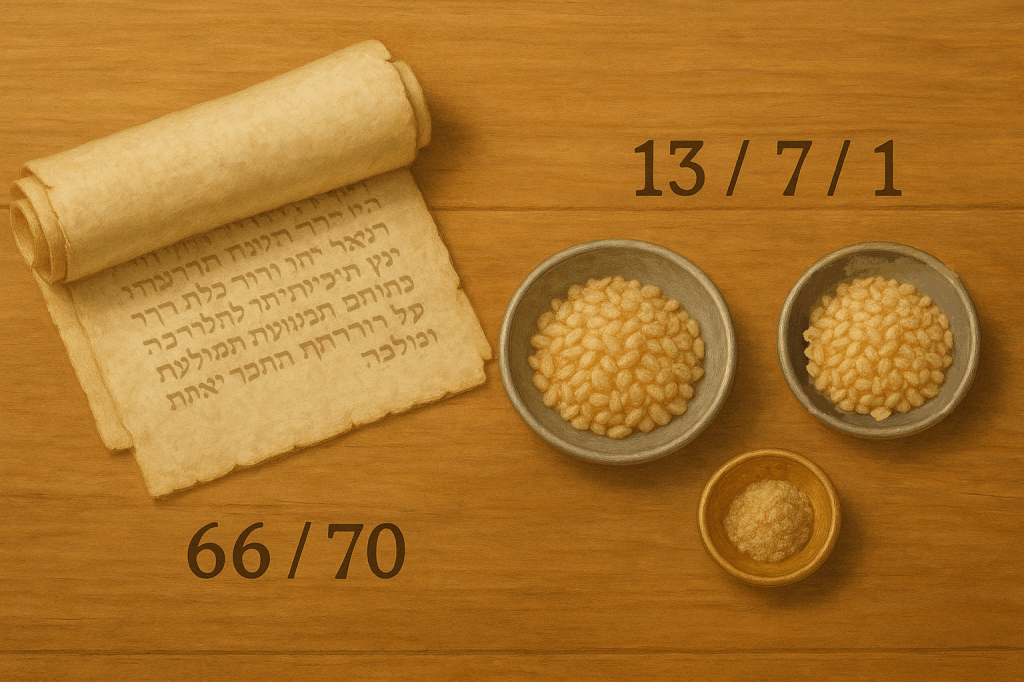
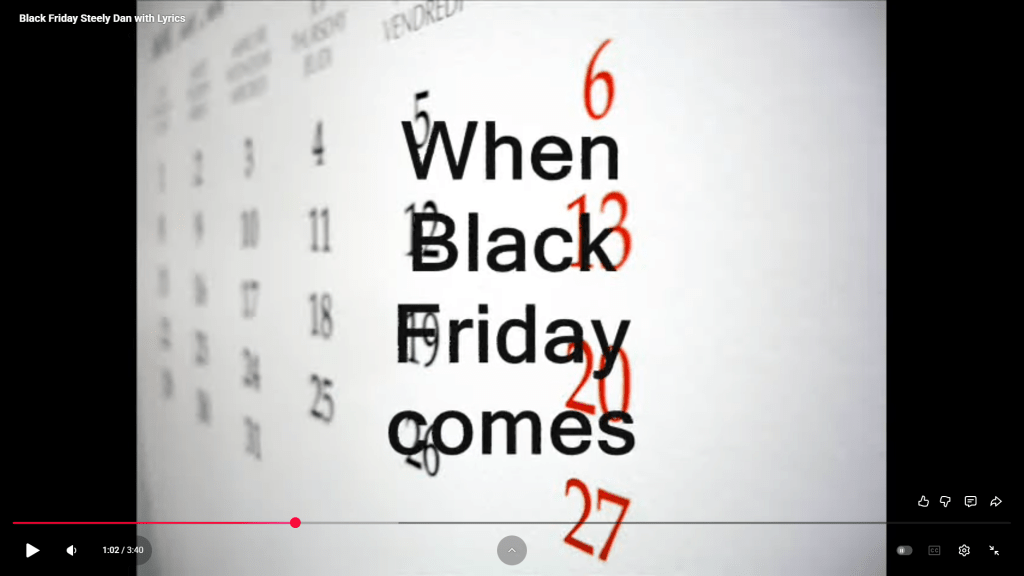
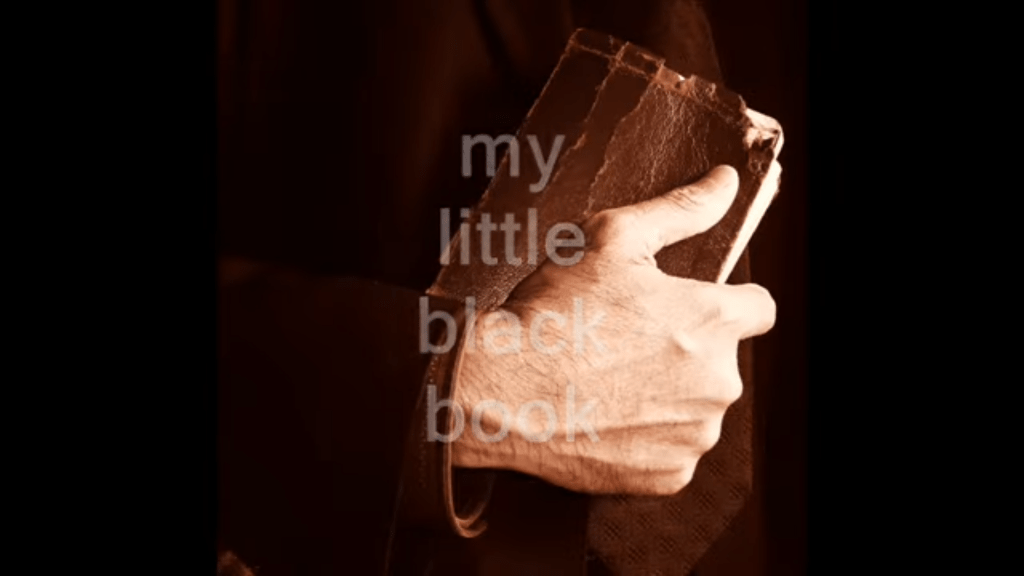




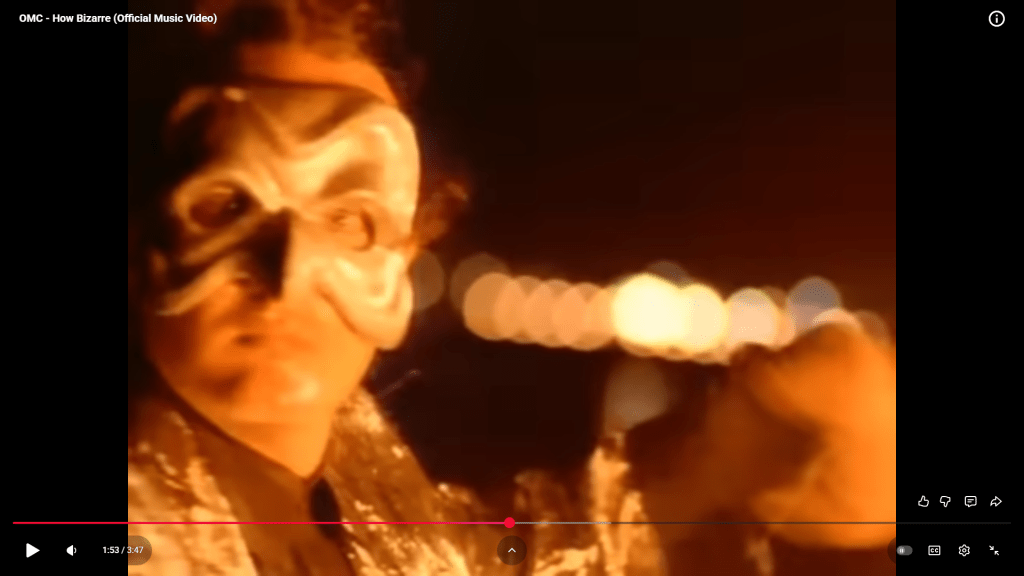
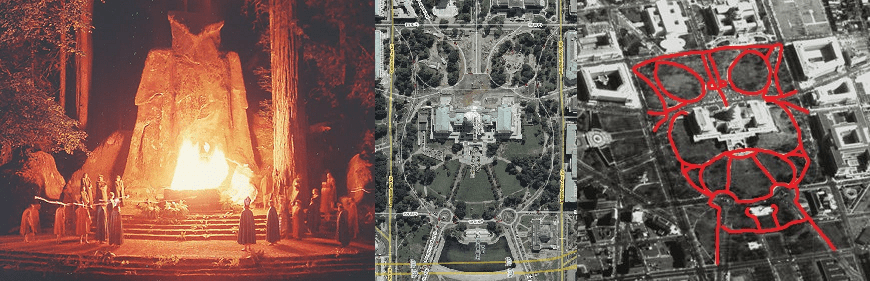

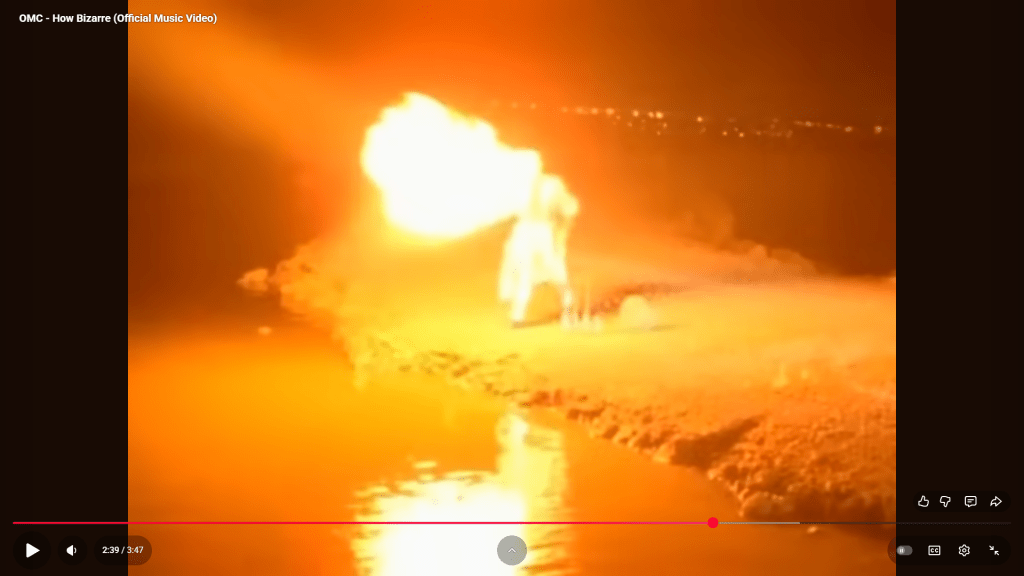

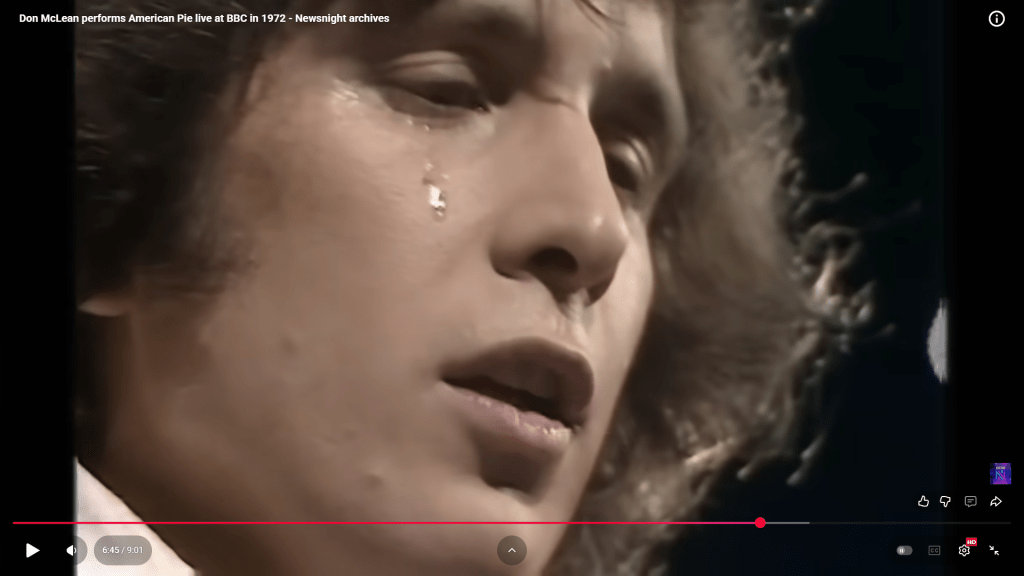

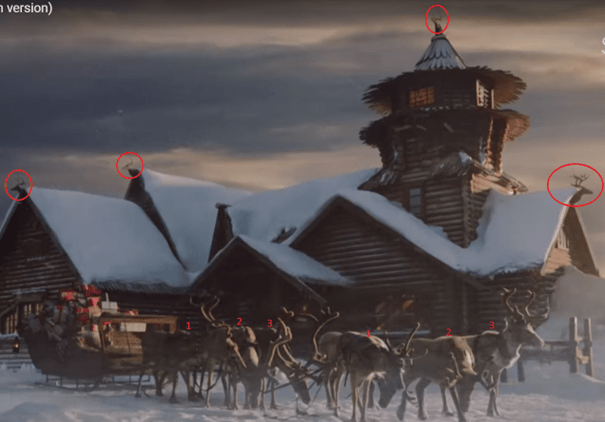

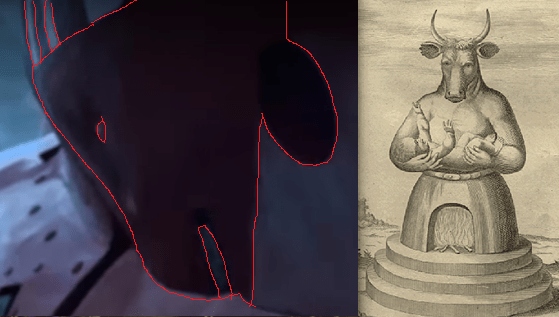

















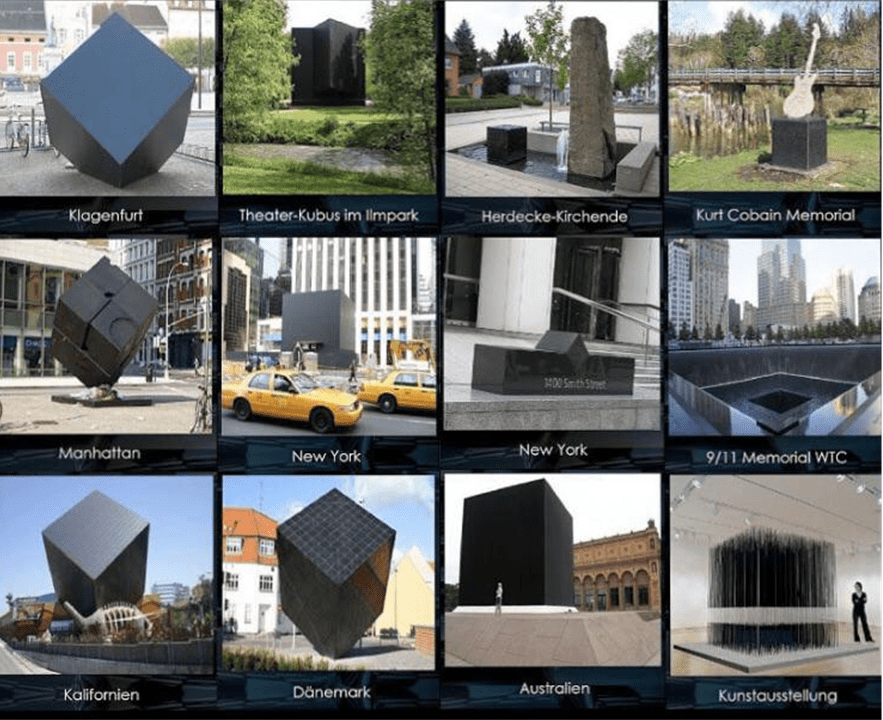
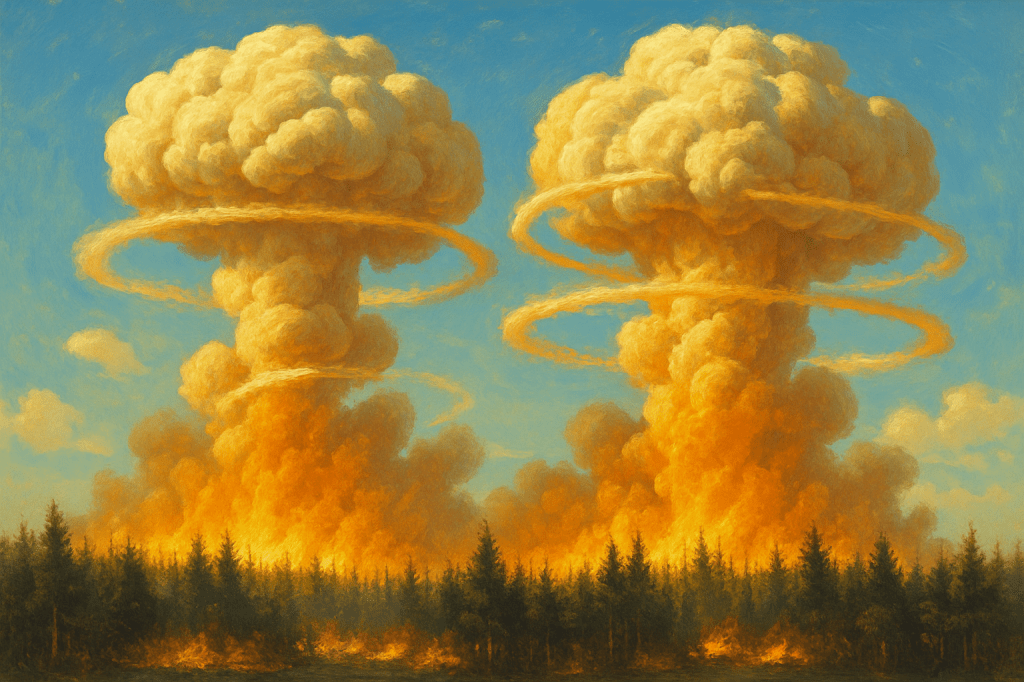
 The Heart of a Lion