God’s Signature in Scripture – Part 1

Tracing God’s Fingerprint in Genesis 46 and Numbers 7

In The Marriage Supper of the Lamb – Part 2 we saw that Scripture by itself, as “letter,” is dead; it is the Holy Spirit who makes the Word alive—for, “the letter kills, but the Spirit gives life” (2 Corinthians 3:6). Any study of the Bible that focuses only on the text as an academic object usually misses the depth of meaning God intended—especially in the Old Testament.

So can I “prove” my understandings are correct? Not in a mathematical way. The only real confirmation is if the same Holy Spirit bears witness in your heart. There is also a second safeguard: no true understanding of Scripture will contradict any other part of Scripture. If an interpretation requires us to ignore even a single verse, it is not from God. The understandings I present here are, to the best of my knowledge, in harmony with all of Scripture—and I welcome honest testing and challenge on that basis.

Every Word as Seed

Quoting Moses, Jesus said, “Man shall not live by bread alone, but by every word that comes from the mouth of God.” To me, that means every word in Scripture matters.

Why are we told Peter caught exactly 153 fish in John 21:11? Why, in the middle of one of the longest and hardest-to-read genealogies in the Bible, does Nehemiah 9:11 speak of “a stone” being cast “into mighty waters,” while Exodus 14:21 says a strong east wind parted the sea?

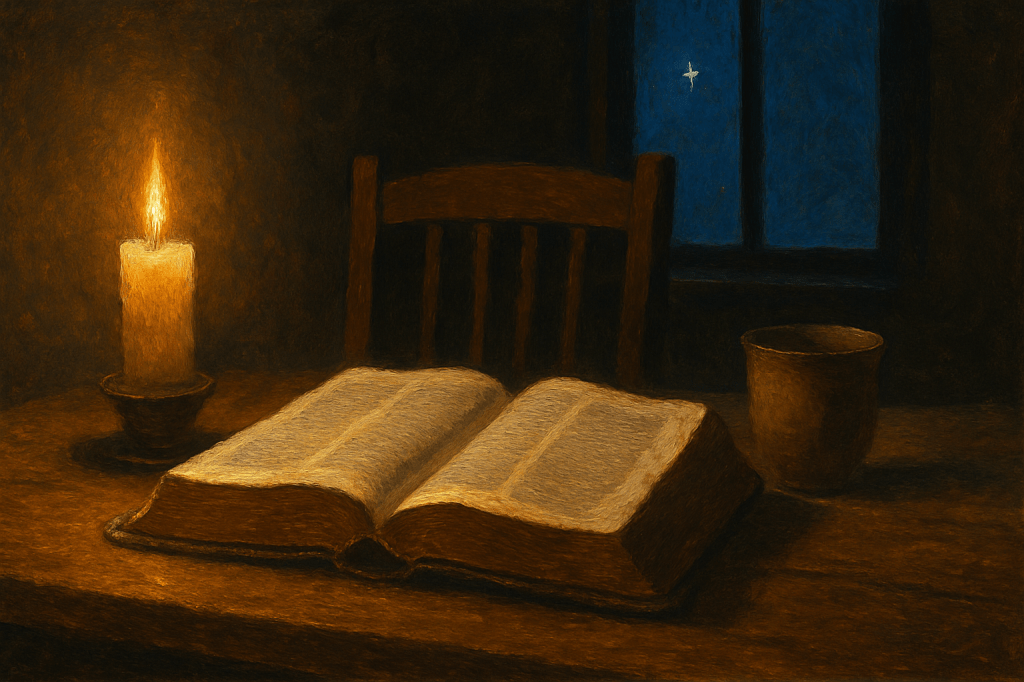
These kinds of details began to stand out to me. A new texture—and, most of all, life—began to emerge, as if a new dimension opened above the black letters on a white page. Meaning began to “float” above the text in the illuminating golden light of the Lampstand.

What I call God’s “signature” in Scripture—patterns that authenticate the Bible as His Word in a way no human author could have orchestrated—is exactly this: illuminated meaning that seems to rise from the pages and brings a deep confidence and peace that it truly is God’s Word.

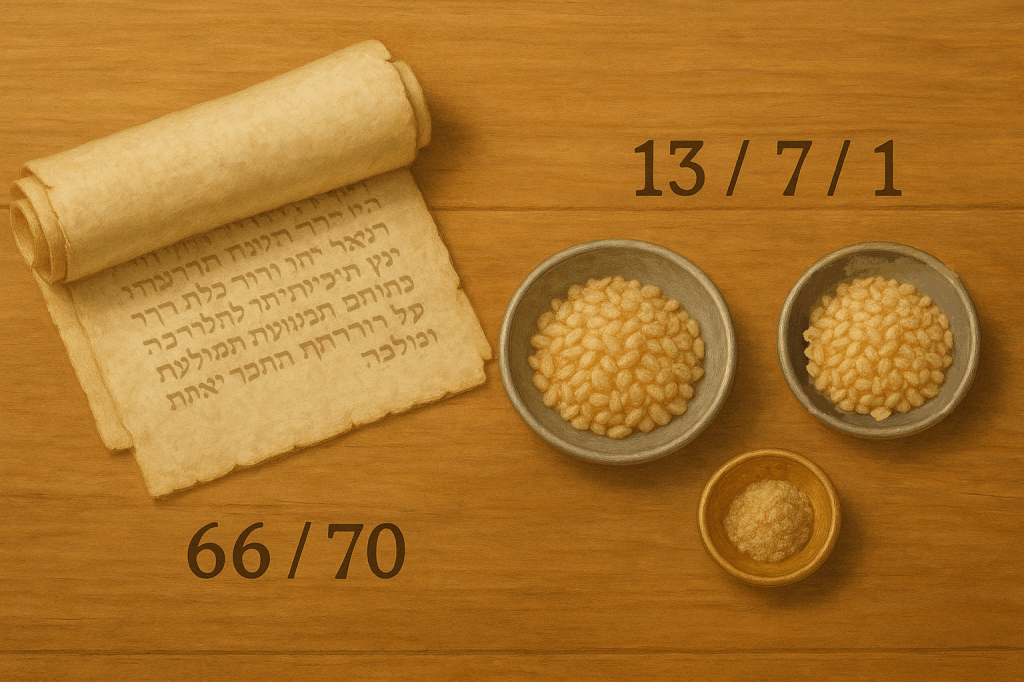
The Seed of the House of Israel—66/70

Genesis 46 records Jacob going down to Egypt with his family. The chapter carefully lists the descendants of Jacob who went to Egypt, and then gives us two counts:

  • 66 direct descendants who went down with Jacob
  • 70 total when Jacob himself and Joseph’s two sons are included

Scholars debate how to reconcile these numbers. Most readers overlook them. To me, the 66/70 pattern looked deliberate, but I did not yet know what it meant. I simply kept it prayerfully tucked away in my heart.

Some time later, as I was planning another full read-through of Scripture, that unanswered question came back.

I am currently reading through the Bible for the ninth time. I don’t read from Genesis straight through to Revelation. Instead, I mix the order to see more cross-connections. In one of these cycles, I decided to split the book of Psalms into its five internal “books,” because Psalms is so long and is already clearly partitioned.

When I did that, I realized something simple but striking:

  • If you count Psalms as one book, the Bible has 66 books.
  • If you count Psalms as five books, the Bible has 70 “books”.

There was that 66/70 pattern.

When I saw that, Genesis 46 came back into my mind. I had been praying over the double count there, and now I saw a link:

  • In Genesis 46, the seed of the house of Israel is counted as 66/70.
  • In the Bible, the books that carry God’s Word also form a 66/70 pattern.

My conclusion is not that “the Bible is 66/70” as a bare number. Rather: 66/70 is the number of the seed of the house of Israel, and Scripture is that seed.

Here it is important to remember who Israel is.

  • “Israel” is a name God Himself gives to Jacob after he wrestles with Him: “Your name shall no longer be called Jacob, but Israel, for you have striven with God and with men, and have prevailed.” (Genesis 32:28)
  • In the New Testament Paul explains that “Israel” is defined by faith, not mere genetics: “For not all who are descended from Israel belong to Israel… it is not the children of the flesh who are the children of God, but the children of the promise.” (Romans 9:6–8; see also Galatians 3:7, 29)
  • Daniel 12 adds an Old Testament witness to this same idea: “At that time your people shall be delivered, everyone whose name shall be found written in the book.” (Daniel 12:1) Here “your people” are identified not merely by bloodline, but as those whose names are written “in the book” (elsewhere called “the book of life” in Revelation 20:12; 21:27).
  • Revelation 7 gives a New Testament picture of “Israel” at the end of the age: an angel seals “the servants of our God … sealed from every tribe of the sons of Israel” (Revelation 7:3–4). Verses 5–8 then list the offspring (sons) of the tribes, notably omitting Dan.

The “house of Israel” is therefore not just an ethnic label; it is the house of God’s people—those who belong to Him and walk by faith.

Scripture itself uses “seed” both in the physical (descendants) and spiritual sense (the Word):

  • In the parable of the sower, Jesus says plainly: “The seed is the word of God.”
  • Paul speaks of Christ as the Seed and of us as Abraham’s offspring by faith (Galatians 3).

So when I see Genesis 46 highlighting the seed of Israel as 66/70, and the canon of Scripture mirroring 66/70 depending on how we count Psalms, I see a quiet signature of God that confirms the Bible is the “seed” of the house of Israel—God’s house.

The Structure of the Word of God—13/7/1

This brings us to Numbers 7, another place where, at first glance, the text is repetitive and easy to overlook—and yet another place where I believe God has left His signature authenticating the Bible.

Numbers 7 describes the dedication of the tabernacle. The twelve tribal chiefs bring their offerings. The offerings are identical, and the chapter repeats the full list verbatim, twelve times, once for each tribe. Many readers skim this section. Many commentators summarize it instead of reading it through.

As I prayed over this chapter, I sensed the Lord impress something on my heart:

“Do not skim this. Read every offering, all twelve times. It is this way for a reason. If you are faithful to read it this way, I will give you understanding.”

So I read each repetition of the offerings of the twelve tribes as if I were reading it for the first time.

The next day I started a long journey, on a train from Sumy, Ukraine to Moscow, with a nine-hour stop in Kharkov. As I lay in my cabin, I played back Numbers 7 in my mind, prayerfully considering the details I had read the day before. There were two offerings of grain and oil on silver platters of 130 and 70 shekels, and one offering of incense on a gold platter of 10 shekels.

What did the 13/7/1 mean? Why was there grain and oil on two of them but incense on the third? What did the silver and gold mean?

The more I contemplated it, the more three simple observations stood out:

  • There are three dishes: the first two are made of silver, and the last is made of gold.
  • The first two hold grain mixed with oil, and the last one holds incense alone.
  • Their weights form a 13 / 7 / 1 pattern (130, 70, 10).

Grain and oil match what we have already seen: the Word (grain) made alive by the Spirit (oil). Incense, in turn, is a picture of prayer received in heaven before God (as we see in Revelation 5:8, where we read of “golden bowls full of incense, which are the prayers of the saints” and in Revelation 8:3-5, where incense is offered with “the prayers of all the saints” and then thrown to the earth).

In The Marriage Supper of the Lamb – Part 2, we described grain—which grows above the earth—as symbolic of manna from heaven, and oil as a picture of the Holy Spirit who gives that Word life. So we can see the grain-and-oil dishes as representing the Word of God made alive by the Holy Spirit. Incense clearly pictures prayer.

Even the metals speak. Silver is pale like the moon; gold shines like the sun. The moon’s light is only a reflection of the sun’s light. Silver, then, can picture what is on earth, reflecting heaven; gold points directly to the source—heaven itself.

Seen this way:

  • The two silver dishes with grain and oil point to God’s Word and Spirit working in the realm of man.
  • The one golden dish with incense points to the heavenly side: worship and prayer before God’s throne.

This 13/7/1 pattern is not random. It appears elsewhere in Scripture in ways that cluster around sacrifice, fullness, and completion. One striking example is the Feast of Booths in Numbers 29, where:

  • 13 bulls are offered on the first day,
  • the number of bulls decreases day by day down to 7 over 7 days, and
  • on the eighth day, there is a single bull for a solemn assembly.

Again we see a 13 / 7 / 1 shape around offerings and consecration.

In Numbers 7, the 130–70–10 shekel dishes form a 13/7/1 pattern and carry exactly the elements we have been tracing: grain and oil (Word and Spirit) on silver, and incense (prayer and worship) on gold. For me, this became another part of God’s “signature”: hidden inside a chapter most people skim, He quietly sketches the basic structure of His Word.

In the Old Testament, Israel is often functioning as thirteen tribes: Joseph is divided into Ephraim and Manasseh, and Levi is set apart in the center around the tabernacle while the other tribes encamp around them. In that light, the “13” can be seen as pointing to God’s Word and Spirit given to the genealogical tribes of Israel—the Old Testament.

In the New Testament, Jesus walks “among the seven golden lampstands,” and we are shown seven churches (Revelation 1–3). The “7” in the second silver dish fits this: the Word of God, made alive by the Spirit, given to the seven churches—the New Testament.

The “1” then points to a single, distinct book: Revelation itself—a book not simply written from earth looking up, but dictated to John in heaven, where the bowls of incense gather the prayers of the saints.

  • 13 – the Old Testament: Word + Spirit in the era of the tribes.
  • 7 – the New Testament churches: Word + Spirit in the era of the lampstands.
  • 1Revelation: a heavenly book of incense, vision, and the consummation.

Even the gaps in the numbers—13 down to 7, and 7 down to 1—are 6 and 6, again hinting at the 66 pattern tied to the whole Bible’s sixty-six books.

There is another 13/7/1 pattern echoing this structure inside the New Testament itself:

  • 13 letters traditionally associated with Paul, laying foundations of doctrine and practice for the churches.
  • 7 other letters (James; 1–2 Peter; 1–3 John; Jude), strengthening, warning, and encouraging believers.
  • 1 final prophetic book, Revelation, filled with incense, worship, and end-time vision around the throne of God.

I don’t claim these patterns as a mathematical proof, but I believe they are God’s quiet signature—ordering His Word with a consistency no human author could have engineered, and leaving hints of that order in places like Numbers 7 that most readers pass over quickly.

Taken together, Genesis 46’s 66/70 pattern for the seed of the house of Israel and Numbers 7’s 13/7/1 pattern for the dishes and offerings look to me like two sides of the same signature: the number and structure of the seed of the house of Israel, the Word of God. These are not proofs in a laboratory sense, but if we both have the Holy Spirit, He can confirm what is true and set aside what is not.

How I Came to Read Scripture This Way

For those who are interested in how the Lord led me into this way of reading, I want to share a bit of my own story.

From Ukraine to Daniel 7

I read the Bible twice in my twenties, then on and off for the next two or three decades. In 2011 I became a digital nomad and have lived in many places since. I spent a lot of time in Ukraine—Sumy, Mykolaiv, Crimea, Luhansk, and also the western parts like Lviv and Kolomyia in the southwest. I understood the regional differences and the tensions keeping the nation divided.

When the Maidan protests began in 2013–2014, I followed the news closely. I watched what Western media and U.S. officials were saying, and compared it to what I experienced while living there. It became clear to me that the West was more interested in narratives that justified force than in truth that could lead to peace. I understood then where the U.S.’s meddling would lead.

I remembered Daniel 7, where the bear is told to “arise and devour much flesh.” I understood what I was watching in real time was part of what Daniel saw: the shifting of empires and the approach of a third world war. Russia is the bear, and Ukraine, one of the three ribs in the bear’s mouth.

When the Veneer Came Off the Church

In my twenties I attended a “charismatic Baptist” church. They taught what is often called the “five-fold ministry” from Ephesians 4:11—apostles, prophets, evangelists, shepherds (pastors), and teachers—as if these were institutional offices to be filled and managed.

The main Bible teacher (who bore the title “apostle”) had real insight—and I still believe much of his teaching came from a sincere place. But looking back, the system around him was driven by membership and money, not by the Holy Spirit. Emotion through music and institutional loyalty were often substituted for real spiritual connection, obedience, and truth.

When events in Ukraine escalated, I reconnected with that church, hoping to talk with one of their “prophets.” A true prophet will not simply echo the viewpoint of his own nation; he cares about truth before nationalism. As I listened, I realized their “prophets” were fully Americanized in their worldview. They did not see what was really happening. That was the moment when the veneer came off for me. I saw the institution for what it was.

More importantly, that was when I decided: I need to go back to Scripture myself.

Laying Aside Commentaries

At first, I opened a few well-known Bible commentaries on my screen beside the text. I would read a chapter of Scripture and then read what the commentators said about it.

Then, one day, quietly but clearly, I sensed the Holy Spirit speaking to my heart:
“Stop reading the commentaries. I will teach you.” After that, I began to see a bigger picture. My heavenly Father, through the Holy Spirit and the Word, wanted to have a conversation with me, but a third person was sitting at the table, constantly interrupting, rephrasing and injecting his comments into our conversation. Should a child not be able to understand his own father? Why should a stranger join in and try to talk for the father?

Jesus had already promised, “the Helper, the Holy Spirit, whom the Father will send in my name, he will teach you all things and bring to your remembrance all that I have said to you” (John 14:26). That does not mean we never learn from others, but it does mean that the same Spirit who inspired Scripture must be the One who makes it alive and clear in each of our hearts.

(In everything I write, I have no desire to replace that Teacher; my hope is that your love for the Word of God deepens, and that you find yourself more drawn to meet with God through it.)

From that point on I stopped going to commentaries for understanding. I now purposely use a physical ESV Bible with no commentary as my primary way of reading Scripture. If I don’t understand something, I pray for understanding. Sometimes it’s immediate; sometimes it takes days or longer; but whenever I have sought earnestly, I have received understanding.

Many “scholarly” approaches to the Bible lean heavily on schemes such as historical-critical analysis, source criticism and redaction criticism, and purely literary analysis, all wrapped in highly technical “biblical hermeneutics” that imply only trained experts can really understand the text.

The Bible, however, was given for the whole people of God—for anyone with an open, believing heart—not just for those with degrees and titles.

Those tools can sometimes provide useful background, but they are not the same as listening to the Author with an open heart. If we treat the Bible only as an object of academic study, we may become clever—and also blind.

And the final message is that God’s people need to return to the Word of God—undivided across denominations and continents—peeling back doctrines introduced over the ages by human interests, doctrines that separate us from real relationship and living knowledge of God the Father and Jesus the Son.

In Part 2: Sixes, Sevens, and the Two Witnesses, we will look at another layer in Numbers 7—the six-and-seven pattern in the animal offerings—and how it connects to God’s end-time work in His Church.

And in Part 3: Seven Lamps, One Bride, One King, we will show the completion of the number pattern, as it finishes in Numbers 8, and how it points to the completion of this age.
The Marriage Supper of the Lamb – Part 3

Bearing Offspring: The Righteous Deeds of the Bride

In Part 1, we looked at the marriage supper as a present reality: Jesus feeding us with His flesh, the pure Word of God, and calling us to gather that heavenly manna every day.

In Part 2, we focused on the cup — drinking His blood — receiving the Holy Spirit so that the Word becomes alive inside us. Without the Spirit, even the most accurate Bible reading remains dry and lifeless. With the Holy Spirit, the same words become living bread and living wine.

In this Part 3, we look at what that living Word and living Spirit are meant to produce: offspring for the Bridegroom. The Bride is not only invited to eat and drink; she is called to bear fruit, to bring forth spiritual children before the consummation of the marriage in the next age.

The Betrothed Who Bears a Son

Scripture gives us a clear picture of a virgin, betrothed but not yet married, who nonetheless bears the promised Son:

“Behold, the virgin shall conceive and bear a son,
  and shall call his name Immanuel.”
– Isaiah 7:14; Matthew 1:23

Mary is still a virgin, still only betrothed to Joseph when she conceives by the Holy Spirit. She is not yet in the fully consummated marriage, yet she already bears the Offspring of promise.

This is a pattern for the Bride of Christ.

  • The Church is the betrothed Virgin Bride.
  • The marriage (union in the fullest sense) is still future.
  • Yet in this betrothal period, the Bride is already called to bear the Bridegroom offspring.

We see the same pattern already hinted at in the test of the unfaithful woman (Numbers 5:11–31), which we looked at in Part 2. If she is found faithful, she does not merely survive — she bears her husband offspring. Faithfulness in the testing leads to fruitfulness.

In the same way, the faithful Bride of Christ is not only preserved; she is made fruitful. She bears Him children — not physical children, but spiritual offspring: lives brought to Him through His living Word and Spirit working in and through her.

The Jealous Husband and the Bridegroom of Blood

The jealousy of God for His Bride appears throughout Scripture. On the road back to Egypt, after Moses has delayed circumcising his son as God had commanded, the Lord meets Moses in judgment. It is a strange and sobering scene:

24 At a lodging place on the way the Lord met him and sought to put him to death. 25 Then Zipporah took a flint and cut off her son’s foreskin and touched Moses’ feet with it and said, “Surely you are a bridegroom of blood to me!” 26 So he let him alone. It was then that she said, “A bridegroom of blood,” because of the circumcision.
– Exodus 4:24–26

The Lord is confronting Moses, because the covenant sign of blood has been neglected. Circumcision belongs to God; Zipporah’s act of obedience and the shedding of blood turn away death.

Who commanded circumcision — Moses or God? It is God who requires it. Circumcision is a sign in the flesh that belongs to Him. Prophetically, it points to the circumcision of the heart, a heart opened to God, separated for Him, willing to be changed.

Jesus is the true Bridegroom of blood:

  • He purchased the Bride with His own blood.
  • He calls us to open our hearts, to let Him cut away what does not belong to Him.
  • He insists on ownership: we are not our own, we are bought with a price.

This is not about us making ourselves perfect. It is about not hiding from His claim on us, not resisting His jealous love. We bring Him a washed, honest heart; He does the deep changing and cleansing over time.

Pain in Childbearing, Sweat in the Field

After the fall, God speaks to the woman and to the man:

To the woman he said,
“I will surely multiply your pain in childbearing;
  in pain you shall bring forth children.
  Your desire shall be contrary to your husband,
  but he shall rule over you.”
– Genesis 3:16

There is a natural meaning here, but there is also a prophetic picture:

  • The woman is a picture of the Bride.
  • The children are spiritual offspring.
  • The husband is Christ.

We have a nature that is contrary to our Husband’s will, but we are called to come into obedience to Him. The Bride will bring forth children, but not without pain, struggle, and conflict with her own nature.

Then to Adam He said,
“Because you have listened to the voice of your wife,
  and have eaten from the tree about which I commanded you, saying,
  ‘You shall not eat from it’;
Cursed is the ground because of you;
  In toil you will eat of it
  All the days of your life.
18 “Both thorns and thistles it shall grow for you;
  And you will eat the plants of the field;
19 By the sweat of your face
  You will eat bread…”
– Genesis 3:17–19a

The ground, “cursed” and full of thorns and thistles, is a picture of the soil of human hearts. In toil we bring the Word of God to this ground so that it may bear fruit. The thorns are the cares, worries, and deceitfulness that choke the Word. The thistles are false teachings and worthless ideas that compete with it.

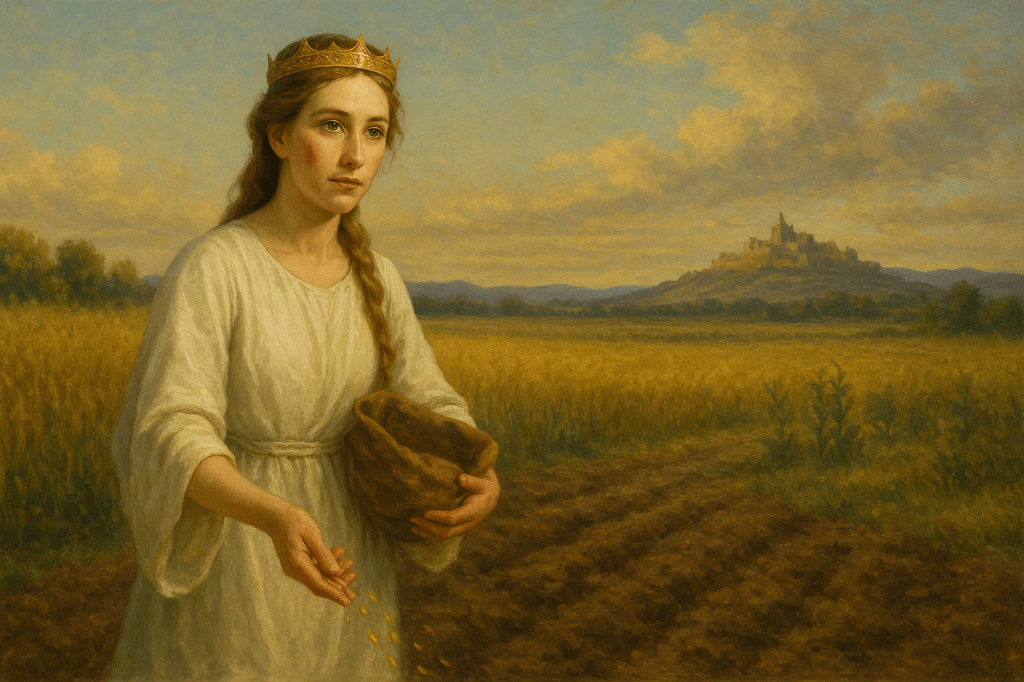
Jesus makes this picture explicit in the parable of the sower (Luke 8:4–11). The seed is the Word of God. Different kinds of soil receive it differently. The harvest depends not just on sowing, but on the condition of the heart.

So:

  • The Bride’s calling is to labor in this “field,” sowing the Word.
  • There will be sweat, thorns, and resistance.
  • This age is the season of toil and sowing; the next age is the rest and full harvest.

Even the garments of the priests picture this.

“They shall have linen turbans on their heads, and linen undergarments around their waists. They shall not bind themselves with anything that causes sweat.”
– Ezekiel 44:18

In the inner courts they were not to wear anything that caused sweat. Prophetic picture:

  • In this age (outer court / outer sanctuary), we labor and “sweat” in ministry and obedience.
  • In the next age (inner sanctuary), it will be our very nature to serve without “sweat” — without inner conflict.

For now, we sweat and labor to bring the harvest of souls, the offspring of Christ.

Washed with the Word, Clothed in Fine Linen

Paul pulls the picture together in Ephesians 5, where he speaks of husbands and wives and then says plainly that he is really speaking of Christ and the Church:

Wives, be subject to your own husbands, as to the Lord. 23 For the husband is the head of the wife, as Christ also is the head of the church, He Himself being the Savior of the body. 24 But as the church is subject to Christ, so also the wives ought to be to their husbands in everything.

25 Husbands, love your wives, just as Christ also loved the church and gave Himself up for her, 26 so that He might sanctify her, having cleansed her by the washing of water with the word, 27 that He might present to Himself the church in all her glory, having no spot or wrinkle or any such thing; but that she would be holy and blameless. …
31 For this reason a man shall leave his father and mother and shall be joined to his wife, and the two shall become one flesh. 32 This mystery is great; but I am speaking with reference to Christ and the church.
– Ephesians 5:22–27, 31–32

Jesus is actively preparing the Bride:

  • He washes her with the water of the Word.
  • He is preparing to present her to Himself, without spot or wrinkle, holy and blameless.
  • The end goal is union: “the two shall become one.”

That consummation is not mainly about scenery or a change of location; it is about God giving us a truly new, perfect heart — the “white stone” with a new name (Revelation 2:17), His own nature written within. Only with hearts like His can paradise truly be paradise. With all the knowledge and glory of the age to come, if our hearts were still crooked we would only build new towers of Babel; with perfect hearts, love for God and for one another finally becomes our nature instead of a struggle.

Revelation gives us the same picture from heaven’s perspective:

“Let us rejoice and exult
  and give him the glory,
for the marriage of the Lamb has come,
  and his Bride has made herself ready;
8 it was granted her to clothe herself
  with fine linen, bright and pure”—
for the fine linen is the righteous deeds of the saints.
– Revelation 19:7–8

Notice the tension:

  • “It was granted her” – the linen is a gift of grace.
  • “The Bride has made herself ready” – she has a role.
  • The linen is described as “the righteous deeds of the saints.”

These deeds are not the Bride trying to earn love. They are the fruit of a heart that has been:

  • Washed by the Word.
  • Filled and led by the Spirit.
  • Brought into obedience to Christ’s purposes.

Those deeds are part of her wedding garment.

Revelation also says:

“Blessed are those who wash their robes, so that they may have the right to the tree of life…”
– Revelation 22:14

The washing is now. The tree of life and the full access belong to the next age. The marriage supper prepares the Bride’s garments; the actual marriage is when she stands before Him fully clothed in what His grace has produced in her.

The Bride’s Commission: Bearing Offspring

Jesus sums up the Bride’s commission in what we often call the Great Commission:

“Go therefore and make disciples of all nations, baptizing them in the name of the Father and of the Son and of the Holy Spirit, teaching them to observe all that I have commanded you…”
– Matthew 28:19–20

This is not a command to run religious programs; it is a call to live as His sons and daughters, truly fruitful:

  • “Make disciples” – bring forth spiritual children.
  • “Teaching them to observe” – passing on the Word in a way that leads to obedience.
  • “I am with you always” – the Bridegroom’s presence with His Bride as she labors.

When we:

  • Eat the Word (Part 1),
  • Drink the Spirit (Part 2), and
  • Walk out what He shows us (Part 3),

Like a good tree that naturally bears good fruit, a heart filled with His Word and Spirit naturally overflows. Others are touched, awakened, drawn, and discipled. Christ’s own life in us begins to show itself. His life in us does not end in us; it multiplies.

The faithful Bride does not only “pass the test”; she becomes fruitful. She brings the Bridegroom offspring by sowing the living Word in the power of the Holy Spirit.

There is a cost to this fruitfulness. The church was built on the blood of martyrs, and Scripture says, “Precious in the sight of the Lord is the death of his saints” (Psalm 116:15). Jesus calls a Bride who does not “love [her] life even unto death” (Revelation 12:11). The key is not heroic willpower, but love that begins to outweigh fear: love for Him, and love for others who will otherwise face eternal loss. A faithful wife cares more about what her husband thinks than the opinion of the crowd; in the same way, the faithful Bride of Christ cares more about honoring Him and rescuing souls than about her own comfort or reputation. From that kind of heart, boldness can rise when circumstances demand it.

Not Earning, but Responding

It is important to keep the order clear:

  1. He loves and chooses first.
  2. He invites us to the marriage supper now: to eat His Word and drink His Spirit.
  3. As we keep coming with a washed, honest heart, He changes us from the inside out.
  4. Out of that changed heart come righteous deeds and spiritual offspring.

We are not trying to earn the marriage. We are responding to His love and His calling:

  • We keep bringing our hearts to be washed.
  • We keep coming to the table.
  • We keep saying “yes” to the small obediences He shows us.

The fruit — the deeds, the offspring — is the result of His life in us.

Living as the Betrothed Bride

So where does this leave us now, in very practical terms?

  • The marriage supper is here and now, on earth, in this age.
  • The marriage — the full union, the unveiling in the Holy of Holies — is still to come.
  • In this betrothal period, the Bride is called not just to eat and drink, but to bear fruit.

To live as the Betrothed Bride means:

  • Eating His flesh – feeding daily on the Word with a washed, honest heart.
  • Drinking His blood – asking and allowing the Holy Spirit to make that Word alive and to change us.
  • Bearing offspring – letting that living Word and Spirit flow through us to others so that Jesus gains children, not just attendees.

The Betrothed—the virgin who bears offspring before the consummation—has made herself ready with righteous deeds here on earth. Those deeds flow from a Word-filled, Spirit-filled heart that brings forth spiritual children for the Bridegroom.

The veil into the Holy of Holies, the full unveiling of the marriage itself, belongs to the next age. For now, we remain in the outer sanctuary of this present age, being washed with the water of the Word and filled with the Spirit (Ephesians 5:26; 5:18). If we will stay at the table and in the field—Word, Spirit, and obedient deeds together—He will make us ready:

  • Ready to endure the coming night,
  • Ready to bear Him offspring in this age,
  • And ready to stand—washed, faithful, and longing for that perfect heart—when the consummation itself comes.

On that day He will give each overcomer “a white stone, with a new name written on the stone that no one knows except the one who receives it” (Revelation 2:17)—a picture of a new, perfect nature that does not erase the unique identity He gave us, but fulfills it.

Then in the next age, the marriage itself is revealed and God gives His Bride that new, perfect heart that makes true paradise possible for all eternity.

The Marriage Supper of the Lamb – Part 2

Drinking the Cup: Receiving the Holy Spirit

In Part 1, we looked at the marriage supper as a present reality: Jesus Christ feeding us with His own flesh, the pure Word of God, and calling us to gather that heavenly manna every day. In John 6 He says, “Truly, truly, I say to you, unless you eat the flesh of the Son of Man and drink his blood, you have no life in you.” In Part 1 we focused mainly on His flesh; in this Part we will focus mainly on His blood.

If eating His flesh is taking in the Word, then drinking His blood is receiving the Holy Spirit so that the Word becomes alive inside us. Without the Spirit, even the most accurate Bible reading remains dry and lifeless. With the Holy Spirit, the same words become living bread and living wine.

This is not a side topic. Learning to receive and walk with the Holy Spirit is central to loving God with all our heart, soul, mind and strength. At the marriage supper of the Lamb, we do not read as scholars trying to craft a sermon, but as a Bride sitting with her Bridegroom—opening the Bible and our heart together, prayerfully listening, responding, and seeking to understand His heart behind the words. Listening to our Father—really listening, in this two-way conversation of Word and prayer—is an act of love and respect.

In this article we will look at how Scripture itself ties together three things:

  • The Word of God (the flesh of Jesus)
  • The Holy Spirit (the blood / wine / oil)
  • Our heart (the vessel, the tent, the wineskin)

“The Letter Kills, but the Spirit Gives Life”

The Bible is very clear that there is a way to handle Scripture that brings death, and a way that brings life.

For the letter kills, but the Spirit gives life.
– 2 Corinthians 3:6

For the life of every creature is its blood.
– Leviticus 17:14

The Word of God, taken only as “letter,” can kill—not because there is anything wrong with the Word, but because our heart and our approach are wrong. The same Word, taken with a washed heart and a right spirit, becomes life when joined with the Spirit of God. Scripture links “life” with the blood; the life is in the blood. Spirit and life go together.

Create in me a clean heart, O God,
  and renew a right spirit within me.
– Psalm 51:10

David is not claiming that he already has a clean heart. He is crying out for something only God can create. In this age, our part is to come before God with a washed heart—being honest about our struggles and sins, asking (or at least allowing) Him to change us, and then letting Him fill it with His Word and His Spirit—while we wait for the day He gives us a truly new, perfectly clean heart at the consummation—the marriage that comes after the supper.

So when Jesus speaks about drinking His blood, He is not inviting us into some mystical ritual for its own sake. He is calling us to receive the Holy Spirit, who makes the written Word alive in us. The Word of God does not come alive in us if we try to understand it based only on our own intellect. We must have the Holy Spirit. This is what Jesus meant by drinking His blood.


The Wedding at Cana – Empty Jars to Living Wine

John tells us that Jesus began His public signs at a wedding:

On the third day there was a wedding at Cana in Galilee, and the mother of Jesus was there. 2 Jesus also was invited to the wedding with his disciples. 3 When the wine ran out, the mother of Jesus said to him, “They have no wine.” 4 And Jesus said to her, “Woman, what does this have to do with me? My hour has not yet come.” 5 His mother said to the servants, “Do whatever he tells you.”
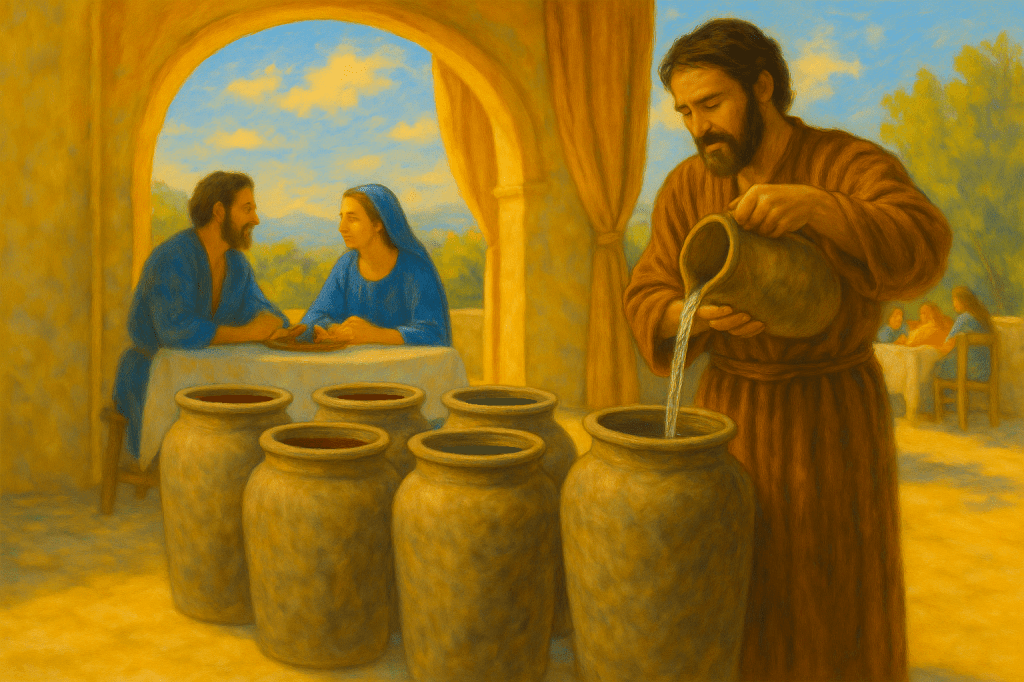
6 Now there were six stone water jars there for the Jewish rites of purification, each holding twenty or thirty gallons. 7 Jesus said to the servants, “Fill the jars with water.” And they filled them up to the brim. 8 And he said to them, “Now draw some out and take it to the master of the feast.” So they took it. 9 When the master of the feast tasted the water now become wine, and did not know where it came from (though the servants who had drawn the water knew), the master of the feast called the bridegroom 10 and said to him, “Everyone serves the good wine first, and when people have drunk freely, then the poor wine. But you have kept the good wine until now.” 11 This, the first of his signs, Jesus did at Cana in Galilee, and manifested his glory. And his disciples believed in him.
– John 2:1–11

There is a simple, prophetic picture here:

  • The six stone jars represent the human heart. Six is the number of man. Hollow, stone vessels, designed to be filled.
  • Jesus tells the servants to fill the vessels with water. This is our part. The servants had to act and the water represents washing. Now the vessels with water—human, washed hearts—are ready for His change.
  • Then Jesus turns the water into wine. That is His work alone. This pictures the heart filled with the Holy Spirit.

Luke 5:36–38 uses similar imagery when Jesus compares our hearts to wineskins that must hold new wine. The pattern is consistent: we bring a soft, yielded, washed heart; He fills and begins to transform us by His Spirit.

The marriage supper of the Lamb is this very work: His Word, made alive by the Holy Spirit inside hearts that we wash and open to Him. In this way, the marriage supper is the true food that prepares us for the actual marriage consummation, when we will receive a truly new and perfect heart — His perfect nature — which is the necessary foundation for living forever in the paradise of God.


The Tent of Meeting – Stepping into God’s Heart

In Exodus, God gives detailed instructions for the tent of meeting. These details are not just ancient ritual; they reveal how God invites us into fellowship with Himself.

The tent has two chambers: an outer sanctuary, which is holy, and an inner sanctuary, which is the Holy of Holies. Its walls are scarlet, blue, and purple like the walls of a heart, and its covering is of tanned (dyed red) goat skins (Exodus 26), which are soft. Its design represents a heart, the heart of God.

To enter, one must be washed and then sprinkled with the blood of the sacrifice (Exodus 29). Inside the outer sanctuary is:

  • The table of the Presence (manna from heaven, bread of the Presence)
  • The lampstand with seven lamps (light of the Spirit)

Paul helps us see what this means for us:

For a tent was prepared, the first section, in which were the lampstand and the table and the bread of the Presence. It is called the Holy Place. 3 Behind the second curtain was a second section called the Most Holy Place…
8 By this the Holy Spirit indicates that the way into the [Most Holy Place] is not yet opened as long as the first section is still standing 9 (which is symbolic for the present age).
– Hebrews 9

The outer sanctuary, with table and lampstand, is symbolic for the present age. It is where God meets His people now.

  • The bread of the Presence pictures Jesus, the manna from heaven, the Word of God.
  • The lampstand with seven lamps pictures the Holy Spirit (compare Revelation 1:12–16).

Thus, after washing, putting on clean clothes, and being sprinkled by the blood of Jesus—remembering what He did for us and that we are His bondservants—we are also to enter into this Holy Place to meet with God. There He meets with us and reveals His heart through the Word of God, illuminated by the Holy Spirit.

In so doing, the Word of God (the flesh of Jesus) is illuminated and comes alive in us by the golden light of the Lampstand (the Holy Spirit, the “blood” of Jesus). Here, in this very real daily “tent of meeting,” formed as a picture of God’s heart, is where the marriage supper happens in very practical terms.


Grain and Oil – Faithfulness, Oil, and the Ten Virgins

All through the Old Testament, God pairs grain (bread) with oil. In a stalk of wheat or barley, the head of grain forms at the very top, holding its seed high above the earth—a simple picture of bread that “comes down” from above, like the manna from heaven, while the oil poured over it points to the Holy Spirit who makes that Word alive.

Grain offerings are always accompanied by oil (for example, in Leviticus 2; 6, Numbers 7 and Malachi 1–2). Word and Spirit are not meant to be separated.

There is a sobering counter-picture in the test of the unfaithful woman by the jealous Husband (Numbers 5:11–31). In that test, the grain offering has no oil. Both the unfaithful and the faithful woman experience pain in the testing; the unfaithful woman withers, but the faithful woman bears her husband many children. This is a cast and shadow of how Jesus, the jealous Husband, tests His Bride. If we are unfaithful and do not have the Holy Spirit in us, the Word of God brings death. But if we do have the Holy Spirit, that same Word brings new life—spiritual offspring—consistent with the commission of the Bride of Christ, the Church (Matthew 28:18–20), to bring Him children by sowing the Word made alive through understanding given by the Holy Spirit.

The same pattern appears in the parable of the ten virgins (Matthew 25:1–13). All ten have lamps. All ten are waiting. The difference is oil. The virgins who were not ready thought the Bridegroom would come for them early in the night, but He came for them late in the night, and they ran out of oil. They did not have the Holy Spirit. Jesus says of them: “Truly, I say to you, I do not know you.”

Most English translations of this parable indicate those that were ready went with Him to the “marriage supper.” However, the original text in Matthew 25:10 uses only γάμος (“wedding” / “marriage”), not δεῖπνον (“supper”), highlighting the difference between the marriage and the marriage feast.

By contrast, Revelation 19:7–9 speaks of both:
“the marriage of the Lamb has come” (ὁ γάμος τοῦ ἀρνίου) and those who are invited “to the marriage supper of the Lamb” (εἰς τὸ δεῖπνον τοῦ γάμου τοῦ ἀρνίου).
This makes a real distinction between the marriage supper and the marriage itself. The supper is preparation time in this age; the marriage is union in the next age.

Personal note: After I had come to believe that the marriage supper is here and now on earth, I read Matthew 25 (ESV) one night before going to sleep and felt deeply disturbed, because it did not fit what I had thought I understood. I tossed and turned for hours until I finally got up, opened an interlinear, and saw that the text said simply “wedding,” not “wedding supper.” It was a relief because it confirmed the pattern I felt the Holy Spirit had impressed upon me—but it continues to bother me because this single added word in translation can bend our understanding and sow confusion on such an important topic.

Jesus later calls Himself “the bright morning star” (Revelation 22:16). Morning comes after night. Isaiah 21:12 says that “morning comes, but also the night.” The foolish virgins expected an early rescue—before the night really gets started. The wise were prepared and endured through the night with oil in their lamps.

So what does faithfulness look like now? It is not enough to say, “I believe.” Faithfulness means:

  • We keep coming to the marriage supper—the daily Word.
  • We keep coming with a washed heart so God can fill us with the oil—the Holy Spirit—to make that Word alive in us.
  • We allow the Spirit to comfort, correct, change, and lead us into right relation and obedience to His purpose.

The Betrothed—the virgin who bears offspring before the consummation (Isaiah 66:7–9)—has made herself ready with righteous deeds here on earth. As Revelation says, “Blessed are those who wash their robes, so that they may have the right to the tree of life” (22:14), and “for the fine linen is the righteous deeds of the saints” (19:8). Those deeds flow from a Word-filled, Spirit-filled heart that brings forth spiritual children for the Bridegroom.


Faith Like a Mustard Seed – Letting the Spirit Teach

Jesus gives a strange picture in Luke 17:6:

And the Lord said, “If you had faith like a grain of mustard seed, you could say to this mulberry tree, ‘Be uprooted and planted in the sea,’ and it would obey you.”

When you read about the faith of the mustard seed, how do you react? Do you think, “I just don’t understand”, and move on? Do you assume that “faith of a mustard seed” is something nobody really has? Or do you stop, ponder, and ask your Heavenly Father for understanding? Are you really “eating” the Word of God and do you believe that the Holy Spirit can teach you?

This is where the Holy Spirit makes the difference between “letter that kills” and “Spirit that gives life.”

For most of our lives, we can read verses like this for years and quietly tolerate a gap between what Jesus says and what we experience. We may treat His words as exaggerations or riddles we are not meant to understand. But His words are true. The gap is not in Him; it is in us.

The point here is not to become obsessed with throwing trees into seas. The point is: will we bring the hard verses to God and ask Him to teach us? Will we hold His words in our heart and wait on the Spirit until He gives understanding?

That is part of drinking the cup. That is what it means to treat the words of Jesus as living, not as religious phrases we skim over.

I encourage you to seek the Lord yourself on this verse in prayer and in the Scriptures; and if you stay with me, in a later article on the Gog and Magog prophecies in Ezekiel and Revelation I will share my understanding of this “mulberry tree” being uprooted and thrown into the sea that I believe He has given me. Food for thought: What kind of fruit is the fruit of a mulberry tree? What “sea” is Jesus referring to? Why would God want a mulberry tree thrown into the sea? I once bought a bottle of mulberry wine and spent several days praying and asking God questions like these before the meaning became clear to me.


The Heart Response – How to Actually “Drink His Blood”

In practical terms, what does it mean to “drink His blood” in the context of the marriage supper?

It is not a mystical feeling we chase, and it is not a special experience reserved for a few. It is “a daily posture of heart” so He can change it over time. It starts with faith and with love for God, which produces a true desire to be pleasing to Him.

Washing Our Heart

We come to God honestly, acknowledging our sins and struggles instead of hiding them, and asking Him—or at least allowing Him—to change us. Sometimes it’s hard to ask for something we don’t yet want, but simply allowing Him to work is already a step in the right direction. We are not promising that we will never fail again; we are bringing Him the heart we actually have. That desire for a clean heart is already the beginning of His work in us.

Prayerfully Reading God’s Word

Just like every child wants to spend time with his father and listen to what he has to say, we read God’s Word expectantly. I picture myself sitting at the table of the Presence, with the golden light falling on the words of the text and God just behind the veil of the temple, wanting to speak to me through it. My heavenly Father is there all the time, waiting.

If a president or world leader made an appointment to meet you, you would go, and you would be on time. You would not expect him to wait endlessly. Yet we often take for granted that our heavenly Father—far greater than any earthly ruler—is always near, waiting to meet with us, and we treat almost everything else as more urgent than sitting and listening to Him. Drinking His blood begins with honoring His invitation to meet with Him in His Word.

Pondering, Not Rushing

I think the first few times we read the Bible, it is fine to move quickly. It is important to see the whole landscape so we can understand each part in context. I am reading the Bible for the ninth time now. I do not worry whether I read one chapter or five. I read until my heart is full of thoughts and questions, and then I stop.

There is a word, ruminate, taken from how a cow chews and re-chews its food over time so it can be fully digested. Digesting God’s Word is no different. If our mind and heart are scattered, we may need to stop, pray for a quiet heart, and read less—but read deeply. The goal is not to race; it is to let the Word sink in until it becomes part of us.

Often we do not get the understanding we are looking for right away. Some things take years. For example, I pondered the wheels of Ezekiel in my heart for a very long time before I came to an understanding. But God cares about the process—the interaction, the questions, the fact that we want to hear Him and understand His heart.

So when we meet a hard saying, we do not shrug and move on. We hold it in our heart. We ask questions. We wrestle. We wait. We believe the Holy Spirit can actually answer and slowly realign our thinking with His. That honest effort is all we can give—and it matters to Him.

Walking Out What We Hear

As understanding grows, our faith grows. As the Holy Spirit becomes stronger in us, our conviction deepens, and we begin to take the next steps He shows us. Sometimes we stumble. Sometimes we suddenly see how far off we have been and feel as if we are moving backward. But we keep coming back to the table.

Over time, as our love for and understanding of the Word and the Spirit grow together, they begin to produce real change and real fruit—“righteous deeds,” the fine linen of the Bride. It is a gradual work, but it is real.

This is the essence of the marriage supper of the Lamb in this age. The table is set now. The food is the pure Word of God. The cup is the Holy Spirit. And our hearts are the vessels we keep bringing to Him—vessels He keeps filling and slowly transforming.


Conclusion – Staying at the Table Until Morning

We are not called to treat the marriage supper as a one-time event, or as something distant in heaven. We are at the table now. Jesus stands at the door and knocks. If we hear His voice and open the door, He will come in and eat with us, and we with Him. (Revelation 3:20)

To love God with all our heart, soul, mind, and strength starts with listening to Him—feeding on His Word and receiving His Spirit day after day. It is to stay at the table when the night grows long, with oil in our lamps, trusting that the Morning Star will rise.

Come to the marriage supper of the Lamb. Eat the unleavened manna from heaven by reading the Word of God with a washed, honest heart. Ask for understanding from the Holy Spirit to make it alive in you. Let Him turn the “water” of washing into the “wine” of His life within you.

The veil into the Holy of Holies is for the next age, when the marriage itself is revealed. For now, we are in the outer sanctuary, in this present age, being washed with the water of the Word and filled with the Spirit (Ephesians 5:26; 5:18). If we will remain at the table—Word and Spirit together—He will make us ready: ready to endure the coming night, to bear Him offspring in this age, and to stand—washed and faithful—when the consummation itself comes.

The Marriage Supper of the Lamb (Part 1)

Eating His Word in This Present Age

If there is one theme that has pressed most on my heart in these days, it would be this: the Marriage Supper of the Lamb is not a distant event in heaven – it is an invitation right now. And that invitation is not abstract. It is very concrete: will you feed on the Word of God as your daily food, in love and obedience to Jesus?

When Jesus restored Peter after his denial, He did not ask Peter, “Are you ready for ministry?” or “Will you build a big church?” He asked one question three times: “Do you love Me?” And each time, He tied Peter’s love directly to feeding and tending His lambs and His sheep.

If we say we love God, that love must express itself in very real ways:

  • We love God by listening to Him.
  • We love God by receiving what He speaks.
  • We love God by feeding on His Word and then feeding others.

This is why I have come to see the Marriage Supper of the Lamb as one of the most important messages for this hour. It is about how we love God with all our heart, soul, and mind, and how we will stand in the time of testing that is ahead.

“You shall love the Lord your God with all your heart and with all your soul and with all your mind. This is the great and first commandment.”
– Matthew 22:37–38

Whatever we call “most important” in this article must be rooted in these two great commandments: love for God and love for one another. Everything that follows is meant to serve that love.

Marriage vs the Marriage Supper

In an ordinary wedding, we all understand the difference:

  • Many guests attend the wedding supper.
  • But only the bride actually goes into the marriage chamber with the groom.

The supper and the marriage are related, but they are not the same event. One is a public celebration; the other is a private union.

I believe Scripture treats the Marriage Supper of the Lamb and the marriage itself in this same way:

  • The marriage supper is the season in which we are now invited to come, sit, and eat what God sets before us.
  • The marriage—the final union, the unveiling of the Bride—takes place at the end of this age, when the dead in Christ are raised and we are given new and perfect hearts: the consummation of God’s own heart and Spirit with ours, so that we perfectly reflect His love and character.

In this first article, I want to focus on the supper: what it is, what we are eating, and why so many refuse the invitation.

The Parable of the Great Banquet: An Invitation Ignored

Jesus gives us a picture of this in the parable of the great banquet:

“16 But he said to him, “A man once gave a great banquet and invited many. 17 And at the time for the banquet he sent his servant to say to those who had been invited, ‘Come, for everything is now ready.’ 18 But they all alike began to make excuses. The first said to him, ‘I have bought a field, and I must go out and see it. Please have me excused.’ 19 And another said, ‘I have bought five yoke of oxen, and I go to examine them. Please have me excused.’ 20 And another said, ‘I have married a wife, and therefore I cannot come.’ 21 So the servant came and reported these things to his master. Then the master of the house became angry and said to his servant, ‘Go out quickly to the streets and lanes of the city, and bring in the poor and crippled and blind and lame.’ 22 And the servant said, ‘Sir, what you commanded has been done, and still there is room.’ 23 And the master said to the servant, ‘Go out to the highways and hedges and compel people to come in, that my house may be filled. 24 For I tell you, none of those men who were invited shall taste my banquet.’”
Luke 14:16–24

Notice a few things:

  • The banquet is ready now – “Come, for everything is now ready.”
  • Those first invited are not atheists. They are not shaking their fist at God. They are simply busy. Their hearts are bound up with land, work, possessions, family.
  • The master still wants a full house. If some will not come, he will fill his house with others.

Now ask a simple question:
If this parable were about a sudden rapture to a wedding banquet in heaven, who would say no? Who would reply, “I just bought some land,” or “I just got married – I can’t come”?

No one would.

This parable makes sense when you see the banquet as here and now. There is a real table set in front of us in this age. We have real excuses in this age. We are being invited now to the Marriage Supper of the Lamb.

The question is not, “Will you want to go to heaven one day?” The question is, “Will you come to the table today?”

What Is on the Table?

If the marriage supper is here now, the next question is:

What exactly are we eating?

Jesus answers that directly:

“So Jesus said to them, “Truly, truly, I say to you, unless you eat the flesh of the Son of Man and drink his blood, you have no life in you.”
John 6:53

And a few verses later:

“Whoever feeds on my flesh and drinks my blood has eternal life, and I will raise him up on the last day. For my flesh is true food, and my blood is true drink. Whoever feeds on my flesh and drinks my blood abides in me, and I in him. As the living Father sent me, and I live because of the Father, so whoever feeds on me, he also will live because of me. This is the bread that came down from heaven, not like the bread the fathers ate, and died. Whoever feeds on this bread will live forever.”
John 6:54–58

Jesus connects this directly to the manna God gave Israel in the wilderness:

“And he humbled you and let you hunger and fed you with manna, which you did not know, nor did your fathers know, that he might make you know that man does not live by bread alone, but man lives by every word that comes from the mouth of the Lord.”
Deuteronomy 8:3

And when Satan tempted Him in the wilderness, Jesus answered with this same verse:

“It is written, “‘Man shall not live by bread alone,
but by every word that comes from the mouth of God.’”
Matthew 4:4

Scripture itself ties these threads together:

  • The manna in the wilderness was a picture – a cast and shadow – of Jesus Himself, the true bread from heaven.
  • Jesus is called “the Word”:

“And the Word became flesh and dwelt among us, and we have seen his glory, glory as of the only Son from the Father, full of grace and truth.”
John 1:14

So when Jesus says, “Whoever feeds on my flesh…”, He is not inviting us to some strange ritual. He is telling us plainly:

Jesus is telling us that real life is found in feeding on the Word of God as our true food, just as Israel fed on manna every day.

The Marriage Supper of the Lamb is, at its core, this:

Sitting down daily with the Word of God – the pure, unleavened Scripture – and receiving it into your heart in faith.

That is what it means to “eat His flesh.”

Contempt for Manna and the First Falling Away

Israel was required to gather manna every day (except the Sabbath). At first, they marveled at it. But over time, they grew tired and began to despise it:

“For there is no food and no water, and we loathe this worthless food.”
Numbers 21:5b

When they called the manna “worthless food,” the Lord sent fiery serpents among them, and many died (Numbers 21:5–6).

Today, many treat large parts of Scripture – especially the Old Testament – as “worthless food.” Some even speak as if it were optional or outdated. Others simply do not bother to open their Bible at all, except occasionally.

In John 6, after Jesus spoke about eating His flesh and drinking His blood, something remarkable happens:

“After this many of his disciples turned back and no longer walked with him.”
John 6:66

It’s striking that the first great falling away did not happen when Jesus was doing miracles. It happened when His words became offensive and too hard to accept. When the “food” He offered was no longer to people’s taste, they walked away.

It has always struck me that this hard saying lands at John 6:66. I personally see in that a foreshadowing of the great falling away that will accompany the rise of the beast and his mark at the end of this age.

It’s easy for us today to say we are following Christ, while quietly refusing to eat His flesh and drink His blood in the way He means. It’s easy to accept blessings and promises, but not the offense of the cross, not the daily discipline of opening the Word, and not the correction and reproof His words bring.

When the time of tribulation comes and the cost of following Christ becomes severe, those who have not been eating at the marriage supper – who have not been feeding on Jesus through His Word – will find themselves weak and starving spiritually.

11 Behold, the days are coming,” declares the Lord God,
    “when I will send a famine on the land—
not a famine of bread, nor a thirst for water,
    but of hearing the words of the Lord.
12 They shall wander from sea to sea,
    and from north to east;
they shall run to and fro, to seek the word of the Lord,
    but they shall not find it.
13 “In that day the lovely virgins and the young men
    shall faint for thirst.
14 Those who swear by the Guilt of Samaria,
    and say, ‘As your god lives, O Dan,’
and, ‘As the Way of Beersheba lives,’
    they shall fall, and never rise again.”
Amos 8

Listening as an Act of Love

We often talk about loving God in emotional terms, but Jesus ties love to very concrete actions:

  • “If you love Me, you will keep My commandments.”
  • “If you love Me, feed My lambs… tend My sheep… feed My sheep.”

Listening to our Heavenly Father is an act of love and respect. When you pick up your Bible each day and open your heart, you are saying to God:

“Father, Your words matter to me very much.
I am here to listen, to understand, and to please because I love You.”

You are also loving your neighbor, even though they are not in the room, because:

  • We cannot feed lambs if we ourselves are starving.
  • We cannot tend sheep with truth if our own heart is empty of truth.
  • We cannot help others stand in the time of deception if we are not rooted in the Word ourselves.

Coming to the table of the Marriage Supper of the Lamb, day after day, is one of the most real ways you can fulfill the two great commandments:

  1. Love the Lord your God – by listening, believing, and obeying His Word.
  2. Love your neighbor as yourself – by becoming someone who can feed and strengthen others with that same Word.

How to Come to the Table Each Day

This first article would be incomplete if it only spoke in theory. The invitation is practical. Here is a simple pattern you can follow.

You do not need to copy my way exactly, but I will share what I try to do.

Come through the sacrifice

I begin by remembering that I only come to God through the blood of Jesus. I do not come as a good man who had a good week. I come as one who has been washed and forgiven.

A simple prayer might be:

“Father, I come to You only by the blood of Your Son.
Thank You for His sacrifice.
Cleanse my heart and my conscience as I draw near.”

Come with a real heart, not a performance

I try to come honestly:

  • If I am tired, I tell Him I am tired.
  • If I am anxious, I confess my anxiety.
  • If I am dull, I ask for mercy and awakening.
  • If I am struggling with temptation, I admit my weakness and invite Him to change me.

The point is not to put on a show for God, but to be honest and transparent and open your heart to Him.

Open the Word and expect Him to speak

I then open my Bible and read – not as a religious duty to “get through” a chapter, but as a hungry man sitting at a table.

A few practical helps:

  • Let God set the menu: over time, give equal attention to all parts of Scripture, not only your favorite passages.
  • When a verse cuts you, do not run away. Stay with it.
  • When something is hard to understand, do not shrug and move on. Ask: “Father, I do not understand this. Please teach me by Your Holy Spirit.”

Sometimes the understanding comes quickly; sometimes it takes days or even years. The important thing is to hold the question in your heart until He gives you the understanding.

Let the Word change you

If we are truly eating the flesh of Jesus, His Word will not simply confirm everything we already think. It will change us. Often that means being challenged, humbled, and called to realign our thinking and obey. That is a sign that the Word is alive in us.

Share what you are eating

Finally, when the Word really begins to feed us, it changes our everyday focus and how we interact with others. We realize how important God’s life-giving words are in a world marked by spiritual darkness and find ourselves wanting to share what He has shown us. We listen, we pray inwardly for discernment, we test for an opening with a sentence or two, and if there is an open door, we speak up.

In this way, what we receive at the Marriage Supper moves naturally from His heart into ours and then out toward others.

The kingdom of heaven is like leaven that a woman took and hid in three measures of flour, till it was all leavened. -Matt 13:33 (ESV)

A Preview of What Comes Next

In this first part, we have focused on “eating His flesh” – receiving the Word of God as our daily food in this present age. The Marriage Supper of the Lamb is not a theory; it is the daily choice to come to the table, open the Scriptures, and let God speak to our mind and heart.

In Part 2 – Drinking His Blood, we will look at how the Holy Spirit makes this Word alive in us: the difference between letter and Spirit, the picture of water turned to wine, the table of the Presence and the lampstand, grain with oil and without it, and the ten virgins who either carry oil or find themselves shut out.

In Part 3 – The Bride’s Offspring, we will turn to the marriage itself and its fruit: the Bride’s fine linen as righteous deeds, cross-bearing and the Bridegroom of blood, the soil of our hearts, the parable of the sower, and how the Bride is washed by the Word and brings forth offspring for the Bridegroom.

For now, the question remains very near: are we actually coming to the table today?

The invitation is on the table.
Come and eat.